


How Big Data Is Used in Business: Use Cases, Benefits, and Strategic Insights
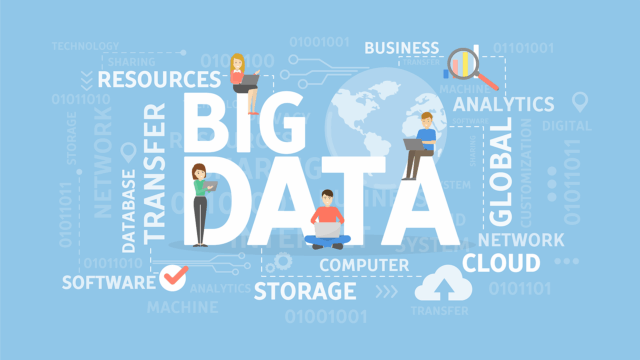
What is Big Data?
Data is any sequence of one or more symbols given meaning by specific acts of interpretation. Data requires interpretation to become information. To translate data into information, there must be several known facts considered. Big data is a field that treats ways to analyze, systematically extract information from, or otherwise deal with data sets that are too large or complex to be handled by traditional data-processing application software. Large data sets offer greater statistical power, but high complexity may also lead to higher false discovery rates. Challenges of big data include capturing data, data storage, data analysis, search, sharing, transfer, visualization, querying, updating, information privacy, and data sourcing.
In addition, big data is commonly characterized by the concept known as the 5V. The first V is Volume, which refers to the massive amount of data generated every second from digital interactions, sensors, transactions, and online activities. The second V is Velocity, meaning the speed at which data flows and must be processed in real time or near real time. The third V is Variety, which highlights the diversity of data types, including structured data, unstructured text, images, videos, and machine logs. The fourth V is Veracity, which concerns the accuracy, reliability, and quality of the data collected. Finally, the fifth V is Value, referring to the importance of extracting meaningful insights that can drive decision making and business growth. These five elements help explain why big data has become an essential foundation for modern business strategies.
So how is big data used for business?
How Big Data Is Used in Business
1. Boosting Customer Acquisition and Retention
One of the most effective business uses of big data is boosting customer acquisition and retention. By analyzing customer behavior, purchase history, and engagement data, companies can craft highly personalized loyalty programs. For instance, Coca-Cola strengthened its data strategy in 2015 by launching a digital-led loyalty program. This program helped the company to deepen relationships with customers and drive repeat purchases.
2. Enhancing Marketing Insights and Advertising
Big data provides powerful marketing insights that change how companies operate. By collecting and analyzing data from online activity, point-of-sale systems, and real-time customer behavior, businesses can match customer expectations, optimize product lines, and run more effective campaigns. Big data enables advertisers to spot trends, target the right audiences, and even adapt creative content on the fly.
For example, Netflix uses big data analytics for targeted content recommendations. With over 100 million subscribers, Netflix collects enormous amounts of streaming and search data. Using this data, it determines which genres or themes a subscriber prefers and then suggests films or series accordingly. This not only boosts viewer engagement but also helps Netflix retain users.
3. Improving Risk Management
Big data analytics significantly contributes to more effective risk management. With advanced tools, companies can quantify and model risks based on internal and external data, leading to smarter mitigation strategies. For example UOB, a Singaporean bank, implemented a big data–based risk management system that reduced the calculation time for value at risk (VaR) from 18 hours to just a few minutes. This optimization helps the bank perform near real-time risk analysis.
4. Streamlining Operations and Reducing Costs
Big data is also used to improve operational efficiency. Big data allows businesses to analyze production, customer feedback, and returns to optimize quality and profitability. Predictive analytics helps predict equipment downtime, avoiding costly breakdowns and reducing maintenance expenses. This kind of data-driven operations supports smarter decision-making and lower operating costs.
5. Business Intelligence and Strategic Decision-Making
Better business intelligence (BI) is one of the most transformative ways how big data is used in business. By applying BI tools on large and complex datasets, organizations can gain deep insights that inform strategy. Big data fuels BI to help businesses make data-driven decisions, optimize processes, and understand trends better than ever before.
6. Fraud Detection and Cybersecurity
Fraud prevention is a critical application. Big data systems analyze vast volumes of transaction logs, user behavior, and system events to flag anomalies and suspicious patterns. Financial services firms like credit card companies deploy real-time big data analytics to detect and prevent fraud.
7. Product Innovation and Business Model Innovation
Big data enables companies to innovate not only in terms of product features but also in business models. Firms use data collected from existing products to develop next-generation offerings or entirely new offerings. For example, manufacturers can analyze product usage data to decide what to build next, design after-sales services, or even launch location-based services from real-time mobility data.
8. Optimized Pricing and Revenue Management
Big data helps companies optimize pricing dynamically, based on real-time demand, competition, and customer behavior. IBM notes that big data analytics enables businesses to fine-tune pricing strategies and maximize profitability. Airlines, for instance, can adjust ticket prices according to demand fluctuations and competitor pricing.
9. Supporting AI and Advanced Analytics
Big data fuels modern AI, generative models, and machine learning. Big data supports AI systems by providing vast training datasets, enabling better model performance and more personalized experiences. For example, knowledge repositories built with big data can power retrieval-augmented generation (RAG) models that answer customer queries using a company’s own data in real time.
Challenges When Implementing Big Data in Business
Implementing big data isn’t without its difficulties. Key business challenges include:
1. Data Capture and Integration
Handling huge volumes and variety of data requires strong infrastructure and seamless data blending from multiple sources. Businesses must ensure that data from internal systems, customer touchpoints, and third-party platforms can be captured efficiently and integrated into a unified system.
2. Data Storage
Organizations need scalable storage solutions such as data warehouses or cloud platforms to store both raw and processed data. As data volume grows, storage architecture must remain flexible, secure, and cost efficient.
3. Analysis Complexity
Drawing actionable insights from big data demands skilled analysts and sophisticated analytical tools. Without proper expertise, organizations may struggle to transform massive datasets into meaningful information.
4. Privacy and Compliance
Collecting and using data responsibly involves managing privacy regulations, ensuring strong data security, and handling sensitive information properly. Compliance with laws like GDPR and regional data protection rules is essential to maintain trust.
5. Real-Time Processing
Converting data into real-time insights requires high-speed processing and analytics capabilities. Businesses often rely on technologies such as streaming analytics to make instant decisions based on live data.
6. Data Quality
Poor data quality or the presence of dark data (unused, unstructured, or low-value data) can hamper insights and lead to inaccurate decision making. Ensuring data cleanliness, consistency, and relevance is critical for successful big data initiatives.
Strategic Steps for Businesses to Use Big Data Effectively
1. Start with Clear Goals
Define what business problem you want to solve, such as customer churn, sales growth, fraud risk, or operational inefficiency.
2. Collect Relevant Internal Data
Begin with your own databases including sales logs, customer interactions, and operational data to build initial insights.
3. Use Blended Data Sources
Combine internal data with external sources like social media, IoT devices, and third-party datasets to enrich analysis.
4. Set Up Scalable Storage and Infrastructure
Use data warehouses or scalable cloud solutions to store and manage big data effectively.
5. Implement Analytics Tools
Apply BI tools, predictive analytics, machine learning, or AI to uncover patterns and improve decision making.
6. Ensure Data Governance and Security
Establish strong data policies, encryption standards, compliance procedures, and governance frameworks.
7. Measure Impact with KPIs
Track ROI with metrics such as cost reduction, customer lifetime value, risk mitigation, and time saved.
8. Foster a Data Driven Culture
Encourage teams to use data for decision making and upskill employees on analytics to strengthen organizational capability.
Real Business Examples of Big Data in Action
1. Coca Cola
Built a digital led loyalty program to better understand customer behavior and improve retention.
2. Netflix
Uses watching history and search behavior to recommend personalized content and enhance user experience.
3. UOB Bank
Reduced its value at risk (VaR) calculation time from 18 hours to just minutes using a big data based risk management system.
4. Uber
Forecasts rider demand during peak events and improves driver signup by identifying and fixing operational bottlenecks.
5. Tesco and Other Retailers
Apply big data in supply chain forecasting, inventory management optimization, and customer segmentation.
6. American Express and Credit Card Companies
Use analytics to detect fraudulent transactions in real time and strengthen financial security.
Data is more than an operational asset, it’s now a strategic resource. Most firms view data as vital for business, and data analysis is leveraged across nearly all parts of the organization. Companies that become truly data-driven often outperform their peers in innovation, efficiency, and growth.
Also read: Bisnis Big Data: Pengertian, Manfaat, dan Peluang Bisnis
Ready to Build a Creative Data-Driven Business? Join Creativepreneurship at BINUS @Bandung
Big data is one of the most powerful tools available for modern businesses. From customer acquisition and marketing optimization to risk management, operations, and strategic innovation, how big data is used in business can define competitive advantage.
If you want to build a future where creativity meets data intelligence, then Creativepreneurship at BINUS @Bandung is the perfect place for you. There, you will learn not just entrepreneurship, but how to harness big data analytics, digital strategy, and innovation to create business models that are smart, sustainable, and customer-centric.
Join us to become a creativepreneur who understands data and use it to build a business that thrives in the digital age.
Writer:
Milo Putra Matadewa – 2301870256

Comments :