

RESPONSIBLE CONSUMPTION AND PRODUCTION
Ensure sustainable consumption and production patterns.
212
ACTION GOALS
756
PUBLICATIONS

EXPERTS

Dr. Ridho Bramulya Ikhsan, S.E., M.M
Related Goals
Dr. Kukuh Lukiyanto, S.T., M.M., M.T.
Related Goals


BINUS University continued to promote environmental sustainability in 2025 through initiatives that encourage responsible plastic use, material reuse, and community participation in waste management. These efforts complement the university’s institutional commitment under Rector’s Circular Letter No. 1564A/REK/IX/2023, “Gerakan Ramah Lingkungan: Pengurangan Plastik dan Barang Sekali Pakai,” which encourages the university community to reduce dependence on single-use plastics and adopt reusable alternatives.

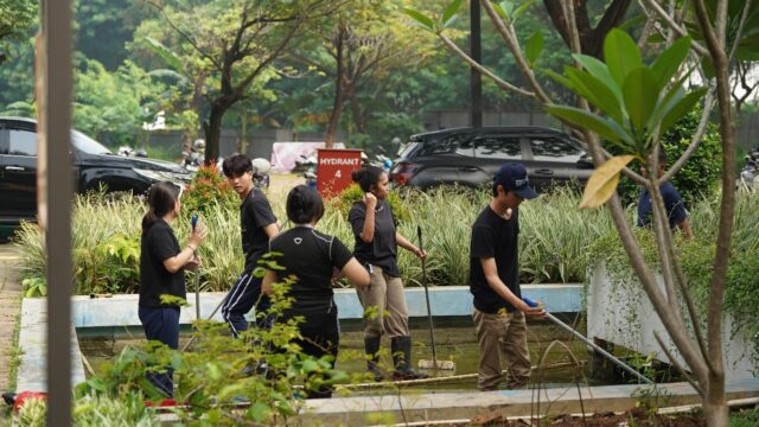
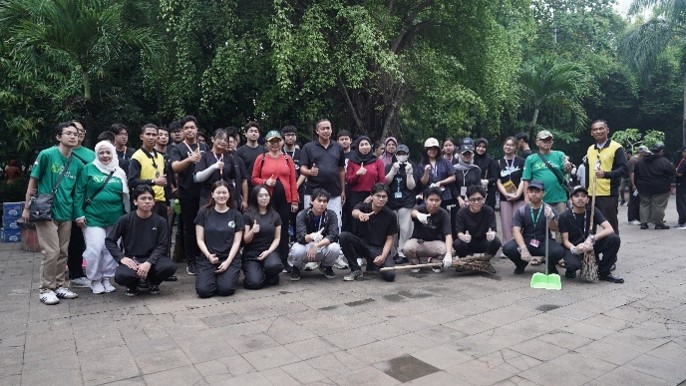
One of the university’s environmental initiatives in 2025 was Plogging BINUS 2025, which combined physical activity with environmental action by encouraging participants to collect waste while jogging. The activity raised awareness of plastic pollution and promoted the responsible handling and reuse of collected materials. By engaging participants in practical environmental action, the initiative encouraged greater awareness of the importance of preventing plastic waste from accumulating in the environment.
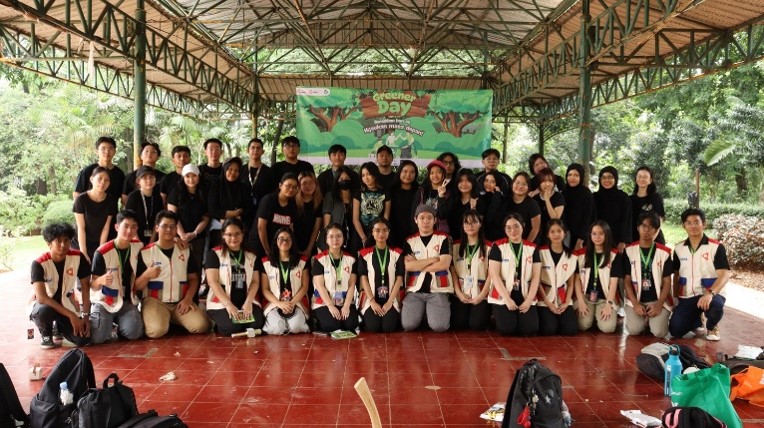
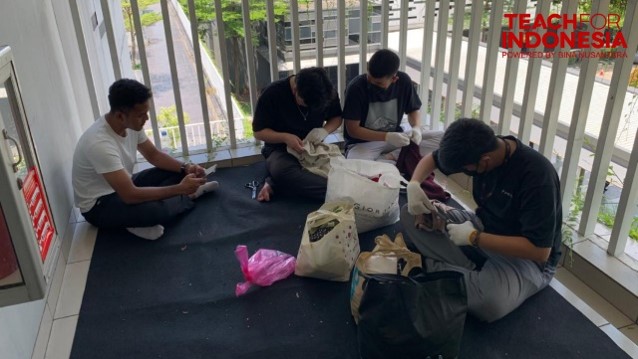
Another initiative was Greener Day 2025, organized through Teach For Indonesia. The activity demonstrated how used plastic bottles could be repurposed into functional plant pots. This hands-on approach encouraged participants to extend the useful life of plastic materials rather than immediately discarding them, reinforcing the importance of reuse as part of responsible material management.

BINUS University also contributed to community-based waste management through Taruma Agni, a pyrolysis-based waste-processing technology developed collaboratively by three BINUS Online lecturers and the M-SAT Appropriate Technology Service Center in Tanah Sareal, Bogor. The initiative applies technology to process household waste at the neighborhood level, helping reduce waste volumes sent to landfills and promoting a circular approach to waste management. Supported by a community service grant, the project demonstrates how BINUS academic expertise can be applied to address environmental challenges in surrounding communities. Although Taruma Agni focuses on processing existing waste rather than directly preventing plastic consumption, it complements the university’s broader efforts to address plastic pollution and improve waste management.

Together, these 2025 initiatives demonstrate BINUS University’s commitment to promoting environmental awareness, encouraging material reuse, and supporting practical solutions to waste-related challenges. Combined with its institutional plastic reduction policy, these activities contribute to a broader sustainability approach that encourages responsible consumption and helps address plastic pollution. Further evidence of reductions in plastic purchases or consumption across university operations would strengthen the demonstration of measurable progress in minimizing plastic use.
BINUS University incorporates environmental sustainability considerations into its procurement processes and relationships with external suppliers. Through its supplier guidelines, the university demonstrates its commitment to extending environmental responsibility beyond its direct campus operations and into its broader supply chain.

The BINUS Vendor Guidelines (Page 5, Point 2.1.1, No. 11) establish environmental sustainability expectations for prospective suppliers, requiring them to support environmental sustainability and align their activities with BINUS University’s green initiatives. By incorporating these expectations into supplier engagement, BINUS integrates environmental considerations into its procurement processes and relationships with external business partners.

These requirements are relevant to the university’s wider supply chain, including suppliers of equipment, stationery, and building-related goods and services, insofar as these suppliers fall within the scope of the Vendor Guidelines. This approach provides a basis for considering environmental responsibility in the procurement of goods and services that support university operations.

BINUS University’s broader engagement with sustainable procurement is also reflected in its collaboration with RMIT University, as described in Advancing Transparent and Sustainable Business Practices through Global Academic Collaboration. The collaboration focuses on the Sustainable Procurement Disclosure Index (SPDI), which promotes transparency and accountability in sustainable procurement practices. This initiative provides additional context for BINUS’s engagement with responsible procurement and environmentally conscious business practices, although it does not independently establish environmental compliance obligations for BINUS suppliers.

Overall, the BINUS Vendor Guidelines provide the primary evidence that environmental sustainability expectations are incorporated into supplier relationships, while the BINUS–RMIT collaboration offers broader context for the university’s sustainable procurement agenda. Together, these sources support the university’s approach to extending environmental considerations beyond its direct operations and into its external procurement relationships.

BINUS University has extended its commitment to sustainability and social responsibility to its outsourced services and supply chain. This effort is guided by policies that ensure vendors and service providers align with BINUS’s core values, particularly in supporting environmental sustainability and local community empowerment. According to the Vendor Guideline (Point 2.1.1, No. 11 and 12), all suppliers are required to actively support environmental preservation and contribute to local business and community development. This approach not only strengthens BINUS’s supply chain but also helps foster positive social and environmental impacts beyond the campus.
Rector’s Decree No. 136A further reinforces these guidelines by emphasizing specific practices that suppliers must follow. Point R highlights the responsibility of food and beverage providers on campus to offer healthy, safe, and hygienic meals, ensuring the well-being of the BINUS community. Meanwhile, Point U encourages the procurement of goods and services from suppliers that demonstrate a commitment to environmental sustainability. This includes using eco-friendly products and services that align with BINUS’s broader environmental goals.

BINUS University’s broader engagement with sustainable procurement is also reflected in its collaboration with RMIT University, as reported in the July 2025 article, Advancing Transparent and Sustainable Business Practices through Global Academic Collaboration. The collaboration focuses on the Sustainable Procurement Disclosure Index (SPDI), which aims to advance transparency and accountability in sustainable procurement practices. This initiative provides additional context for BINUS’s engagement with responsible procurement and sustainable business practices. While the collaboration demonstrates engagement with the broader sustainable procurement agenda, the Vendor Guidelines and Rector’s Decree No. 136A remain the primary evidence of BINUS’s expectations for suppliers and service providers.

By integrating these policies, BINUS University ensures that its partnerships with vendors and service providers reflect its dedication to the Sustainable Development Goals (SDGs). This comprehensive approach to outsourcing and supply chain management not only supports the university’s internal sustainability initiatives but also creates a ripple effect that benefits local communities and the environment.

BINUS University has implemented a comprehensive set of policies and initiatives aimed at minimizing the use of disposable items, demonstrating its commitment to environmental sustainability and responsible resource consumption. A key component of this commitment is the transition toward paperless operations, encouraging staff and students to reduce paper usage through digital systems. Complementary office practices, such as double-sided printing and reviewing documents before printing, further support the efficient use of resources and the reduction of unnecessary paper consumption.

This commitment is supported by Rector’s Decree No. 0136A, which provides a framework for resource management and waste reduction. Under Point P, BINUS University promotes the reduce, reuse, and recycle (3R) principle to encourage efficient resource utilization and minimize waste generation. Point S addresses the management of liquid and solid waste in accordance with applicable government regulations. These institutional guidelines establish a foundation for integrating waste reduction and responsible resource management into university operations.

BINUS University further reinforces these efforts through Rector’s Circular Letter No. 1564A/REK/IX/2023, titled “Gerakan Ramah Lingkungan: Pengurangan Plastik dan Barang Sekali Pakai.” The circular encourages staff, students, and faculty members to minimize single-use plastics by adopting reusable alternatives, including tumblers, food containers, and shopping bags. These measures aim to reduce dependence on disposable items and prevent unnecessary plastic waste generation across the university community.

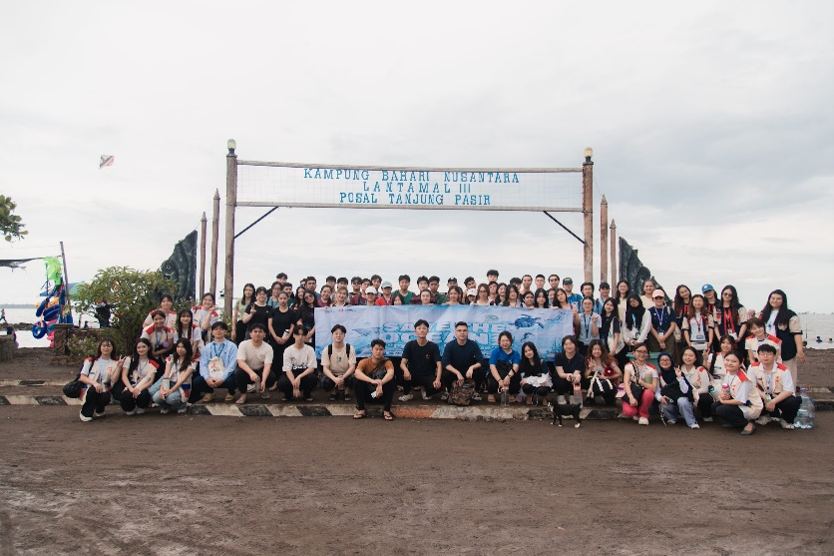
In addition to institutional policies, BINUS University promotes environmental awareness and creative reuse through student activities and sustainability initiatives. One example is Save the Ocean 2025, an environmental initiative that encourages participants to take an active role in protecting marine environments. The activity includes creative approaches to reusing waste materials, such as transforming discarded plastic bottles into useful products. By engaging students in environmental action, the initiative supports awareness of plastic pollution and the importance of reducing waste at its source. While recycling and upcycling do not directly demonstrate a reduction in disposable-item consumption, they complement the university’s broader efforts to encourage more responsible material use.

Another practical example is BINUS @Kemanggisan’s upcycling initiative in 2025, in which discarded kain blacu artwork was transformed into 330 environmentally friendly tote bags. This initiative demonstrates how existing materials can be repurposed into practical products instead of being discarded. Reusable tote bags can also serve as alternatives to single-use shopping bags, particularly when adopted in place of disposable plastic bags. The activity therefore connects waste reuse with the promotion of reusable alternatives within the university community.

This commitment is reinforced by the Rector’s circular No. 1564A/REK/IX/2023, titled “Gerakan Ramah Lingkungan: Pengurangan Plastik Dan Barang Sekali Pakai,” which promotes minimizing single-use plastics on campus. The circular encourages staff, students, and faculty to adopt eco-friendly alternatives by using reusable containers, tumblers, and shopping bags, contributing to a reduction in disposable plastic use and plastic waste disposal.

BINUS University has a formal written policy on waste disposal that includes measuring the amount of waste sent to landfill and the amount recycled. This institutional policy is established under Rector’s Decree No. 0136A, which provides the university-wide framework for waste management and responsible resource use. The policy covers liquid waste treatment, solid waste management, waste segregation, and pollution prevention.

The policy is supported by an institutional waste tracking practice. BINUS has implemented regular measurement and monitoring of waste generation, particularly at the Alam Sutera Campus, where a dedicated team tracks waste volumes to support appropriate disposal and recycling decisions. This provides direct evidence that BINUS does not only have a waste policy but also measures its waste footprint and monitors disposal and recycling outcomes.

BINUS also demonstrates the implementation of its recycling policy through measurable waste-reduction initiatives. Since 2018, the Building Management Team at Alam Sutera has processed nearly 200 kg of organic waste into compost each month. In addition, BINUS has converted 450 kg of organic waste into 1,500 liters of eco-enzyme, while its collaboration with PlasticPay supports the collection and recycling of plastic waste through Reverse Vending Machines. These initiatives contribute to reducing the volume of waste accumulated in landfills.

The university further promotes waste segregation at source, including the classification of waste into compost, waste, and recyclable categories, as demonstrated through the BINUSIAN Lestari Bumi program at BINUS @Bekasi. This strengthens the implementation of the university’s recycling approach by ensuring that recyclable and organic materials can be diverted from general waste disposal.

BINUS also applies specific procedures for hazardous waste, including segregation from regular waste and designated treatment and disposal processes, ensuring that waste is managed safely and in accordance with applicable environmental requirements.

Through its formal waste-disposal policy, waste tracking and measurement, recycling programs, source segregation, and documented waste-reduction practices, BINUS University demonstrates an institutional approach to measuring and reducing waste sent to landfill while increasing the amount of waste recycled or otherwise recovered. These practices provide clear evidence of both policy and implementation in support of responsible waste management.

BINUS University has an institutional procurement process to ensure that the sourcing of food, supplies, and other goods and services is conducted through an established and accountable mechanism.

The BINUS Procurement Portal supports the university’s formal procurement and supplier management process. As part of this process, BINUS incorporates sustainability requirements into its Vendor Guidelines (Page 5, Point 2.1.1, No. 12). Prospective suppliers are required to align with environmental sustainability principles, demonstrating that sustainability considerations are included in the university’s supplier selection and engagement process. The Vendor Guidelines also extend BINUS’s reduce, reuse, and recycle policies to organizations and companies collaborating with the university.

The supplier registration process includes evaluations of financial performance, tax and legal compliance, sustainability, relationships, and reputation. Suppliers must also complete the required declarations and agree to an Integrity Pact, which includes commitments relating to business ethics and the prevention of improper inducements in procurement. These requirements establish supplier screening and accountability measures as part of BINUS’s procurement process. This provides an institutional basis for responsible and sustainable sourcing, rather than relying solely on individual purchasing practices.

For food and beverage procurement, the CEO Decree establishes specific requirements for vendors supplying food and beverages for institutional activities. Vendors must meet hygiene standards, must not have conflicts of interest with BINUS stakeholders or employees, and must not be listed on the institution’s blacklist. The decree also regulates vendor eligibility and selection, requiring the Procurement Department to evaluate and verify new vendors for qualifying purchases. Procurement transactions must comply with applicable budget standards and financial procedures, use cashless payments, and be supported by official invoices or point-of-sale receipts.

Through its formal procurement mechanism, Vendor Guidelines, and explicit sustainability requirements for suppliers, BINUS demonstrates an institutional commitment to ethical and responsible sourcing of food and supplies. By extending sustainability expectations to external suppliers, BINUS integrates responsible sourcing into its wider supply chain and supports its commitment to sustainable consumption and responsible procurement.

BINUS University is deeply committed to sustainable waste disposal practices as part of its dedication to the Sustainable Development Goals (SDGs). Guided by Rector’s Decree No. 0136A (Part II, Points P, S, T), the university applies the principles of reducing, reusing, and recycling to all resource usage, including waste disposal and wastewater management. A key example is the reuse of treated wastewater from campus buildings for watering plants, which reduces reliance on fresh water and promotes water conservation. The university’s policy on hazardous waste management aligns with government regulations, ensuring that both liquid and solid waste are managed in accordance with legal standards to minimize environmental harm. This includes various initiatives aimed at environmental preservation, such as preventing pollution of water, air, and soil, as outlined in Point T. In support of these policies, BINUS has implemented several water conservation strategies, including regular plumbing maintenance, promoting water-saving habits, and utilizing treated wastewater for garden irrigation and toilet flushing. These efforts not only conserve water but also contribute to the university’s broader goal of creating a cleaner, healthier environment. The policy on hazardous materials management, detailed in the Rector’s circular No. 1660A/REK/IX/2023 titled “Pengelolaan Sampah dan Limbah Berbahaya,” ensures that hazardous materials are separated from regular waste and managed through designated processes, compliant with national regulations, and handled by authorized vendors specializing in hazardous waste disposal. Through these comprehensive waste management practices, BINUS University upholds its commitment to environmental sustainability and responsible resource management.

BINUS University has implemented comprehensive waste management practices, with a focus on measuring waste generation and supporting recycling efforts, particularly at its Alam Sutera campus. A dedicated Building Management team monitors waste levels to support appropriate waste handling and recycling. According to BINUS University’s report, its organic waste management initiatives include producing nearly 200 kg of compost per month and processing 450 kg of organic waste into 1,500 liters of eco-enzyme during the reported period. These figures demonstrate the quantification of organic waste processed and the recovery of resources through sustainable waste management practices.

In addition to waste management, BINUS University has introduced water conservation programs, including encouraging responsible water use, maintaining plumbing systems, and treating wastewater for reuse in suitable applications, such as plant irrigation and toilet flushing. These initiatives aim to minimize the university’s environmental footprint while promoting sustainability in daily campus operations.

Furthermore, in September 2025, BINUS @Bekasi participated in World Cleanup Day, involving more than 100 students in a cleanup activity that collected approximately 300 kg of waste for sorting and further management. Although this figure represents waste collected during a specific cleanup event rather than the university’s total waste generation, it provides an additional example of quantitative waste collection and management.

Through waste monitoring, organic waste processing, recycling initiatives, and environmental campaigns, BINUS University demonstrates its commitment to responsible resource use and waste reduction. To establish the full extent of this commitment across the university, consolidated data on total waste generated, recycled, and sent to landfill across all campuses would further strengthen the evidence.