



RESPONSIBLE CONSUMPTION AND PRODUCTION
Ensure sustainable consumption and production patterns.
141
ACTION GOALS
744
PUBLICATIONS

EXPERTS

Dr. Ridho Bramulya Ikhsan, S.E., M.M
Related Goals
Dr. Kukuh Lukiyanto, S.T., M.M., M.T.
Related Goals


BINUS University has a formal written policy on waste disposal that includes measuring the amount of waste sent to landfill and recycled. This policy is established under Rector’s Decree No. 0136A, which provides the institutional framework for environmental management, including waste handling procedures.

Specifically, the Decree addresses waste management in:

  • Part II, Point P: management of liquid waste with mandatory treatment before disposal,

  • Part II, Point S: segregation and management of solid waste including hazardous waste (B3),

  • Part II, Point T: pollution prevention for air, water, and soil encompassing overall waste management.

To implement these policies, BINUS conducts several activities, such as:

  • Regular monitoring and reporting of waste volumes by the Building Management Team, especially at Alam Sutera Campus, ensuring proper landfill disposal and recycling,

  • Composting programs producing nearly 200 kg of compost monthly from organic waste, enriching campus gardens,

  • Eco-enzyme production converting 450 kg of organic waste into 1,500 liters of eco-enzyme used for cleaning and organic farming,

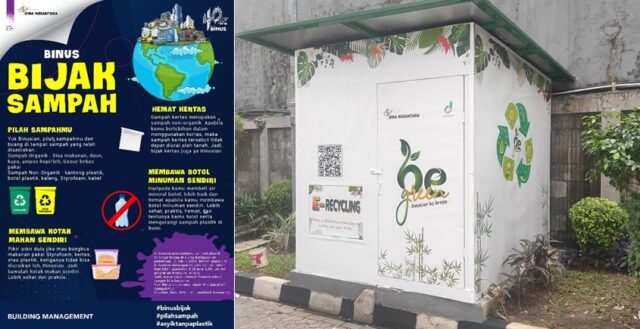
  • “Be-Green” E-Recycling Program, incentivizing correct plastic waste disposal among campus communities.

Beyond internal initiatives, BINUS also actively collaborates with local government and communities to address urban waste challenges:

  • Partnering with Tangerang City Government to develop the Geo-Bee Dashboard, a smart platform for monitoring waste management performance to optimize city operations,

  • Supporting Taruma Agni, a technology startup focused on smart urban waste solutions, through faculty expertise and applied research to tackle city-scale waste crises.

These combined efforts demonstrate BINUS University’s comprehensive approach to waste management, encompassing policy, measurement, practical action, and community engagement.
BINUS University is deeply committed to upholding ethical sourcing practices, particularly concerning food and essential supplies across all campuses. This initiative aligns with Rector’s Decree No. 0136A (Part II, Point R), which emphasizes the provision of healthy, safe, and hygienic food for students, faculty, and staff. The university ensures that all food served within campus canteens is sourced from trusted and certified suppliers who adhere to strict quality and safety standards. 

To strengthen this commitment, BINUS also prioritizes local vendors in its procurement policies, as outlined in the Vendor Guidelines (Page 5, Point 2.1.1, No. 12). By doing so, the university supports the growth of local enterprises and fosters economic empowerment within surrounding communities. This approach not only enhances supply chain sustainability but also reduces environmental impacts associated with long-distance transportation. 

Furthermore, BINUS applies its sustainability and minimization policies to external suppliers, ensuring that ethical and environmentally responsible practices extend beyond internal operations. These efforts are reflected in initiatives featured on BINUS’ sustainability platform: 

Through these actions, BINUS University demonstrates a strong institutional commitment to ethical sourcing, local economic empowerment, and sustainable consumption. The policies ensure that every aspect of food and supply procurement contributes positively to both the university community and the wider environment, reflecting BINUS’ alignment with the United Nations Sustainable Development Goals (SDGs).

BINUS University has taken significant steps to extend its sustainability policies to outsourced suppliers and the broader supply chain, emphasizing environmental responsibility across all partnerships. The university has implemented the principles of reduce, reuse, and recycle not only within its campus operations but also with external organizations and companies that collaborate with BINUS. For instance, BINUS encourages everyone on campus—including staff, students, guests, and lecturers—to adopt eco-friendly practices like using reusable water bottles and bags. To support proper waste management, the campus has also implemented a system where trash bins are clearly separated into organic and inorganic categories, streamlining waste processing for cleaning staff.

In its commitment to environmental sustainability, BINUS has integrated eco-conscious criteria into its procurement process. One of the primary requirements for potential suppliers is their active support for sustainable practices. This is explicitly outlined in the vendor guidelines (Page 5, Point 2.1.1, No. 11), where suppliers are expected to align with BINUS University’s green initiatives. Suppliers of equipment, stationery, and building contractors must demonstrate their commitment to sustainability, ensuring that their operations and products contribute to BINUS’s overall environmental goals.

This extended policy is a reflection of BINUS University’s dedication to the Sustainable Development Goals (SDGs), particularly in promoting responsible consumption and production. By involving external partners in its sustainability efforts, BINUS is fostering a broader impact, ensuring that its influence on reducing environmental footprints goes beyond the campus and reaches into the entire supply chain.

BINUS University has extended its commitment to sustainability and social responsibility to its outsourced services and supply chain. This effort is guided by policies that ensure vendors and service providers align with BINUS’s core values, particularly in supporting environmental sustainability and local community empowerment. According to the Vendor Guideline (Point 2.1.1, No. 11 and 12), all suppliers are required to actively support environmental preservation and contribute to local business and community development. This approach not only strengthens BINUS’s supply chain but also helps foster positive social and environmental impacts beyond the campus.

Rector’s Decree No. 136A further reinforces these guidelines by emphasizing specific practices that suppliers must follow. Point R highlights the responsibility of food and beverage providers on campus to offer healthy, safe, and hygienic meals, ensuring the well-being of the BINUS community. Meanwhile, Point U encourages the procurement of goods and services from suppliers that demonstrate a commitment to environmental sustainability. This includes using eco-friendly products and services that align with BINUS’s broader environmental goals.

By integrating these policies, BINUS University ensures that its partnerships with vendors and service providers reflect its dedication to the Sustainable Development Goals (SDGs). This comprehensive approach to outsourcing and supply chain management not only supports the university’s internal sustainability initiatives but also creates a ripple effect that benefits local communities and the environment.

BINUS University has implemented a comprehensive set of policies aimed at minimizing the use of disposable items, underscoring its commitment to environmental sustainability and reducing its carbon footprint. A significant part of this initiative is the transition to a paperless system, encouraging staff and students to reduce paper usage in daily operations. This shift not only decreases paper consumption but also reduces CO2 emissions, aligning with the university’s goal of minimizing its environmental impact. In support of this, BINUS promotes eco-friendly practices in its back office, such as double-sided printing, careful review of documents before printing, and relying on digital systems over hard copies. These initiatives reflect BINUS’s dedication to creating a sustainable campus and advancing the broader objectives of the Sustainable Development Goals (SDGs).

This commitment is further reinforced by BINUS University’s Rector’s Decree No. 136A, which provides clear guidelines for resource management and waste disposal. According to Point P of the decree, the university follows the “reduce, reuse, recycle” (3R) principle to ensure efficient resource use and minimize waste. Additionally, Point S mandates the proper management of liquid and solid waste in line with government regulations, ensuring that BINUS complies with national environmental policies. These efforts highlight the university’s role in fostering sustainability both on campus and beyond, contributing to long-term environmental preservation.

Moreover, BINUS University actively promotes creative and sustainable practices through various campaigns and workshops. The School of Design has spearheaded the “From Waste to Fashion” campaign, turning discarded materials into wearable art, and has organized workshops like “New Way of Upcycling,” focusing on repurposing waste into useful items. The university has also taken practical steps to reduce single-use plastics by restricting the use of styrofoam utensils and encouraging alternatives, as well as replacing plastic bags with paper bags or reusable totes. These combined efforts showcase BINUS’s proactive approach to waste reduction and its leadership in promoting sustainable practices.

This commitment is reinforced by the Rector’s circular No. 1564A/REK/IX/2023, titled “Gerakan Ramah Lingkungan: Pengurangan Plastik Dan Barang Sekali Pakai,” which promotes minimizing single-use plastics on campus. The circular encourages staff, students, and faculty to adopt eco-friendly alternatives by using reusable containers, tumblers, and shopping bags, contributing to a reduction in disposable plastic use and plastic waste disposal.

BINUS University is committed to environmental sustainability through various policies aimed at minimizing plastic use on campus and in surrounding communities. The policy aimed at reducing plastic waste is outlined in the Rector’s circular No. 1564A/REK/IX/2023, titled “Gerakan Ramah Lingkungan: Pengurangan Plastik Dan Barang Sekali Pakai.” This initiative encourages the academic community to adopt sustainable practices, such as bringing their own reusable containers, including tumblers and shopping bags, to minimize reliance on single-use plastics.

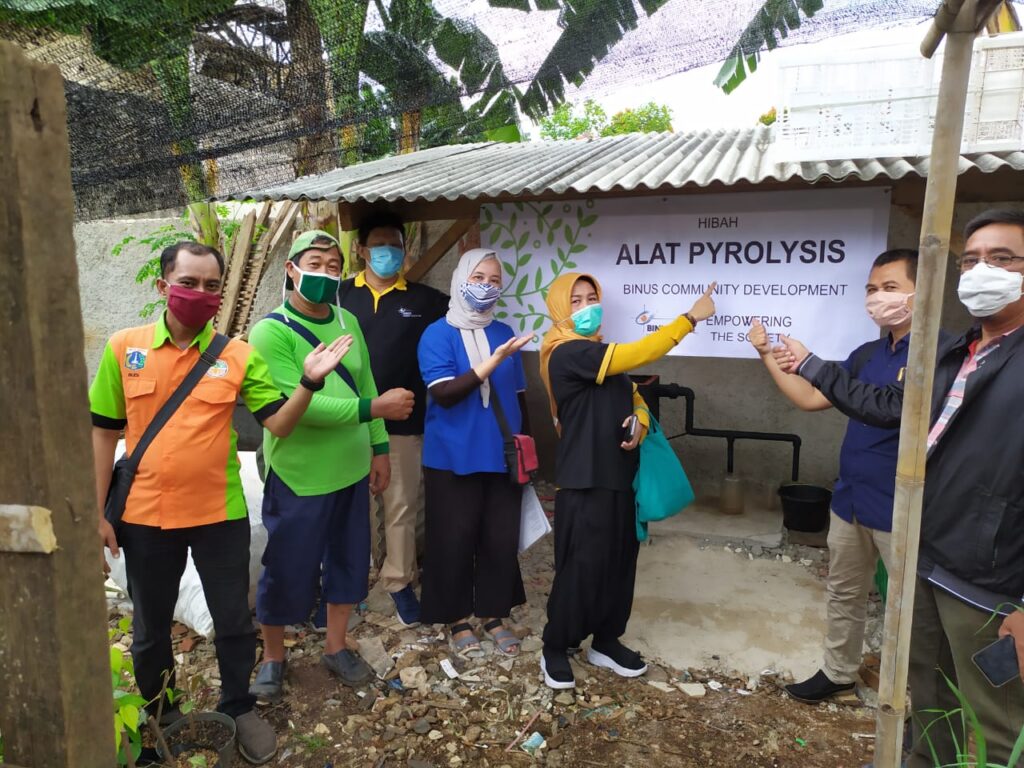
One notable initiative is the handover of a Pyrolysis Waste Processing Machine from the Faculty of Engineering to the Environmental Community of RW 4, Meruya Selatan District. Led by Mrs. Religiana Hendarti and Mr. Tota Pirdo, and supported by Mrs. Retno Dewanti from BINUS’s Community Development Academic team, this machine converts plastic waste into liquid fuel through a combustion and condensation process. Originally developed as a final project in the Manufacturing Processes course, it exemplifies the university’s commitment to practical technology applications for community service, funded by an internal BINUS grant. There are plans to expand this technology across BINUS campuses and partner communities.

In addition, the university has implemented the “BINUS ASYIK TANPA PLASTIK” (BINUS is Fun Without Plastic) policy, which encourages students and staff to eliminate single-use plastics in favor of reusable alternatives. To support this initiative, designated bins for plastic waste are provided, regular educational campaigns are conducted, and sustainability programs such as “Be-Green” are organized. As a result, BINUS has significantly reduced plastic waste, with a decline of more than 10 kg per month for the last 5 years.

These actions reflect BINUS University’s comprehensive approach to tackling plastic pollution, aligned with global sustainability efforts. By combining innovative technology like the Pyrolysis machine with strong campus policies and community engagement, BINUS sets a clear example of environmental stewardship. Additionally, this commitment is reinforced by the circular letter regarding the “Environmental Movement: Reduction of Plastic and Single-Use Items,” which underscores the university’s dedication to fostering a plastic-free environment.

BINUS University is deeply committed to sustainable waste disposal practices as part of its dedication to the Sustainable Development Goals (SDGs). Guided by Rector’s Decree No. 0136A (Part II, Points P, S, T), the university applies the principles of reducing, reusing, and recycling to all resource usage, including waste disposal and wastewater management. A key example is the reuse of treated wastewater from campus buildings for watering plants, which reduces reliance on fresh water and promotes water conservation. The university’s policy on hazardous waste management aligns with government regulations, ensuring that both liquid and solid waste are managed in accordance with legal standards to minimize environmental harm. This includes various initiatives aimed at environmental preservation, such as preventing pollution of water, air, and soil, as outlined in Point T. In support of these policies, BINUS has implemented several water conservation strategies, including regular plumbing maintenance, promoting water-saving habits, and utilizing treated wastewater for garden irrigation and toilet flushing. These efforts not only conserve water but also contribute to the university’s broader goal of creating a cleaner, healthier environment. The policy on hazardous materials management, detailed in the Rector’s circular No. 1660A/REK/IX/2023 titled “Pengelolaan Sampah dan Limbah Berbahaya,” ensures that hazardous materials are separated from regular waste and managed through designated processes, compliant with national regulations, and handled by authorized vendors specializing in hazardous waste disposal. Through these comprehensive waste management practices, BINUS University upholds its commitment to environmental sustainability and responsible resource management.

BINUS University has implemented comprehensive waste management policies, with a focus on measuring waste generation and recycling efforts, particularly at its Alam Sutera campus. A dedicated team monitors waste levels to ensure proper disposal and recycling, supporting the university’s broader environmental goals. BINUS has also introduced water conservation programs, such as encouraging responsible water use, regular plumbing maintenance, and treating wastewater for reuse in plant irrigation and toilet flushing. These initiatives aim to minimize the campus’s environmental footprint while promoting sustainability in everyday operations.

To further reduce waste, BINUS has enacted policies that prioritize minimizing non-organic waste and encouraging recycling. These include replacing disposable bottles with reusable tumblers, limiting the use of styrofoam and plastic bags, and promoting paper alternatives. The “Be-Green” E-Recycling program rewards proper disposal of plastic waste, and sustainability campaigns like “From Waste to Fashion” and “New Way of Upcycling” creatively repurpose waste. Through these efforts, BINUS University continues to promote a culture of environmental responsibility and waste reduction across its campuses.