


From chalkboards to chatbots, AI-powered methods to help students improve their English skills
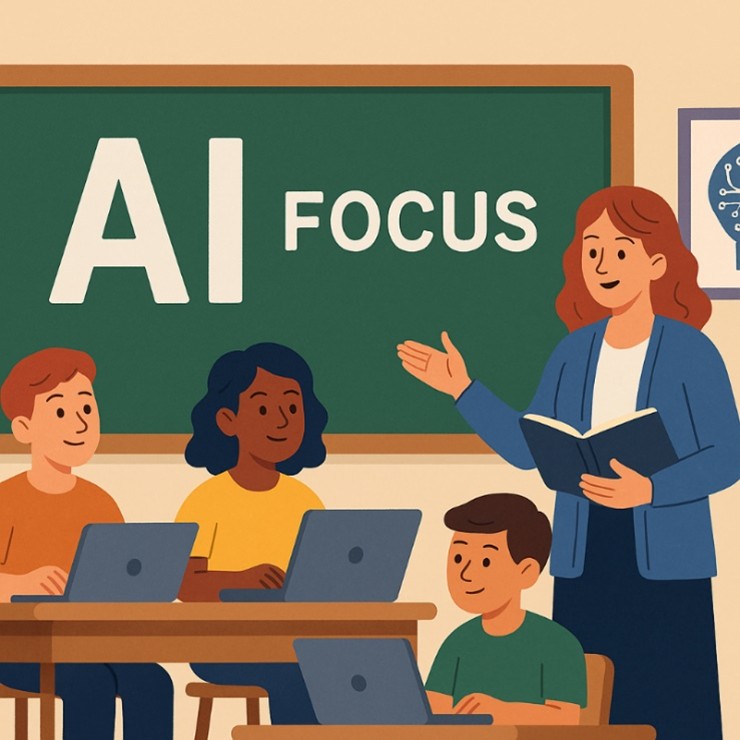
Source: https://www.littlelit.ai/post/from-chalkboard-to-chatbot-the-evolution-of-schools-in-the-age-of-ai
Technology is changing quickly, and this has brought about a new era for education. It has changed how teachers teach and how students learn. English language teaching (ELT) has undergone one of the most significant transformations. In the past, printed worksheets, lectures, and activities done on a chalkboard were the main ways to teach English. This method is still useful, but teachers need to rethink how they do things because of the needs of the 21st century. Today’s students grow up with digital technology all around them. They are used to having instant access to information, interactive apps, and personalized learning systems. In response, teachers have started to move away from teaching with chalkboards and toward AI-assisted teaching. Chatbots, intelligent tutoring systems, machine translation tools, and learning analytics are all powerful tools that are changing the way we learn. This change makes us wonder: how can AI-driven strategies be used not just as extra resources in the classroom, but also as effective ways to really improve students’ English skills?
Artificial Intelligence (AI) doesn’t just give teachers new tools; it changes the way they teach. AI makes adaptive learning possible, which means that lessons can be tailored to each student’s needs in real time. AI-powered tools find learning gaps, keep track of progress, and give personalized feedback, which is different from traditional teaching methods that use the same lesson plans for everyone. This is especially helpful for learning English, where students often have trouble with grammar, pronunciation, vocabulary, listening, reading comprehension, writing structure, or speaking fluency. AI makes it possible to personalize learning, which means that each student gets help that is appropriate for their level of skill and speed. This reduces cognitive overload and helps students remember what they learn.
One of the most interesting ways that AI is being used is in English learning through the use of chatbots. Chatbots are like virtual conversation partners that act like people talking to each other in real life. They give students a safe, non-judgmental space to practice speaking and writing without worrying about being embarrassed or corrected in front of their peers. Chatbots give shy, introverted, or anxious students a lot of chances. They can keep users interested by responding in real time, suggesting different structures, and making small corrections to mistakes, which can improve both fluency and accuracy at the same time. Unlike the traditional classroom model, where time is limited and the teacher has to pay attention to many students at once, chatbots are always available and let students practice without limits. Students can build their confidence and learn new languages outside of class time because they have unlimited access.
Another important thing that AI does is help people improve their writing. To write well in English, you need to know more than just grammar. You also need to know how to organize your thoughts, keep them coherent, be aware of tone, and use a variety of words. AI-powered writing tools like Grammarly, ProWritingAid, and ChatGPT have changed the way students learn. These platforms do more than just fix grammar mistakes; they also give you tips on how to make your writing better by making it more formal, cohesive, clear, and word choice. Students learn to recognize their mistakes and gradually adopt better writing habits. In this way, AI acts as an independent feedback system that makes it less likely that students will need teachers to correct them. It also makes the teacher’s job easier by letting them focus on things like content development, deep analysis, and the more humanistic parts of teaching, like motivation and critical thinking, instead of just giving basic grammar feedback. AI helps students improve their writing skills on their own, which helps them learn how to edit their own work, communicate better in school and at work, and continue learning throughout their lives.
AI-powered pronunciation apps are changing the way people speak English, along with chatbots and writing tools. In traditional pronunciation lessons, students often have to copy what the teacher says and get feedback from them from time to time. But it’s hard to practice speech consistently because of limited classroom time and the different needs of each student. AI applications with speech recognition, like ELSA Speak or Duolingo’s oral practice features, look at how well learners pronounce words and stress patterns, find specific pronunciation problems, and give them focused drills to fix them. The benefit is accuracy: these systems can find phonetic mistakes down to the level of individual sounds, which means that training can be more focused instead of more general. There are no time limits in the classroom, so students can do exercises as many times as they need to. AI helps people speak more clearly and fluently, which improves real-world communication and academic discussions. This is because how you pronounce words directly affects how well you understand what you hear and how confident you feel when you speak.
AI-powered vocabulary learning is also a new way to teach English. Repetition without context is a big part of traditional vocabulary memorization, which usually only helps people remember things for a short time. Instead, smart vocabulary platforms use spaced repetition algorithms, learning in context, and games. Instead of just reading lists of words, students learn new words in meaningful situations like conversations, real-life situations, and interactive quizzes. AI keeps track of words that people forget or don’t know, and it brings them back up every now and then until they are learned. This makes sure that students learn more than just definitions; they also learn how to use words in context and understand their meanings. AI-based strategies greatly improve overall English proficiency because vocabulary mastery is the basis for academic reading, speaking accurately, and writing well.
AI integration also helps with understanding what you hear. AI-curated listening platforms tailor content to what students are interested in, such as movies, interviews, business talks, academic lectures, or conversational audio. They also offer transcript support and instant vocabulary lookup. When students can listen to things that are important and relevant to them, they are more motivated and understand better. Smart systems keep track of students’ strengths and weaknesses, like when they have trouble with connected speech, idioms, or certain accents, and change the practice tasks to fit. This is especially helpful in today’s world, where hearing different accents is very important. Students can learn about different languages without leaving the classroom thanks to AI. This gets them ready for international academic and professional settings.
AI-driven learning has many benefits, but technology alone can’t guarantee success. AI should not take the place of teachers; it should work with them. English teachers are still important for teaching discipline, moral values, and how to interact with other people, which can’t be done by machines. AI doesn’t take the place of pedagogy; instead, it changes it so that teachers can go from being “information transmitters” to “learning facilitators.” Instead of being the only source of knowledge, teachers become designers of learning experiences. AI can do things like fix grammar mistakes, drill vocabulary, or practice pronunciation. This gives teachers more time to work on higher-level skills like critical thinking, intercultural communication, creativity, teamwork, and solving problems in the real world.
To make sure that AI is used responsibly, we need to think about ethics and digital literacy. Students need help using AI in a responsible way, like not plagiarizing, being honest, and using AI as a tool instead of a way to finish their work faster. AI can make people too dependent on it and stop them from developing their own ideas if it isn’t controlled. So, it is very important for English teachers to teach their students how to use AI in a responsible way. This means teaching them the difference between getting help and cheating, how to learn from feedback instead of copying it, and how to make sure that creativity and originality are always a part of academic work.
The move from chalkboard to chatbot shows how English language learning has changed from static, teacher-centered instruction to dynamic, learner-centered interaction. The classroom becomes a mix of human knowledge and machine intelligence, making it possible for students to learn in a way that is both personalized and scalable. Students have more freedom, more chances to practice, and help that is tailored to their needs. With the help of AI, teachers can give better lessons that get students interested and lead to measurable learning outcomes. The future of ELT will not be characterized by the substitution of educators but by the integration of human empathy and artificial intelligence precision. By using AI in a thoughtful and planned way, it can become more than just a technological trend; it can also be a useful tool for improving English skills and getting students ready for success in a globalized world.

Comments :