GOOD HEALTH AND WELL BEING
Ensure healthy lives and promote well-being for all at all ages.
392
ACTION GOALS
± 1K
PUBLICATIONS

EXPERTS

Prof. Fergyanto E. Gunawan, Dr. Eng.
Related Goals
3
Prof. Dr. Ir. Sevenpri Candra, S.Kom., S.E., M.M., ASEAN Eng.
Related Goals
3
Dr. Rinda Hedwig S.Kom, M.T
Related Goals
3
Prof. Fergyanto E. Gunawan, Dr. Eng
Related Goals
3
Ir. Diana Lo, S.TP, M.Sc, Ph.D, IPM
Related Goals
3
Dr. Pantri Heriyati, S.E., M.Comm.
Related Goals
3


BINUS University is deeply committed to fostering a healthy, inclusive, and supportive workplace by actively promoting good mental health and providing free access to professional mental health support for all staff.

To strengthen emotional resilience and overall well-being, the university conducts a range of educational and support initiatives tailored to meet the diverse needs of its academic and professional community. Among these programs are:

  • Personal Development (PD) Fest, featuring topics such as “Secrets to a Healthy Life” and “Overcoming Toxic Mentality.”

  • Lecturer Engagement Series, which focuses on empowering faculty to support students’ mental well-being.

  • Muscling Up on Mental Health, which promotes physical activity as part of holistic mental health care.

These initiatives are facilitated by internal professionals and external psychologists to ensure comprehensive, evidence-based support.

In addition, BINUS provides a Mental Health Check-Up Program to help employees identify early symptoms of stress or mental health challenges, along with an Employee Assistance Program (EAP) offering confidential counseling sessions. The Employee Happiness Program complements these efforts through social activities such as culinary gatherings, movie nights, and reflexology sessions that nurture positive workplace relationships and reduce stress.

BINUS University continues to promote mental health awareness and personal well-being through various initiatives, including the Personal Development Festival (PDFest), which featured activities such as Discover Purpose at Work and in Life Through Doodling and Bridging Generations with Mindful Connections. These sessions encouraged self-reflection, personal growth, and meaningful connections. In addition, the Human Capital (HC) team at BINUS University @Bekasi held the HC Health Talk: “Power of Gratitude and Kindness” on February 14, 2025, featuring Rachel Chalista F.D. Hersa, S.Psi., M.Psi., Psychologist, from Siloam Hospital Bekasi Timur. The session highlighted how practicing gratitude, showing kindness, and cultivating empathy can positively contribute to mental and emotional well-being, while fostering a more compassionate, supportive, and positive workplace environment.

Through these consistent efforts, BINUS ensures that every staff member has access to mental health education, counseling, and supportive spaces—all free of charge. This commitment has earned BINUS recognition from HR Asia as one of the Best Companies to Work for in Asia (2021 & 2023) and the Most Caring Company Award 2023, reaffirming its dedication to staff well-being and mental health advocacy.

BINUS University is committed to creating a supportive academic environment that prioritizes the well-being of both students and staff. Through accessible and free programs, BINUS highlights the importance of emotional resilience as a foundation for academic and career success.

As part of this commitment, BINUS provides:

  • Well-being Program to support those experiencing psychological or academic-related challenges.

  • Free Counseling Services with professional psychologists and trained counselors.

  • Mental Health Week. Is a Daily Encouraging Quotes​ & Workshop Series​ that occurred once a year (on September) to also celebrate World Mental Health Day.

This dedication is reflected in a variety of initiatives, such as the Health & Well-being Day, and World Mental Health Day at BINUS Bekasi, which focus on managing emotions and stress for a better quality of life.

BINUS also celebrated World Mental Health Day through the SASC Festival 2025 Mosaic of Me: Pause and Find Your Pieces, a three-day event at BINUS Kemanggisan featuring workshops, seminars, counseling corners, and well-being activities that introduced students to various support services available at the Student Advisory and Support Center (SASC).

By consistently organizing mental health programs, BINUS underscores its mission to ensure that support is not only free of charge but also easily accessible to every student and staff member. This proactive approach reaffirms BINUS’s dedication to cultivating a healthier, more resilient academic community.

BINUS University actively shares its sports facilities with local schools and the general public as part of its commitment to promoting health, fitness, and community engagement. The university’s sports infrastructure includes basketball, volleyball, badminton, and futsal courts, which are open for use by both the BINUS academic community and local residents. These facilities are regularly used for friendly matches, sparring sessions, and inter-school tournaments, strengthening the university’s connection with the wider community.

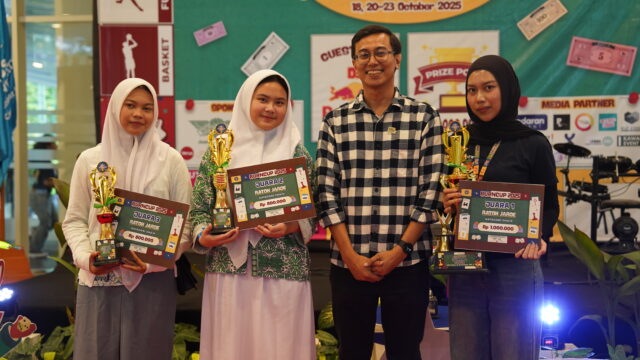
BINUS University @Bekasi annually hosts the BURNCUP, an inter-school and inter-college sports and creativity competition organized by the Academic & Student Development (ASD) Division. Since it was first held in 2018, the event has become a signature platform for BINUS students and high school participants (SMA/K/MA) across the Greater Jakarta area to showcase their talents, build friendships, and experience the vibrant campus atmosphere at BINUS @Bekasi. Through this initiative, the university not only strengthens student engagement but also opens its campus facilities to the wider community, encouraging collaboration and inclusion through sports and creative activities.

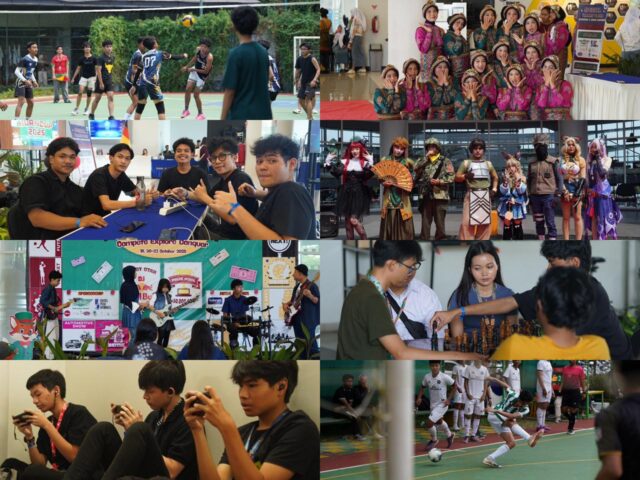
The 2025 BURNCUP, held from October 20–23 at BINUS @Bekasi, marked the eighth edition of the annual competition under the theme “Compete, Explore, Conquer.” The event brought together BINUS students and high school students from various backgrounds, providing a platform for young people to develop their talents, demonstrate their abilities, and engage in healthy competition. The event featured four main categories: Sports, E-Sports, Creative, and Automotive, promoting physical activity, strategic thinking, creativity, teamwork, and technical skills.

The Sports category included futsal, chess, volleyball, basketball, billiards, and table tennis, encouraging physical fitness, coordination, and sportsmanship. The E-Sports category featured Valorant, Mobile Legends, FIFA 1v1, and PUBG Mobile, reflecting the growing role of digital gaming in youth engagement. Meanwhile, the Creative category offered opportunities for artistic expression through cosplay, band performances, traditional Ratoh Jaroe dance, art competitions, dance performances, and cake decoration. The Automotive category further expanded the event’s scope through Autobahn and Car Engineering competitions, showcasing vehicle modification, technical knowledge, functionality, and creativity.

By welcoming high school students to participate alongside BINUS students, BURNCUP 2025 fostered interaction across educational levels, encouraged collaboration, and strengthened solidarity among young people. Beyond a competitive event, BURNCUP served as a platform for talent development, confidence-building, cultural expression, and the promotion of positive youth engagement within the BINUS @Bekasi campus community.

Through these activities and the open access to its sports facilities with local schools and the public, BINUS University demonstrates a strong commitment to build a healthy and active community.

BINUS University contributes to sexual and reproductive health awareness through educational outreach and institutional mechanisms for preventing and addressing sexual violence. These initiatives include reproductive health education for young people, preventive education on sexual violence, and formal reporting and assistance channels within the university environment.

In 2025, BINUS University conducted Apresiasi Duta Generasi Berencana (GenRe) Jakarta Selatan 2025, an educational outreach activity held on 11 July 2025 and led by Yogie Ajie Pratama, a lecturer from BINUS University’s Psychology Study Programme. According to the official BINUS Community Empowerment report, the programme addressed life planning, reproductive health, and character development. The activity involved members of the South Jakarta community and used interactive discussions, question-and-answer sessions, and experience-sharing to communicate these topics to young people. This programme provides documented evidence of BINUS University’s involvement in reproductive health education in 2025.

BINUS University also maintains a formal institutional mechanism for sexual violence prevention and response through the Task Force for the Prevention and Handling of Violence in Higher Education (Satgas PPKPT). BINUS officially established its task force in 2023, and its 2025–2027 structure includes dedicated divisions for education and social media, reporting, and assistance. According to the university’s official information, the task force conducts awareness and education activities for the academic community, receives and follows up on reports, and provides assistance to victims, witnesses, and reported individuals.

Students and other members of the BINUS academic community can report incidents of violence through BINUS Listen, the reporting channel identified on the university’s official Satgas PPKPT page. This mechanism provides a documented institutional route for reporting sexual violence and seeking follow-up support. It complements preventive education by helping students identify where to report concerns and access the university’s response procedures.

These initiatives demonstrate BINUS University’s documented contributions to reproductive health education among young people and to sexual violence prevention and response within higher education. However, the GenRe programme report identifies the wider South Jakarta community as its audience rather than specifically confirming BINUS student participation. Likewise, the Satgas PPKPT is a violence prevention and response mechanism, not evidence of clinical reproductive health care. Documentation of student-accessible reproductive health consultations, contraception information, or sexually transmitted infection screening would be needed to establish the full scope of sexual and reproductive health-care services requested by this indicator.

BINUS University delivers health outreach programmes through student volunteering, community engagement, and partnerships with healthcare providers and social organizations. In 2025, these initiatives promoted personal hygiene, physical activity, and health awareness among local communities and groups facing barriers to health and social participation.

On 5, 6, 8, and 9 August 2025, BINUS University organized Adaptive Sport 2025: Sport Without Limits in collaboration with Perkins International, PAVIC Philippines, Yayasan Sayap Ibu Banten, and special-needs schools. The programme provided children with disabilities opportunities to participate in adaptive sports, including goalball and blind football. Through physical activity and inclusive sports experiences, the programme encouraged exercise, social participation, and well-being among children with disabilities.

On 31 May 2025, a BINUS International student partnered with Yayasan Tunas Bangsa in Bali to organize Fostering Healthy Habits in Children Through Hygiene Awareness. The programme reached 25 children through interactive education on germ transmission, proper handwashing, toothbrushing, and infection prevention. Participants also received personal hygiene kits containing soap, toothbrushes, toothpaste, and hand sanitizer. By combining practical education with essential hygiene supplies, the initiative encouraged healthier daily habits among children in the community.

On 1–2 August 2025, BINUS University’s Faculty of Humanities organized a panel discussion on the mental health of Indonesian migrant workers in collaboration with the global diaspora community. The discussion addressed challenges such as loneliness, social isolation, work-related pressure, and limited access to psychological support. The initiative raised awareness of mental health concerns affecting migrant workers. While this activity demonstrates engagement with a migrant population, further evidence of direct services to refugee or immigrant communities would strengthen its alignment with that specific category.

BINUS University also continued its blood donation initiatives in 2025. On 18 and 20 October 2025, the Give Blood, Give Life programme was held at Mall @Alam Sutera in collaboration with PT Alam Sutera Realty Tbk, Teach For Indonesia, Alam Sutera Residence Community, and the Indonesian Red Cross (PMI) Kabupaten Pandeglang. The activity attracted 270 participants, including members of the surrounding community, tenants, and mall visitors. Free blood glucose and uric acid checks were also provided by EMC Alam Sutera Hospital. The programme encouraged community participation in health-related activities and supported the availability of blood for patients who require transfusions.

On 25–26 December 2025, through Yayasan Bina Nusantara, BINUS University provided humanitarian assistance to disaster-affected communities in Pidie Jaya and Bireuen, Aceh, in collaboration with Global Ehsan Relief. The assistance included food packages, baby supplies, mattresses, and medicines for displaced people. In addition, trauma healing activities were conducted for children through educational activities and recreational games to support their psychological recovery and emotional well-being.

Together, these initiatives demonstrate BINUS University’s efforts to promote health and well-being through inclusive sports, hygiene education, mental health awareness, and blood donation. They provide evidence of engagement with local communities and people who may face additional barriers to health and social participation, while further targeted evidence would be needed to demonstrate direct outreach to refugee or immigrant communities.

BINUS University collaborates with local, national, and international health institutions through healthcare technology development, public health research, blood donation activities, and scientific collaboration. These initiatives connect BINUS with healthcare professionals and research partners to support health services, address health challenges, and improve health and well-being outcomes.

  1. Local Collaboration with An-Nisa Hospital – Healthcare Technology Innovation

In August 2025, BINUS University strengthened its collaboration with An-Nisa Hospital in Tangerang through discussions with the hospital’s medical team and a demonstration of HEART-B (Remote Photoplethysmograph), a non-contact device designed to detect vital signs. This initiative demonstrates the potential application of biomedical technology to support healthcare services and advance innovative health-monitoring solutions.

  1. National Collaboration with Semarang City Health Department – Public Health Research and Technology Transfer

In July 2025, BINUS University established a strategic collaboration with the Semarang City Health Department (Dinas Kesehatan Kota Semarang), focusing on research and technology transfer to support public health services. This collaboration provides a framework for connecting academic research and technological innovation with public health needs.

  1. Local Health Collaboration with the Indonesian Red Cross (PMI) – Blood Donation

In October 2025, BINUS University’s Teach For Indonesia Student Community organized “Blood Donation 2025: Veins of Hope, Connecting Hearts, Saving Lives” at BINUS University’s JWC Campus in Senayan, in collaboration with the Indonesian Red Cross (Palang Merah Indonesia/PMI). The activity involved students, lecturers, staff, and participants from outside BINUS. By facilitating blood donation, the initiative supported humanitarian efforts to provide blood for patients requiring transfusions and promoted community awareness of the importance of blood donation.

  1. Global Collaboration with International Health Researchers – Mental Health and Suicide Prevention

In 2025, BINUS University researchers contributed to the publication “Search engine ads for suicide prevention: analysis of engagement from Indonesia relative to Australia, the USA, and the medical industry standards,” published in The Lancet Regional Health – Southeast Asia. The research involved authors affiliated with Black Dog Institute, Harvard Medical School’s Department of Global Health and Social Medicine, UNSW Sydney’s Centre for Big Data Research in Health, and the University of Toronto’s Department of Psychiatry.

The study examined engagement with suicide prevention advertisements across different contexts, contributing evidence relevant to mental health promotion and suicide prevention.

  1. Global Collaboration with the Korea Institute of Oriental Medicine – Medicinal Plant Research

BINUS University researchers also contributed to the 2025 publication “SMART-HERBALOMICS: An innovative multi-omics approach to studying medicinal plants grown in controlled systems such as phytotrons,” published in Phytomedicine. The research involved authors affiliated with the Herbal Medicine Resources Research Center at the Korea Institute of Oriental Medicine (KIOM) and the Korean Convergence Medical Science Major at the University of Science and Technology (UST), South Korea, alongside BINUS University’s Biotechnology Department and other international research institutions. The study explores a multi-omics approach to investigating medicinal plants, supporting scientific research relevant to herbal medicine and health.

These initiatives reflect BINUS University’s engagement with healthcare institutions, public health authorities, humanitarian organizations, and international health-related research partners. Through healthcare technology, public health research, blood donation, mental health studies, and medicinal plant research, BINUS contributes to knowledge exchange and initiatives relevant to health and well-being.


BINUS University has a stringent smoke-free policy that prohibits smoking on campus premises for all building users. This is outlined in Rector’s Regulation No. 001/TTA KMHS-PER.UBINUS/VIII/2023, Chapter III, Section Three, which prohibits smoking using any tobacco products, whether wrapped or through devices that serve similar functions, within the campus environment and during activities representing the university outside the campus.

Additionally, the policy is reinforced in the Employee Handbook 2024-2025, Article 42, which emphasizes that all employees must adhere to these guidelines. This policy reflects the university’s commitment to promoting a healthy and smoke-free environment for everyone.