





PARTNERSHIPS FOR THE GOALS
Strengthen the means of implementation and revitalize the Global Partnership for Sustainable Development.
829
ACTION GOALS
580
PUBLICATIONS

EXPERTS

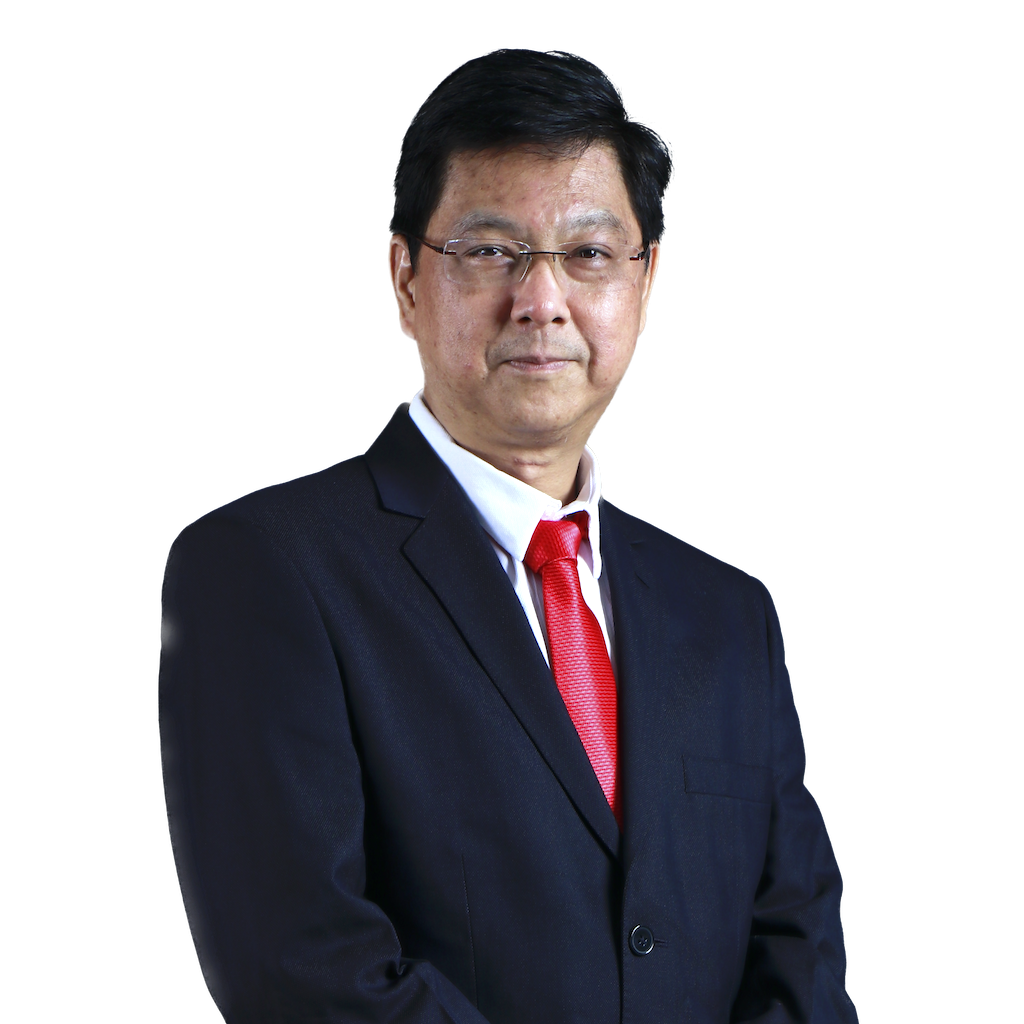
Prof. Dr. Elidjen, S.Kom., MInfoCommTech., CIP, CKM
Related Goals
17
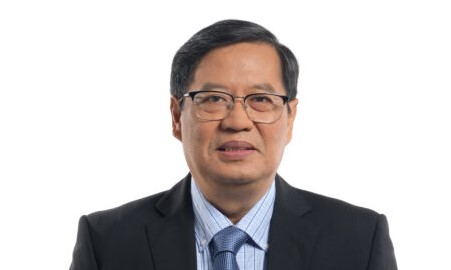
Prof. Dr. Tirta Nugraha Mursitama, Ph.D.
Related Goals
17
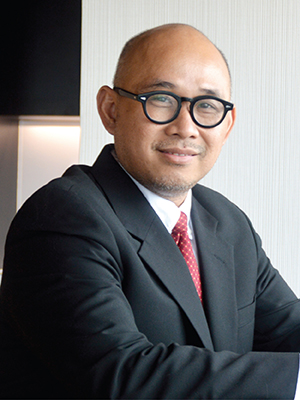
Johan, S.Kom., M.M., CDMS
Related Goals
17
Dr. Ir. Yohannes Kurniawan, S.Kom., S.E., MMSI.
Related Goals
17
Prof. Dr. Ir. Harjanto Prabowo, M.M.
Related Goals
17
Dr. Nelly, S. Kom., M.M., CSCA,
Related Goals
17
Ubaidillah Nugraha, M.Ec., M.P.M.
Related Goals
Dr. Suryadiputra Liawatimena, S.Kom., Pgdip.App.Sci.
Related Goals
Dr. Ridho Bramulya Ikhsan, S.E., M.M
Related Goals


BINUS University collaborates with non-governmental organisations (NGOs) and non-profit organisations to address social, educational, and environmental challenges through student volunteering programmes, research collaborations, and the development and delivery of educational resources. In 2025, these collaborations connected students, academics, NGO partners, and communities through social innovation initiatives, sustainability research, community engagement, and educational programmes.

1. Student Volunteering Programmes

BINUS University facilitates student engagement with NGOs through programmes that encourage active participation in addressing community needs. One example is the BBS Social Innovation Camp, conducted in collaboration with Indorelawan, ISCO Foundation, Kelasekitar, and Komunitas Jendela Jakarta. Through this initiative, students worked with NGO partners to identify community needs and challenges and develop proposed interventions using the Design Thinking approach. The programme provided students with practical experience in social innovation and community engagement while supporting NGO-led community development initiatives.

Another example is the Empowering Expo: Gen Z for Impact, held on 29–31 October 2025 at BINUS @Alam Sutera. Organised through Teach For Indonesia (TFI) and the Student Support Office (SSO) BINUS @Alam Sutera, the event brought students together with six NGO participants: Yayasan Hati Suci, Red Nose Foundation, Yayasan Teman Baik, Bagi Dunia, PKBM Ekatapadi, and Global Peace Foundation. Through exhibition booths and direct discussions with NGO representatives, students learned about social programmes and explored opportunities for collaboration, volunteering, and internships. The event provided a platform for students to engage with organisations working in education, humanitarian support, and community development.
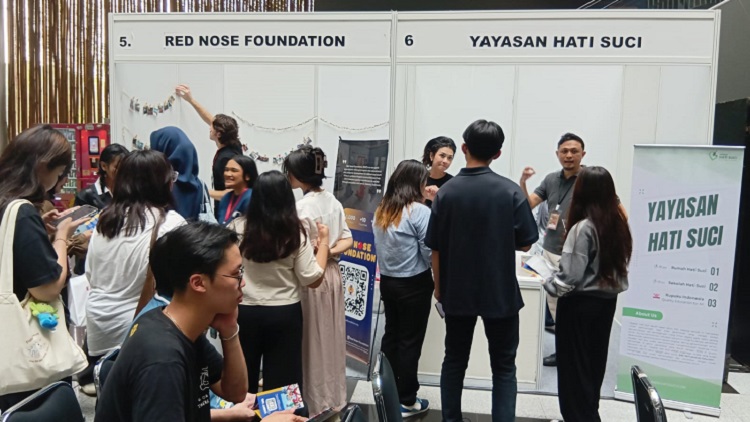
Binus Alam Sutera gelar Teach For Indonesia (TFI) Empowering Expo 2025, pameran yang mengusung semangat kolaborasi dan pengabdian masyarakat. (Foto: Robby Kurniawan/Aktual Tangerang)

2. Research Programmes

BINUS University also engages in research activities involving researchers affiliated with non-profit research institutions to generate knowledge relevant to sustainability and responsible business practices. One example is the 2025 research article entitled The Impact of ESG Factors on Investment Decisions: Exploring the Interplay between Sustainability Reporting, Corporate Governance, and Financial Performance, published in the Journal of Ecohumanism.

The publication includes researchers affiliated with BINUS University and Indonesia Palm Oil Strategic Studies (IPOSS), an organisation involved in palm oil research and policy studies. The research examines environmental, social, and governance (ESG) factors, sustainability reporting, corporate governance, and financial performance. Its findings contribute to discussions on sustainable business practices, corporate accountability, and responsible investment.

3. Development and Delivery of Educational Resources

BINUS University collaborates with NGOs to support educational access and improve learning opportunities for underserved communities. In 2025, BINUS worked with the ISCO Foundation through a community engagement programme supporting children from urban poor communities. The collaboration included assistance, training, and evaluation for ISCO’s learning programmes, helping strengthen the delivery of educational support through learning centres and develop children’s academic and non-academic skills.

BINUS University also collaborated with Yayasan Buddha Tzu Chi through an Environmental Education and Waste-Sorting Programme held on 7 February 2025. Involving Teach For Indonesia, Tzu Chi, and the BINUS Student Support Office, the programme combined student engagement with educational activities on waste management, waste sorting, and the environmental impacts of waste. Through practical learning and community participation, the initiative helped raise environmental awareness and encourage responsible waste-management practices.

These initiatives demonstrate BINUS University’s engagement with NGOs and non-profit organisations through student volunteering, research activities, and educational programmes. By connecting academic expertise and student participation with the work of external organisations, BINUS supports community development, knowledge sharing, educational access, and environmental awareness.
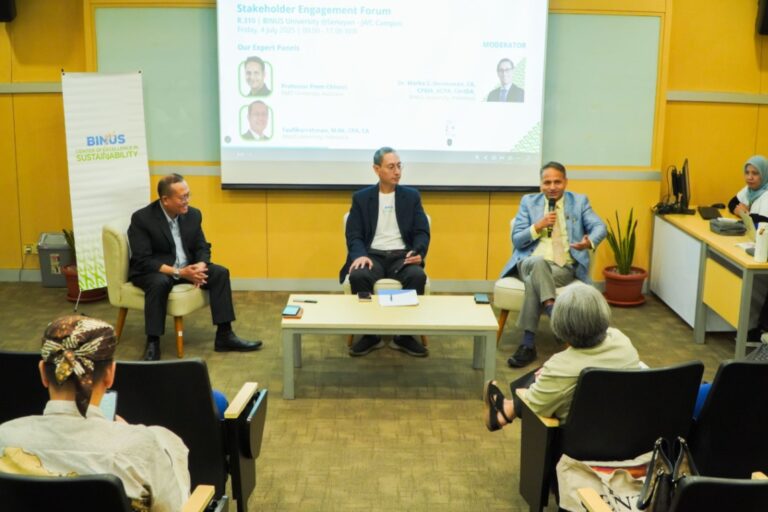
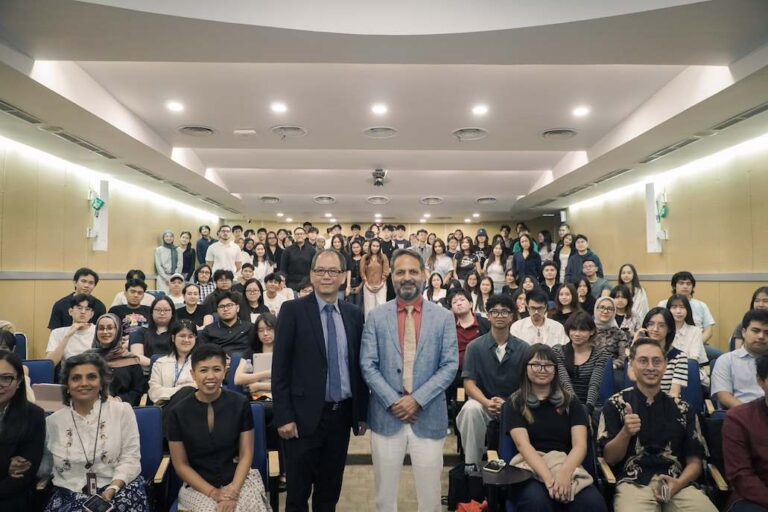
BINUS University, through the BINUS Center of Excellence in Sustainability (BIC-SUS), collaborates with RMIT University, Australia, to review international sustainability practices, conduct comparative research, and adapt international frameworks to the Indonesian context. In 2025, this collaboration focused on sustainable procurement, environmental, social, and governance (ESG) practices, sustainability reporting, and Indonesia’s transition towards a low-carbon economy.

The collaboration combines international academic expertise, research, and stakeholder engagement to examine how sustainability frameworks and practices implemented internationally can be adapted to Indonesia’s business environment, regulatory framework, and institutional needs. The key activities include:

  • International Knowledge Exchange and Benchmarking

On 4 July 2025, BIC-SUS hosted a Stakeholder Engagement Forum featuring Professor Prem Chhetri from RMIT University. The forum provided a platform for academic and stakeholder discussions on sustainable business practices and the integration of sustainability into institutional strategies. It enabled BINUS to review international approaches and consider their relevance to Indonesian institutions and businesses.

  • Adaptation of the Sustainable Procurement Disclosure Index (SPDI)

A central activity of the collaboration is the adaptation of the Sustainable Procurement Disclosure Index (SPDI), a framework developed through RMIT research to assess corporate sustainable procurement disclosures. Originally launched in Australia, the framework provides a basis for evaluating transparency in corporate procurement practices.

To support the development of SPDI in Indonesia, Professor Prem Chhetri has begun collaborating with two BINUS University academics: Professor Yanthi R. L. Hutagaol, Head of BIC-SUS, with expertise in finance, and Dr. Marko S. Hermawan, a BIC-SUS member and Head of the International Business Management Program, with expertise in accounting. Together, they aim to adapt the SPDI framework to Indonesia’s business practices and regulatory environment.

This work illustrates how an international research framework can be reviewed and contextualised for application in another country, with the aim of strengthening transparency, accountability, and sustainable procurement practices among Indonesian businesses

  • Comparative Research on ESG and the Low-Carbon Transition

The collaboration also encompasses research and knowledge exchange on ESG frameworks, sustainability reporting, and Indonesia’s transition towards a low-carbon economy. Discussions have examined energy-transition targets, regulatory challenges, data availability, and institutional readiness, drawing on international perspectives, including Australia’s experience.

By connecting academic research with industry and policy stakeholders, these activities help identify challenges in implementing sustainability practices and inform the development of recommendations suited to Indonesia’s business and regulatory context.

Overall, the BINUS–RMIT collaboration demonstrates how international collaboration, comparative research, and knowledge exchange can support the review and adaptation of sustainability best practices. Through benchmarking, the contextualisation of international frameworks, and research-informed stakeholder engagement, BINUS works with RMIT to explore practical approaches to sustainability that respond to Indonesia’s specific needs.

BINUS University initiates and participates in cross-sectoral dialogue by bringing together stakeholders from academia, government, NGOs, industry, researchers, practitioners, and local communities to discuss sustainability challenges and explore collaborative solutions. In 2025, BINUS engaged in scientific conferences, multi-stakeholder initiatives, community engagement activities, and international forums addressing sustainable development, environmental challenges, innovation, and community empowerment.

1. International Conference on Community Development (ICCD) 2025

BINUS University co-organised the 7th International Conference on Community Development (ICCD) 2025 in collaboration with Universitas Mercu Buana, Universitas Sahid, Universitas Budi Luhur, and Universitas Prof. Dr. Moestopo (Beragama). Held on 14 October 2025, the conference adopted the theme “Leveraging Digital Technologies and Innovative Products for Sustainable Communities.”

The conference brought together academics, researchers, and practitioners to exchange knowledge and discuss how digital technologies and innovative solutions can support sustainable community development. The event also featured a keynote address by Indonesia’s Coordinating Minister for Community Empowerment, Dr. A. Muhaimin Iskandar, alongside international academic speakers.

BINUS contributed 16 community engagement papers, demonstrating how academic research and community-based initiatives can inform practical approaches to social challenges. Through collaboration among universities and engagement with government and academic stakeholders, ICCD 2025 provided a platform for interdisciplinary dialogue and the exchange of ideas on sustainable community development.

2. ICOBAR–FIDI Joint Scientific Forum 2025

BINUS University organised the ICOBAR–FIDI Joint Scientific Forum 2025 in collaboration with the Ikatan Ilmuwan Indonesia Internasional. The forum brought together researchers, academics, innovators, and members of the international scientific community to exchange knowledge and discuss global challenges, environmental resilience, innovation, and sustainable development.

Through scientific presentations and interdisciplinary discussions, the forum facilitated knowledge exchange across research fields and encouraged collaboration in addressing complex sustainability challenges.

3. Sustainable Island Development Multi-Stakeholder Dialogue

BINUS participated in a multi-stakeholder dialogue on sustainable island development, involving government institutions, academics, youth, entrepreneurs, and local communities. The dialogue addressed interconnected issues such as sustainable tourism, environmental conservation, education, women’s empowerment, digital innovation, and local economic development.

By bringing together stakeholders with different areas of expertise and responsibilities, the initiative provided a platform to exchange perspectives, identify local challenges, and discuss collaborative approaches to sustainable island development.

4. Empowering Expo: Gen Z for Impact

Binus Alam Sutera gelar Teach For Indonesia (TFI) Empowering Expo 2025, pameran yang mengusung semangat kolaborasi dan pengabdian masyarakat. (Foto: Robby Kurniawan/Aktual Tangerang)

BINUS University facilitated engagement between students and NGO partners through the Empowering Expo: Gen Z for Impact, held on 29–31 October 2025. Organised through Teach For Indonesia (TFI) and the Student Support Office (SSO) BINUS @Alam Sutera, the event featured NGO exhibitions and sharing sessions covering education, environmental sustainability, health, community empowerment, volunteering, and social impact.

The participating organisations included Yayasan Hati Suci, Red Nose Foundation, Yayasan Teman Baik, Bagi Dunia, PKBM Ekatapadi, and Global Peace Foundation. Through direct interaction with NGO representatives, students learned about community initiatives, discussed social and environmental challenges, and explored opportunities to contribute through volunteering and collaboration.

5. THE Global Sustainable Development Congress 2025

BINUS University participated in the THE Global Sustainable Development Congress 2025, an international forum focused on advancing sustainable development through higher education and cross-sectoral collaboration. The congress provided opportunities to engage with perspectives from universities, policymakers, government representatives, NGOs, and industry on global sustainability challenges and approaches to advancing the SDGs.

Through its participation, BINUS had the opportunity to exchange knowledge, learn from international sustainability initiatives, and explore approaches that could inform its research, education, and institutional sustainability activities.

Overall, these activities demonstrate BINUS University’s engagement in cross-sectoral dialogue through collaborative conferences, scientific forums, multi-stakeholder initiatives, direct engagement with NGOs, and participation in international sustainability events. By connecting stakeholders across different sectors, BINUS supports knowledge exchange, collaborative problem-solving, and the development of approaches to sustainability challenges that reflect diverse perspectives and community needs.

BINUS University participates in international collaboration involving sustainability data analysis, measurement frameworks, and comparative assessment. Through the BINUS Center of Excellence in Sustainability (BIC-SUS), BINUS collaborates with RMIT University, Australia, on sustainability research and the development and adaptation of methods for assessing corporate sustainability disclosures and sustainable procurement practices.

This collaboration contributes to sustainability-related data measurement by examining how corporate sustainability information can be assessed systematically, how reporting gaps can be identified, and how business practices can be compared against international benchmarks. These activities provide evidence that can help identify areas for improvement in sustainable business practices and support broader sustainability objectives.

1. BINUS–RMIT International Research and Collaboration

BIC-SUS collaborates with RMIT University on sustainability research, ESG measurement, and sustainable procurement. Through academic collaboration and stakeholder engagement, the institutions have examined sustainability indicators, corporate disclosure practices, data availability, and challenges associated with Indonesia’s transition towards a low-carbon economy.

These discussions have addressed the alignment of ESG frameworks with energy-transition targets, sustainability reporting, regulatory requirements, and the availability of reliable data. This work highlights the importance of consistent indicators and comparable information in assessing sustainability-related business practices and informing evidence-based decisions.

2. Sustainable Procurement Disclosure Index (SPDI)

A key measurement initiative associated with the BINUS–RMIT collaboration is the Sustainable Procurement Disclosure Index (SPDI), a framework developed through RMIT research and initially launched in Australia in 2023.

To support the development of SPDI in Indonesia, Professor Prem Chhetri of RMIT has begun collaborating with two BINUS University academics: Professor Yanthi R. L. Hutagaol, Head of BIC-SUS, with expertise in finance, and Dr. Marko S. Hermawan, a BIC-SUS member and Head of the International Business Management Program, with expertise in accounting. Their collaboration aims to adapt the SPDI framework to Indonesia’s business practices and regulatory environment.

SPDI provides a structured approach to measuring corporate disclosures on sustainable procurement. Specifically, it supports the assessment of the completeness of reported information, the identification of disclosure gaps, and comparisons of sustainable procurement disclosures across companies. Adapting the framework to Indonesia also provides a basis for comparing local corporate reporting practices with international approaches while taking local regulatory and business conditions into account.

These measurements are relevant to sustainable development because they help assess the transparency of corporate procurement practices and identify opportunities to improve responsible sourcing and sustainability reporting.

3. SPDI-AI: AI-Driven ESG Data Analysis

Complementing the SPDI framework, BIC-SUS has introduced SPDI-AI as an AI-driven approach to analysing corporate sustainability disclosures. The system uses machine learning, natural language processing (NLP), and data analytics to process information contained in sustainability reports and related corporate disclosures.

Its intended measurement capabilities include:

  • Data extraction: identifying relevant sustainability and ESG information in corporate reports.
  • Disclosure assessment: evaluating the presence and completeness of information relating to sustainable procurement and ESG practices.
  • Scoring and benchmarking: supporting the assessment and comparison of corporate disclosures across companies and sectors.
  • Disclosure gap analysis: identifying missing, incomplete, or insufficiently reported information.
  • Comparative analysis: supporting comparisons with relevant international benchmarks.

These methods can make sustainability disclosure assessment more systematic and help researchers identify areas where corporate reporting and transparency could improve. SPDI-AI complements the broader research agenda by supporting data analysis, although its development should be distinguished from the BINUS–RMIT collaboration on SPDI unless joint development is explicitly documented.

Overall, BINUS University’s collaboration with RMIT and its related sustainability measurement initiatives contribute to the systematic assessment and comparison of corporate sustainability data. Through the adaptation of SPDI and the use of AI-driven disclosure analysis, BINUS supports the evaluation of sustainable procurement practices, the identification of reporting gaps, and comparisons with international benchmarks. These activities contribute to the broader SDG agenda by strengthening the evidence base for more transparent and responsible business practices. The measures focus on corporate sustainability disclosures rather than directly measuring all SDG indicators.

BINUS University contributes to sustainability-related policy development through direct engagement with government institutions, regional stakeholders, and non-governmental organisations (NGOs). Through academic expertise, research, stakeholder consultations, and community engagement, BINUS supports the identification of societal and institutional challenges, the development of evidence-based strategies, and the formulation of practical recommendations. In 2025, these contributions included national AI policy development, sustainability policy research, strategic capacity building for NGOs, and community-based problem identification.

1. National AI Strategy and Roadmap – Ministry of Communication and Digital Affairs (Komdigi)

In 2025, BINUS University contributed directly to Indonesia’s national AI policy development through its participation in discussions and the national working group responsible for preparing the National AI Roadmap and Ethical AI Guidelines under the Ministry of Communication and Digital Affairs (Komdigi).

On 17 April 2025, Professor Juneman Abraham represented BINUS in a national discussion on Indonesia’s AI strategy and roadmap. The discussion addressed AI research priorities, regulatory needs, governance frameworks, and regulatory sandbox models for emerging technologies.

Subsequently, Ir. Hendy Risdianto Wijaya, S.T., M.T., Ph.D., and Dr. Ir. Indrajani, S.Kom., M.M. represented BINUS in the national working group tasked with developing the White Paper on the National AI Roadmap and the proposed Ethical AI Guidelines.

Through this involvement, BINUS contributed academic perspectives to the formulation of national strategies and governance approaches for the responsible development and use of AI. The process demonstrates direct university participation in identifying emerging technological challenges and informing policy development alongside government, industry, and other stakeholders.

2. BIC-SUS–RMIT Collaboration: Sustainability Policy Research and Recommendations

Through the BINUS Center of Excellence in Sustainability (BIC-SUS), BINUS University collaborated with RMIT University, Australia, on research and policy engagement concerning ESG integration, sustainable procurement, and Indonesia’s transition towards a low-carbon economy.

In October 2025, BIC-SUS and RMIT held a multi-stakeholder roundtable involving academics, industry representatives, and policy stakeholders. Discussions examined Indonesia’s energy-transition readiness, the alignment of ESG frameworks with national targets, sustainability disclosures, regulatory gaps, data availability, and institutional readiness.

The collaboration produced a Policy Brief on Energy Transition and ESG Integration, which provides recommendations for policymakers on strengthening ESG governance, improving transparency in corporate disclosures and sustainable procurement, and aligning business practices with Indonesia’s energy-transition priorities. The work also draws on international sustainability frameworks and comparative perspectives to inform recommendations relevant to Indonesia.

This initiative demonstrates how BINUS connects research with policy discussions and stakeholder perspectives to identify implementation challenges and develop evidence-based recommendations for sustainability policy and practice.

3. Strategic Collaboration with SurfAid Indonesia – NGO Capacity Building and Implementation Planning

BINUS University collaborated with SurfAid Indonesia, a non-profit organisation working with remote communities, through the Strategic Business Transformation Workshop: From Vision to Execution, held in Bali on 4 August 2025.

The initiative involved organisational diagnosis, focus-group discussions, capacity-building workshops, prototyping, coaching, and evaluation. BINUS academics worked with SurfAid representatives and local government stakeholders to identify organisational and implementation challenges, particularly the need for sustainable funding and stronger partnerships with public institutions.

The collaboration produced practical planning tools, including a Business Model Canvas, Value Proposition Canvas, strategic plans, project proposals for government contracting, and Key Performance Indicators (KPIs) to measure progress and support implementation.

By strengthening SurfAid’s strategic planning and performance measurement capabilities, BINUS helped the organisation develop a more structured approach to implementing and evaluating its community programmes and exploring partnerships with government institutions.

4. BBS Social Innovation Camp – NGO Collaboration and Community Problem Identification

BINUS Business School, together with Teach For Indonesia and Indorelawan, organised the BBS Social Innovation Camp on 19 July 2025. The initiative involved NGO partners including ISCO Foundation, Kelasekitar, and Komunitas Jendela Jakarta.

Students engaged directly with NGO representatives to understand community needs, identify operational and social challenges, and develop proposed interventions using the Design Thinking approach. The process involved field observations, discussions with NGO partners, and presentations of proposed solutions.

Although the programme primarily focused on community engagement rather than formal government policy formulation, it demonstrates how BINUS supports the identification of social problems and the development of practical, community-informed interventions in collaboration with NGOs.

Overall, BINUS University’s engagement with government institutions and NGOs demonstrates several complementary contributions to sustainability-related policy and strategy development. These include direct participation in national policy working groups, research-based policy recommendations, strategic planning and performance measurement for NGOs, and collaborative identification of community challenges. Together, these activities connect academic expertise with government priorities and practical implementation needs.

Education for SDGs in the Wider Community

BINUS University extends Education for SDGs beyond its enrolled students through dedicated educational outreach activities for alumni, local communities, and displaced people and refugees. These activities provide structured learning, tutoring, mentoring, professional knowledge-sharing, and practical skills development to beneficiaries outside the formal university population.

For Alumni, the BBS Social Innovation Camp 2025 involved BINUS alumni as coaches who shared professional knowledge and experience with participants developing solutions for NGOs and community challenges. Through coaching and mentoring, alumni transferred expertise in social innovation and community development to external participants and organisations. BINUS also conducts alumni knowledge-sharing activities covering areas such as branding, business growth, entrepreneurship, and funding.

For Local Communities, BINUS provides direct educational outreach through Ruang Les (RULES) 2025, conducted by the Teach For Indonesia Student Community. The programme delivered five English-learning sessions on 23, 24, and 31 May and 5 and 7 June 2025 to approximately 20–40 children from Yayasan Yatim Piatu Ibnu Sabil. It involved 20 committee members and 9 volunteers and used active learning, exploration, critical thinking, and problem-solving. BINUS also conducted the Binus Innovation Camp 2025, where students and faculty worked with NGOs and community beneficiaries to identify challenges and develop solutions related to education, literacy, environmental sustainability, and urban empowerment.

For Displaced People, BINUS’s institutional Education for SDGs in the Wider Community framework explicitly identifies displaced individuals as a wider-community group reached through educational outreach, including tutoring and educational support through Teach For Indonesia. This demonstrates that BINUS’s outreach framework extends beyond conventional local-community beneficiaries to groups affected by displacement. In 2025, BINUS also delivered structured educational training to 78 Indonesian migrant workers in Singapore, covering business development and financial management, while BINUS Online provided Business Analytics training to support business development and data-based decision-making. These activities provide additional evidence of BINUS extending education to communities living and working outside the university’s immediate environment.

These initiatives demonstrate a dedicated institutional approach to Education for SDGs in the wider community. BINUS extends education beyond its formal student population through direct tutoring, community-based learning, alumni mentoring, professional training, and practical skills development, with identifiable beneficiaries, structured learning activities, and documented engagement across the three wider-community groups identified in the indicator.

BINUS University demonstrates a clear institutional commitment to advancing sustainability and the United Nations Sustainable Development Goals (SDGs) through its academic offerings. This commitment is reflected in the availability of dedicated degree programs, a university-wide minor, and a range of elective and integrated courses that embed sustainability principles across disciplines. These initiatives ensure that students from diverse study areas gain the knowledge, skills, and mindset to contribute meaningfully to sustainable development.

Minor in Sustainable Development

BINUS University offers a university-wide Minor in Sustainable Development, open to students from all disciplines. The program equips them with a strong foundation in sustainability principles and the UN Sustainable Development Goals (SDGs). It emphasizes interdisciplinary collaboration, critical thinking, and practical application to address local and global sustainability challenges.

Full Degree Programs with Sustainability Focus

Several BINUS degree programs integrate sustainability as a core element of their curriculum:

  • Master of Marine Digital Technology combines environmental science, marine conservation, and digital technology. Core courses such as Habitat Restoration and Conservation, Climate Change Mitigation, and Advanced Marine Pollution Management Systems and Ecotoxicology train students to develop technological solutions for marine and environmental sustainability.
  • Product Design Engineering (PDE) at BINUS ASO School of Engineering embeds sustainability and human-centered innovation throughout its curriculum. The program aligns with Making Indonesia 4.0 and Society 5.0, promoting eco-conscious product design through the principles of Breakthrough, Agility, Sustainability, and Empowerment.

Elective and Integrated Courses across Disciplines

Sustainability and SDG-related topics are also embedded across BINUS’ courses in various study areas:

  • Food Technology aligns with SDG 2 (Zero Hunger) and SDG 3 (Good Health and Well-being), focusing on sustainable food systems and safety.
  • Tourism offers courses such as Ecotourism and Sustainable Development and Field Project of Ecotourism & Sustainable Development, emphasizing responsible and sustainable tourism practices.
  • Other departments offer electives covering themes like climate change, renewable energy, and social equity.

Currently, more than 20% of BINUS’ active courses across all disciplines incorporate SDG-related content. Some are directly aligned with specific goals, while others adopt an integrative approach that embeds sustainability principles within broader subjects—building students’ awareness of environmental, social, and economic issues in real-world contexts.

Overall, BINUS University’s academic framework reflects its strong institutional commitment to sustainability. Through dedicated degree programs, minors, and SDG-integrated courses, BINUS ensures that all students—regardless of their field of study—are equipped to drive sustainable solutions and contribute to global change.

BINUS University demonstrates a strong and proactive commitment to sustainability education by integrating the United Nations Sustainable Development Goals (SDGs) into its academic and extracurricular initiatives. The university fully supports the 17 SDGs as part of its global responsibility to reduce poverty, improve health and education, address climate change, and preserve forests and oceans through collaborative action.

To embed sustainability into learning, BINUS offers:

Minor Program in Sustainable Development: A dedicated minor program available to all eligible students, designed to equip them with knowledge and skills to contribute toward global sustainability, through courses such as Sustainable Design and Manufacture, Digital for Sustainable Development, and Introduction to Sustainable Development, regardless of their discipline.

Curriculum Integration of SDGs: Selected study programs, such as Food Technology, align directly with SDGs like Zero Hunger and Good Health and Well-Being, ensuring students encounter sustainability concepts early in their academic journey.

Beyond these programs, more than 20% of BINUS’s active courses across all disciplines incorporate SDG-related content. Some courses are directly aligned with specific SDGs—for instance, programs such as Food Technology, Psychology, and Biotechnology address goals related to Zero Hunger and Good Health and Well-Being. Others adopt an integrative approach, embedding sustainability principles within broader subjects to build students’ critical awareness of environmental, social, and economic impacts in real-world contexts.

Product Design Engineering (PDE) at BINUS ASO School of Engineering also integrates sustainability within its curriculum by prioritizing human-centered design and sustainable product development aligned with Making Indonesia 4.0 and Society 5.0. The program promotes a holistic approach built on Breakthrough, Agility, Sustainability, and Empowerment, encouraging students to innovate responsibly for long-term impact.

Entrepreneurship and Ideation-Based Learning: Through courses like Entrepreneurship and Product Design, students develop innovations addressing SDG challenges across categories such as Technopreneurship, Creativepreneurship, Sociopreneurship, and Foodpreneurship. These ideation activities—ranging from brainstorming to prototyping—foster practical, impactful solutions for global issues.

In addition, BINUS Business School has introduced the Sustainability Leadership Program 2024, which empowers current and future leaders to understand sustainability trends, enhance leadership skills, and drive meaningful change within their organizations. This program reflects the university’s vision of preparing leaders capable of navigating global risks while promoting sustainable growth.

Together, these initiatives highlight BINUS University’s comprehensive approach to sustainability: from classroom learning and leadership development to innovation and entrepreneurship. By mainstreaming sustainability education and fostering global collaboration, BINUS ensures its students and graduates are ready to take part in solving the world’s most pressing challenges.