PEACE JUSTICE AND STRONG INSTITUTIONS
Promote peaceful and inclusive societies for sustainable development, provide access to justice for all and build effective, accountable and inclusive institutions at all levels.
492
ACTION GOALS
465
PUBLICATIONS

EXPERTS

Ubaidillah Nugraha, M.Ec., M.P.M.
Related Goals
Dr. Ridho Bramulya Ikhsan, S.E., M.M
Related Goals


BINUS University upholds academic freedom as a core institutional value, ensuring that members of its academic community can pursue teaching and research independently and responsibly.

This commitment is formally stated in Rector’s Decree No. 0136A (Points B and C) and Rector’s Decree No. 001 (Chapter 3, Article 6, Points e and f), which provide the institutional foundation for academic freedom and autonomy.

Under Rector’s Decree No. 0136A, BINUS guarantees responsible academic freedom for all members of the academic community (civitas academica) in teaching, research, community service, and self-development activities. This includes the freedom to determine research topics, methods, and dissemination of results, while upholding ethical and institutional standards.

Rector’s Decree No. 001 (Chapter 3, Article 6, Points e and f) further supports this commitment through provisions related to academic freedom and autonomy. Together, these regulations provide a framework for academics to conduct teaching, research, and other scholarly activities responsibly.

This academic freedom applies to both senior and junior academics in teaching and research, supporting equal opportunities to explore innovative ideas, challenge established knowledge, and contribute to scientific, social, and educational advancement.

In practice, BINUS University supports academic freedom through various enabling structures and initiatives. For lecturers, Research Centers and Research Interest Groups (RIGs) provide platforms to develop research topics aligned with their expertise. The university also supports research mentorship, in which senior academics guide junior lecturers and students in developing research capacity, complemented by scientific writing workshops and lecturer-student matching programs across disciplines.

For students, BINUS implements the Independent Learning – Merdeka Belajar (MBKM) policy, allowing them to pursue learning experiences beyond their study programs, including internships, research, humanitarian projects, and student exchanges. Through student associations, innovation camps, and conferences, students are also encouraged to express their ideas and present research outcomes.

These policies and initiatives are communicated through the BINUS University website and official portals, reflecting the university’s commitment to academic independence as part of its broader Good University Governance principles.

BINUS University ensures that local stakeholders—including industry representatives, local government, civil society, and partner institutions—have a meaningful mechanism to participate in university decision-making. This involvement is formalized through advisory boards, partnership programs, and collaborative forums that directly influence BINUS’s academic direction, research focus, and community initiatives.

Through these advisory structures, BINUS institutionalizes stakeholder input into formal decision-making processes, ensuring that external perspectives are systematically integrated into academic and operational governance.

  1. Advisory Boards and Stakeholder Participation

The BINUS Advisory Board serves as a strategic governance platform that brings together representatives from industry, government agencies, academia, and professional associations. Each school and faculty—such as the BINUS Business School, School of Computer Science, and School of Civil Engineering—has its own Advisory Board responsible for providing guidance on academic relevance, curriculum design, graduate employability, and institutional reputation.

  1. Curriculum Development with Local Stakeholders

On 27–28 February 2025, BINUS University held a Focus Group Discussion (FGD) at BINUS Square to gather input for the development of its proposed Master of Law program, focusing on business law. The discussion involved a diverse group of stakeholders, including academics from other Indonesian universities, a representative from the Indonesian Attorney General’s Office, a former Supreme Court justice, and a representative of the Indonesian Advocates Association (PERADI), alongside BINUS academics and other participants.

These stakeholders provided academic, government, judicial, and legal professional perspectives to inform the proposed curriculum, including its structure, academic requirements, and relevant legal topics.

  1. BINUS Industry Partnership Program (BIPP)

The BINUS Industry Partnership Program (BIPP) provides an ongoing platform for collaboration and dialogue between BINUS University and local and international industry partners. During 18–22 June 2025, BIPP activities provided opportunities for the university and its partners to exchange perspectives on workforce needs, professional competencies, digital transformation, and industry requirements. Through joint discussions, curriculum alignment, and internship programs, industry partners can provide input to help align academic programs with workplace needs and contribute to curriculum development.

  1. Coordination Forum for Advancing Research and Innovation in Semarang

In January 2025, BINUS University reported its participation in the Coordination Forum for Advancing Research and Innovation in Semarang, a forum established under the Mayor of Semarang’s Decree No. 000.9.2/1007 of 2024 for the 2024–2027 term. A BINUS representative was appointed Coordinator for Community Engagement. The forum provides a mechanism for gathering public aspirations to inform research and innovation policy and communicating recommendations to the Mayor of Semarang. Through this role, BINUS participates in a collaborative process connecting community perspectives, research priorities, and local government planning.

  1. Sustainable Island Initiative

On 17–18 July 2025, BINUS University participated in the Sustainable Island Initiative in Panggang and Pramuka Islands, Jakarta. The initiative brought together government institutions, local leaders, community members, and other partners to support sustainable island development. Activities included community training, women’s entrepreneurship workshops, digital marketing and e-commerce training, and a multi-stakeholder forum. These activities provided opportunities for dialogue and collaboration on local development priorities and community-led sustainability initiatives.

  1. Research and Policy Collaboration through RTTO

Through the Research and Technology Transfer Office (RTTO), BINUS University facilitates research collaboration and knowledge exchange with external stakeholders, including government institutions, NGOs, and civil society organizations. This is an ongoing area of engagement intended to address social, economic, technological, and sustainability challenges through research and knowledge transfer. Specific examples and dates of stakeholder activities undertaken during 2025 should be added when supporting documentation is available.

  1. Collaborative Planning with External Stakeholders

On 4 December 2025, Teach For Indonesia (TFI) held a Partner Gathering at BINUS @Kemanggisan, bringing together stakeholders from NGOs, foundations, schools, communities, government institutions, and industry. The gathering provided a forum for partners to exchange knowledge and discuss strategies to strengthen programs, develop new initiatives, and address challenges in the coming year. This engagement created opportunities for cross-sector stakeholders to contribute ideas and perspectives to future program planning.

According to the BINUS Support Portal, BINUS University manages student organizations through a formal framework that outlines the procedures for establishing organizations, their rights and responsibilities, and the leadership election process. This framework enables students to express their ideas and aspirations and participate in organizational decision-making.

The 2025 Inauguration of Student Organization Leaders demonstrated the university’s formal recognition of student organizations and their leadership. The event inaugurated 65 leaders representing 24 Himpunan Mahasiswa Jurusan (HMJ) and 41 Unit Kegiatan Mahasiswa (UKM) for the 2025–2026 period. These organizations provide channels for student representation and participation in academic and non-academic activities.

Union Provides Governance Input to the University

Student organizations at BINUS University provide channels for students to express their aspirations and participate in matters related to campus life. Students can propose the establishment of new organizations, elect their leaders through established election processes, and develop their own organizational work plans and activities. Student organizations submit activity proposals and budgets for university review and approval, while retaining responsibility for implementing their programmes in accordance with the approved plans and budgets. The university monitors implementation to ensure accountability while allowing student organizations to manage their activities within the approved framework.

Student leadership is also supported by a formal leadership regeneration process involving Campus Elections and General Elections (Pemilu Kampus and Pemilu Umum). In addition, BINUS University’s Good Organization Governance (GOG) principles promote participation, transparency, accountability, and responsible organizational management.

Union Provides Support for Students

Student organizations at BINUS University consist of two main categories: Unit Kegiatan Mahasiswa (UKM) and Himpunan Mahasiswa Jurusan (HMJ). Both provide opportunities for students to develop their knowledge, skills, and personal potential beyond the classroom. Some student organizations are specifically established to support students’ learning, skill development, and personal growth.

  1. Unit Kegiatan Mahasiswa (UKM)

UKM provides a platform for students to develop their interests and talents through extracurricular activities. Examples include:

  • Bina Nusantara Computer Club (BNCC): Organizes learning and training programmes, seminars, workshops, and hackathons in information technology to help students improve their technical knowledge and practical skills.
  • BINUS English Club (BNEC): Provides English learning opportunities through TOEFL preparation, debate, public speaking, and conversation classes. It also organizes English competitions to help students improve their language and communication skills.
  • BINUS Square Student Committee (BSSC): Organizes creative and innovative activities to help students living at BINUS Square develop their soft skills and hard skills.
  1. Himpunan Mahasiswa Jurusan (HMJ)

HMJ provides a platform for students at the departmental level to connect, discuss, express their aspirations, and develop their academic and non-academic potential. Examples include:

  • Himpunan Mahasiswa Teknik Informatika (HIMTI): Supports students through its Responsi programme, which provides additional learning sessions to help them understand course materials. HIMTI also organized the HIMTI Bootcamp 2025, offering practical training in artificial intelligence and machine learning to develop students’ technical knowledge and skills.
  • Himpunan Mahasiswa Teknik Industri (HIMTRI): Supports students through its 2025 Temu Keakraban Himpunan programme, which helps new students become familiar with their academic environment, build relationships with fellow students, and learn from senior students’ experiences in university life, internships, and career preparation.

Through these activities, UKM and HMJ help students strengthen their knowledge, develop practical competencies, build social connections, and gain learning experiences beyond their regular academic programmes.

Union Provides Social Activities

BINUS student organizations also organize social and humanitarian activities that allow students to contribute directly to the community. Through volunteering, community service, and educational programmes, students help address community needs while developing empathy and social responsibility.

Examples include:

  • FAST Respond Community (FARCO): Established in 2018, FARCO focuses on first aid and emergency response. Its activities provide opportunities for students to develop emergency response skills and contribute to community safety.
  • Teach For Indonesia Student Community (TFISC): Organizes community programmes that support community development and quality of life. Its Community Development 2025 programme involved interactive activities with elderly residents at Sasana Tresna Werdha RIA Pembangunan, encouraging social interaction and community engagement.
  • HIMME: Through Social Responsibility 2025, students participated in community service at Wisma Karya Bakti orphanage. Activities included cleaning the surroundings, planting trees, and providing essential supplies.

These activities demonstrate how student organizations engage in humanitarian initiatives, environmental action, and community service. Through direct involvement, students contribute to community well-being while developing empathy, cooperation, and social responsibility.

BINUS University has established written policies and institutional procedures to systematically identify and engage with local stakeholders external to the university.
These are formally regulated under Rector’s Decree No. 0136A, which outlines BINUS’s governance framework for collaboration, inclusivity, and external partnerships. The decree sets out the responsibilities of units within the university to manage engagement processes, emphasizing collaboration with stakeholders from industry, government, NGOs, and local communities.

Specifically, Part II, Point n of Rector’s Decree No. 0136A mandates the establishment of the BINUS Collaboration Center as the coordinating body responsible for managing and evaluating institutional partnerships.
This unit plays a central role in:

  • Mapping and identifying local external stakeholders across sectors (industry, government, community organizations),

  • Facilitating engagement and partnership agreements that align with academic, research, and community development priorities, and

  • Monitoring and evaluating collaboration outcomes to ensure mutual benefit and sustainability.

These policy directives are reinforced in BINUS’s Commitment to SDGs Policy document (2023), which explicitly references Decree No. 0136A as the basis for structured collaboration and stakeholder inclusion. The policy highlights the university’s commitment to working with local partners through educational, social, and community development programs.

In practice, the procedures set out in the Decree are implemented through several institutional mechanisms, including:

  • BINUS Collaboration Center – responsible for stakeholder identification, partnership initiation, and relationship management.

  • Advisory Boards – comprising local government officials, industry representatives, and professional associations who provide input to university planning and curriculum development.

  • BINUS Industry Partnership Program (BIPP) – a structured framework for engaging local business partners to align academic outcomes with community and regional needs.

  • Teach for Indonesia (TFI) and Community Development (PKM) – programs that directly involve local communities in education, empowerment, and social innovation activities.

Through these written policies, structural mechanisms, and coordinated procedures, BINUS University ensures a systematic and accountable approach to identifying, engaging, and sustaining relationships with local external stakeholders in support of institutional and societal goals.

Bina Nusantara (BINUS) University demonstrates its strong commitment to integrity and ethical governance through the implementation of Good Organization Governance (GOG) principles as outlined in the CEO Decree on GOG Implementation and the BINUS Integrity Pact. These documents serve as the university’s formal and written commitments to prevent and combat organized crime, corruption, and bribery within its academic and administrative ecosystem.

Through its Good Organization Governance (GOG) framework, BINUS promotes transparency, accountability, and ethical conduct across all levels of management and operation. This policy regulates behavior in decision-making, ensures fairness in institutional processes, and sets standards to avoid conflicts of interest, misuse of power, or corrupt practices. The official decree defines mechanisms for monitoring compliance and maintaining institutional integrity as part of the university’s governance system.

Complementing this framework, the university enforces the BINUS Integrity Pact, a formal declaration signed by faculty, staff, and leaders, committing them to uphold honesty, reject bribery, and maintain ethical standards in every activity. This pact strengthens BINUS’s zero-tolerance stance on corruption and unethical behavior by embedding integrity as a core institutional value.

In practice, BINUS implements a whistleblowing system that enables the academic community to report violations of integrity, such as the solicitation or acceptance of gifts, conflicts of interest, or fraud. This system provides a safe and structured channel for addressing unethical practices, ensuring accountability at every level.

Additionally, through the Research Watch and Academic Integrity Policy, BINUS actively prevents and penalizes academic misconduct, including plagiarism, document falsification, collusion, and nepotism. This initiative not only maintains the credibility of research and publications but also reinforces BINUS’s ethical standards in academia.

The university’s dedication to these principles is further demonstrated in its public campaign “Jangan Nyontek!” (Don’t Cheat!), which educates students about the importance of integrity and honesty in academic life. BINUS consistently reminds its community that violations of ethical conduct—such as cheating or falsifying documents—can lead to severe consequences, including expulsion or degree revocation.

Through these integrated policies and educational initiatives, BINUS University exemplifies its institutional commitment to fostering a transparent, ethical, and corruption-free environment in alignment with international standards of good governance.

BINUS University upholds a system of elected representation, ensuring that both faculty and students have a voice in the university’s governance. The key features of the representative governance structure at BINUS University are outlined below:

  1. University Academic Senate: The elected University Academic Senate represents faculty members. It ensures that professors can share their opinions on important academic issues, such as curriculum development and policies. This involvement promotes collaboration and transparency in decision-making.
  2. Student Organizations: Students can elect leaders for various student organizations. These leaders act as representatives, voicing student needs and concerns to the university administration. By participating in these organizations, students can engage in leadership roles, organize events, and advocate for their interests.
  3. Employee Communities: BINUS University also supports employee communities to promote staff interests. For example, the Kolintang Community consists of employees who enjoy playing the Kolintang, a traditional Indonesian musical instrument. This community fosters cultural appreciation and teamwork among staff.
    Importance of Representation

These elected bodies and communities ensure that all voices are heard at BINUS University. By allowing faculty, students, and staff to express their needs and interests, the university promotes a sense of belonging and engagement.

BINUS University as a Neutral Platform for Dialogue on Political and Public Policy Issues

BINUS University provides platforms for stakeholders from different sectors to discuss political, diplomatic, security, and public policy issues. Through academic conferences, policy discussions, and collaborative workshops, BINUS brings together government representatives, academics, civil society organizations, researchers, and practitioners to exchange ideas and discuss common challenges.

These activities provide opportunities for stakeholders to share knowledge, understand different perspectives, and explore possible responses to national and international issues. BINUS University’s commitment to academic freedom and its institutional policy on anti-discrimination and anti-violence also provide a supporting framework for respectful academic engagement and interaction among people from different backgrounds.

These activities provide opportunities for stakeholders to exchange knowledge, understand different perspectives, and discuss possible responses to national and international issues.

  1. BIRFEST 2025: Discussing Diplomacy, Humanitarian Issues, and Regional Security

The BINUS International Relations Festival (BIRFEST) 2025 provided a forum for discussing current issues in international relations and diplomacy. The event featured discussions on migration, humanitarian issues, and Indo-Pacific defence and security.

The sessions involved speakers from government institutions, academia, civil society, and the defence and security research community. The discussions addressed challenges such as migrant worker protection, humanitarian concerns, regional security, and international relations.

The event also included discussions and audience questions, allowing participants to engage with the speakers and explore different perspectives on these issues. By bringing together stakeholders from different backgrounds, BIRFEST provided an opportunity to discuss public policy and international challenges in an academic setting.

Through this event, BINUS University supported the exchange of ideas between government representatives, academics, and other stakeholders on issues affecting society and international relations.

  1. CBDS–ASPI Workshop: Persuasive Technologies and National Resilience

On 13 February 2025, the Centre for Business and Diplomatic Studies (CBDS) at BINUS University collaborated with the Australian Strategic Policy Institute (ASPI) to organize an interactive workshop on Persuasive Technologies and National Resilience.

The workshop involved participants from Indonesian government agencies, academia, and civil society organizations. It explored how persuasive technologies affect cybersecurity, national resilience, critical infrastructure, and public policy.

Through presentations and discussions, participants examined the use of persuasive technologies in foreign policy and defence, as well as their implications for Indonesia. The involvement of different sectors provided opportunities to share knowledge and discuss the challenges of managing emerging technologies.

The workshop demonstrated how BINUS University, through CBDS, works with an international policy institute to bring together different perspectives on security and governance issues. It also provided a setting for government, academic, and civil society representatives to discuss challenges that require cooperation across sectors.

  1. ICOBIRD 2025: Discussing Geopolitical and Geoeconomic Challenges

BINUS University hosted the International Conference on Business, International Relations, and Diplomacy (ICOBIRD) 2025 under the theme “Geopolitical and Geoeconomic Risks: Strategies for Sustainability in an Uncertain World.”

The conference addressed global challenges related to geopolitical rivalry, economic competition, international security, environmental issues, and global governance. Its programme included panel discussions and academic sessions that explored how these challenges affect international relations and sustainability.

The conference brought together academic and professional perspectives on current global issues. Its agenda included a special panel discussion featuring representatives from academia and government, providing opportunities to discuss geopolitical and geoeconomic challenges.

In their official remarks, BINUS University leaders emphasized the importance of bringing together scholars, policymakers, industry experts, and practitioners. They encouraged participants to share ideas, examine different perspectives, challenge assumptions, and develop policy ideas through discussion and collaboration.

These messages reflect BINUS University’s intention to provide a platform where participants from different professional backgrounds can discuss complex international issues and consider possible responses.

Through ICOBIRD, BINUS University supports dialogue on political and public policy challenges and encourages cooperation between academic and professional communities.

BINUS University’s Role in Supporting Multi-Stakeholder Dialogue

BIRFEST 2025, the CBDS–ASPI workshop, and ICOBIRD 2025 show how BINUS University provides opportunities for stakeholders to discuss political, diplomatic, security, and public policy issues.

The activities involve different groups, including government representatives, academics, civil society organizations, researchers, and practitioners. Each forum focuses on different challenges, but all provide opportunities to exchange ideas and discuss issues that affect society and international relations.

Through these initiatives, BINUS University contributes to dialogue between different sectors and supports a better understanding of complex national and global challenges. These activities demonstrate the university’s role in providing a platform for discussion, knowledge sharing, and collaboration on public policy issues.

BINUS University’s Engagement in Government Research and Policy Development in 2025

In 2025, BINUS University engaged with government institutions in initiatives connecting academic expertise, research, and public policy development. Three initiatives involved the University’s Vice Rector for Research and Technology Transfer, reflecting institutional engagement in addressing government priorities. These initiatives covered national AI policy, housing data and urban planning, and tourism development, complemented by collaborative research on tuberculosis incidence in West Java.

  1. Contribution to Indonesia’s National AI Strategy and Roadmap

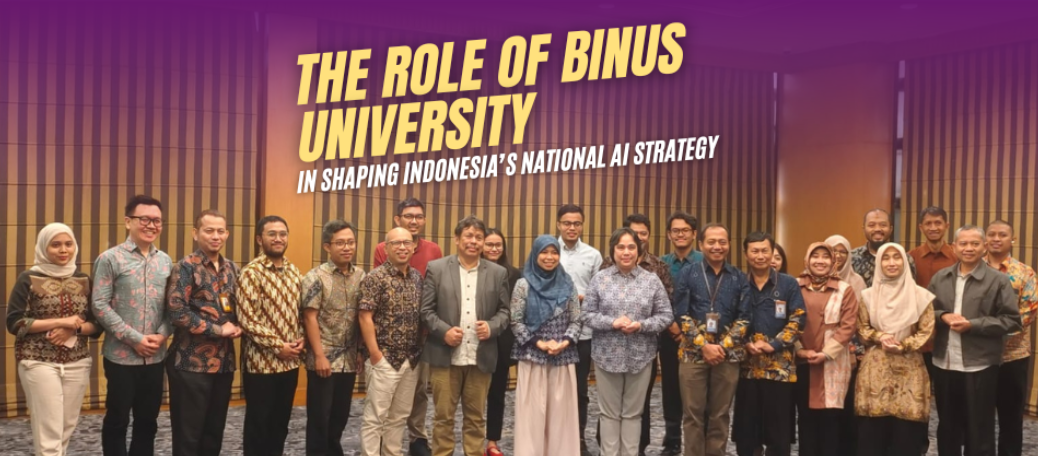
On 17 April 2025, Prof. Dr. Juneman Abraham, Vice Rector for Research and Technology Transfer, represented BINUS University in a national discussion organized by the Ministry of Communication and Digital Affairs (Komdigi). The discussion addressed Indonesia’s AI research priorities, governance frameworks, regulatory needs, and responsible AI development. BINUS contributed an academic perspective on how research and innovation can support national AI policy, including the need for appropriate governance and regulatory approaches. This engagement provided an opportunity to connect university research expertise with the government’s efforts to develop a national framework for AI.

  1. Housing Database Development with the Jakarta Provincial Government

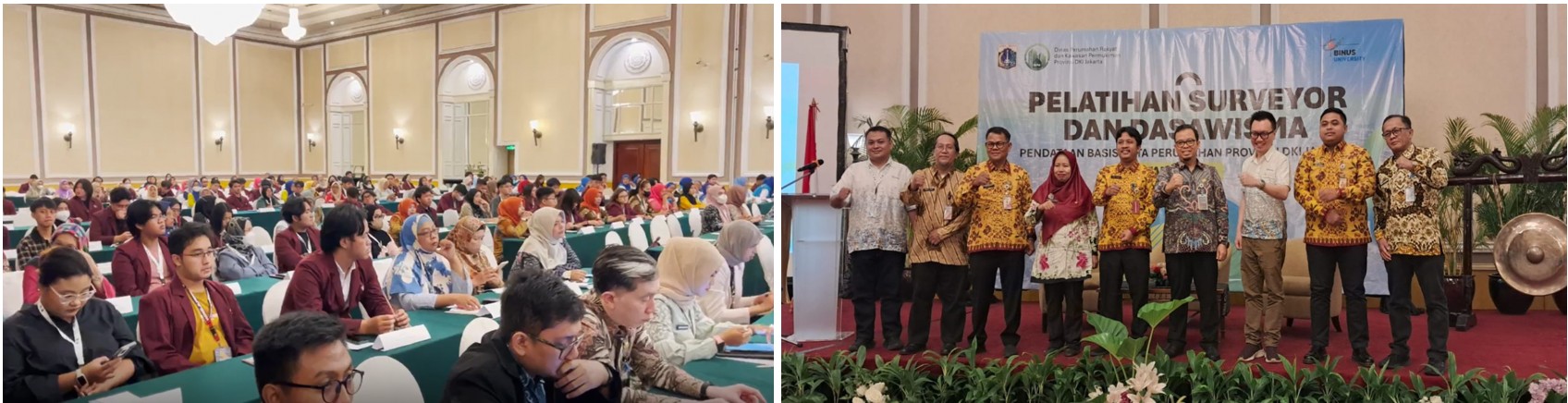
BINUS University collaborated with the Jakarta Provincial Department of Housing and Settlement Areas (DPRKP) and other universities in the 2025 Housing Database Collection Program. As part of the research data collection process, surveyors and community participants received training on housing data collection methods, building condition assessment, and the use of digital mapping tools. BINUS also involved students as surveyors in field data collection across seven urban villages, supported by geospatial mapping and building analysis. These activities contributed to the development of a more comprehensive housing database intended to support housing assessments, urban planning, and government decision-making on housing and settlement development. Prof. Juneman Abraham, BINUS University’s Vice Rector for Research and Technology Transfer, delivered the opening remarks at the program’s launch on 6 March 2025, reflecting the University’s institutional engagement in this government collaboration.

  1. Research Collaboration with the Ministry of Tourism

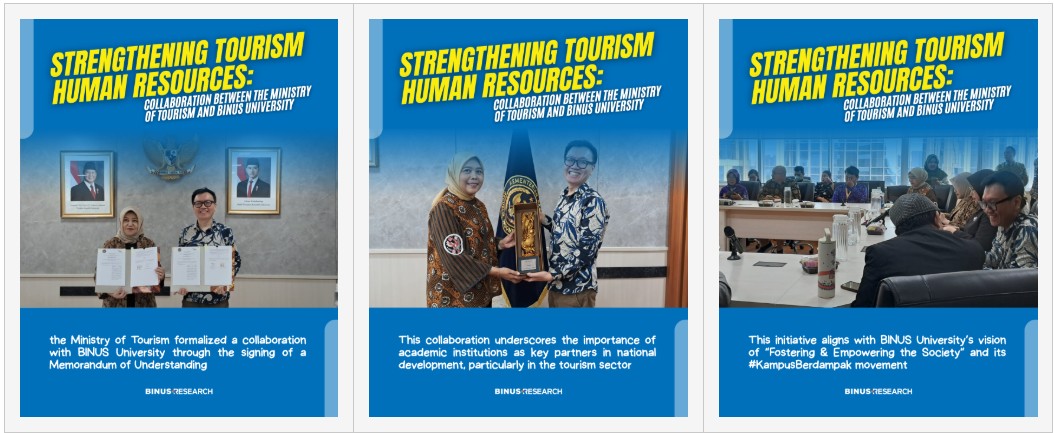
On 25 April 2025, BINUS University and the Ministry of Tourism formalized a strategic collaboration to strengthen tourism human resources and promote research, digital transformation, and community empowerment. Prof. Juneman Abraham represented BINUS University at the signing of the memorandum of understanding. The collaboration established a framework for combining academic expertise with government priorities in tourism development. Its research-oriented focus provides a basis for future studies and recommendations that may support tourism policy, workforce development, and the sector’s digital transformation.

  1. Tuberculosis Research Supporting Regional Public Health Policy

BINUS-affiliated researchers contributed to the 2025 publication “Multiscale Geographically and Temporally Weighted Regression with LASSO and Adaptive LASSO for Tuberculosis Incidence Mapping in West Java.” The research involved affiliations with BINUS University, the National Research and Innovation Agency (BRIN), and a regional government research and development agency. Using spatial and spatiotemporal modelling, the study examined tuberculosis incidence across districts and cities in West Java using data from 2019–2022. The analysis offers evidence on the geographical and temporal patterns of tuberculosis, helping identify areas that may require greater attention. Its findings have potential value for local governments in prioritizing public health interventions and developing more targeted disease-control strategies.

Overall Contribution

These initiatives demonstrate BINUS University’s engagement with government institutions through policy dialogue, data-driven planning, strategic research collaboration, and research addressing regional public health challenges. The participation of the Vice Rector for Research and Technology Transfer in three initiatives highlights institutional involvement in connecting academic expertise with government priorities. Meanwhile, the tuberculosis study provides a concrete example of completed research with potential policy applications. Together, these activities illustrate BINUS University’s contribution to research-informed policymaking and public-sector development in Indonesia.

BINUS University Strengthens Legal and Government Capacity through Professional Training

BINUS University contributes to strengthening legal and government capacity by sharing academic expertise through professional training and capacity-building activities for government personnel and judicial officers. Throughout 2025, BINUS faculty members participated in several initiatives covering legal reasoning, legal advocacy, legal protection, and regional regulation enforcement.

Legal Reasoning Training for Customs and Excise Legal Auditors

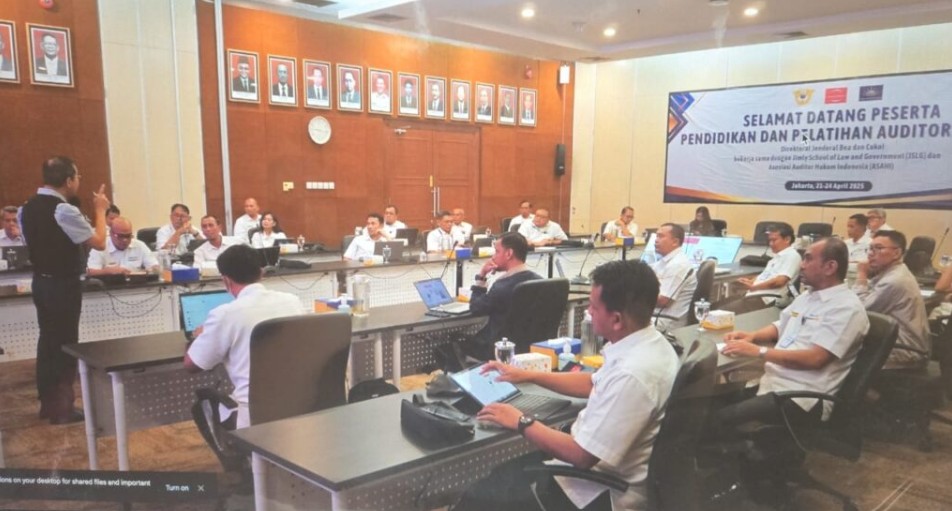
In April 2025, Prof. Shidarta contributed to legal reasoning training for legal auditors at the Directorate General of Customs and Excise. The training focused on applying legal reasoning to professional responsibilities and strengthening participants’ ability to analyze legal issues.

Legal Advocacy and Regional Regulation Enforcement Training for Bekasi City Civil Service Police Officers

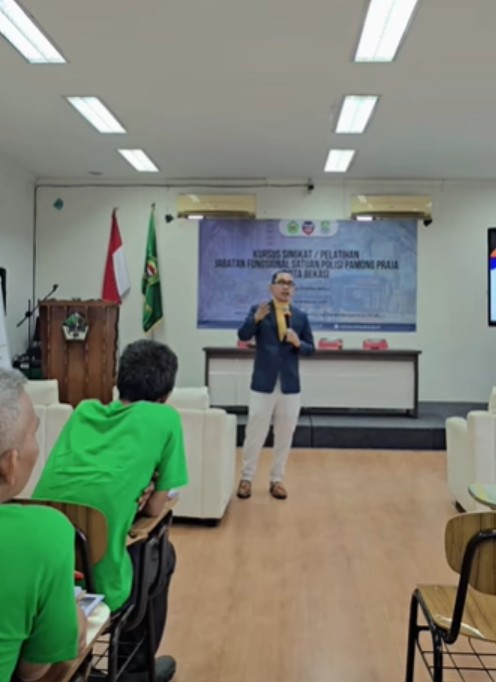
In December 2025, Dr. Muhammad Reza Syariffudin Zaki contributed to professional training for functional officers of the Bekasi City Civil Service Police Unit (Satpol PP). The activity addressed legal advocacy and innovations in the implementation and enforcement of regional regulations, supporting the development of competencies relevant to local government responsibilities.

Legal Reasoning Training for Judges from South Kalimantan and East Kalimantan

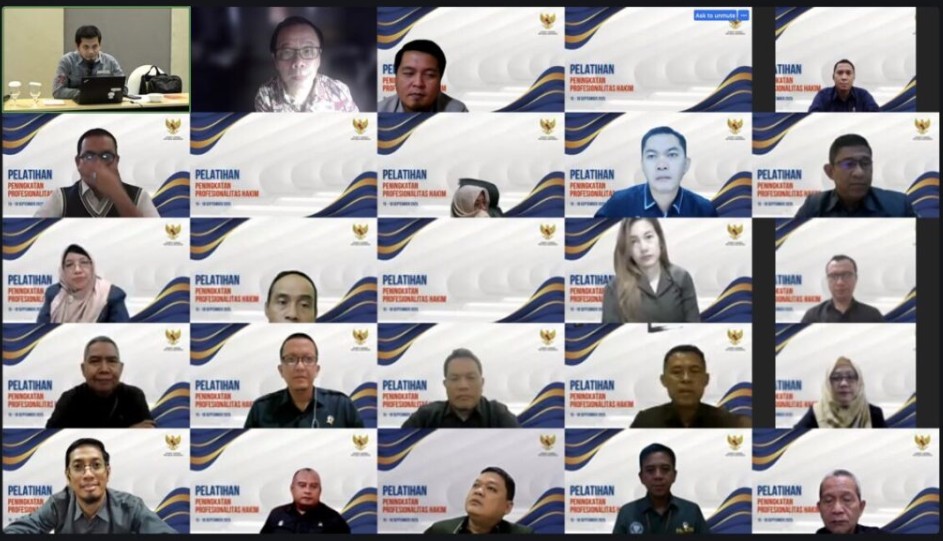
In September 2025, Prof. Shidarta served as a facilitator in a training program organized by the Judicial Commission of the Republic of Indonesia for 30 judges from South Kalimantan and East Kalimantan. The program covered legal reasoning and legal discovery through 10 instructional hours, supporting judges in strengthening their understanding of legal interpretation and judicial decision-making.

Legal Advocacy and Protection Training for West Java Government Legal Analysts

In June 2025, Dr. Muhammad Reza Syariffudin Zaki served as a resource person in technical guidance on advocacy strategies and legal protection for more than 100 legal analysts representing 27 regencies and municipalities across West Java. The program included discussions and group activities to strengthen participants’ understanding of legal advocacy and protection in local government.

Through these four initiatives, BINUS University extended its academic expertise beyond the university to support professional education and capacity-building among government personnel and judicial officers. These activities demonstrate the university’s contribution to strengthening legal knowledge, regulatory implementation, and the professional capabilities of public institutions.

BINUS University Contributes Expert Advice to Government in 2025

BINUS University contributes academic and professional expertise to government institutions through policy consultations, expert discussions, legal analysis, and participation in regulatory development. By engaging with public institutions on issues ranging from regional development and legal reform to corporate accountability, BINUS academics help connect specialised knowledge with the practical needs of government.

Throughout 2025, BINUS University representatives and academics contributed their expertise through several activities involving government institutions and policy-related initiatives.

Contributing to the Localisation of ASEAN Community Vision 2045

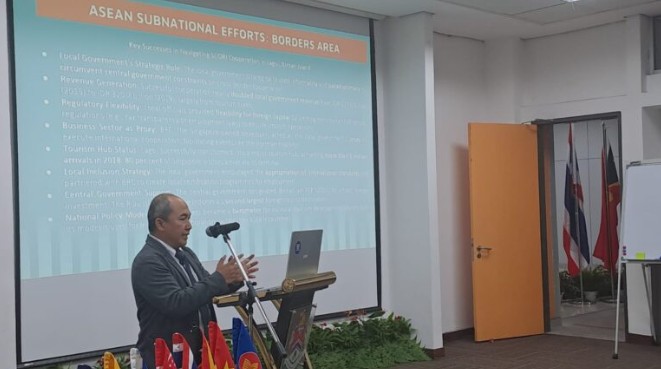
On 24–25 November 2025, Ganesh Aji Wicaksono, a lecturer in International Relations at BINUS University, participated as an invited expert in the First Expert Group Meeting on Localising ASEAN Community Vision 2045 in Kuala Lumpur, Malaysia. The meeting brought together experts and local government representatives to discuss how ASEAN’s long-term vision could be translated into practical strategies at the local level.

During the meeting, Ganesh presented perspectives on Asian economic integration and the role of local actors, including city governments and governors, in advancing regional priorities. He also facilitated discussions to help participants identify targets and indicators for monitoring progress towards ASEAN Community Vision 2045. His contribution supported discussions on translating regional development objectives into approaches that can be implemented and monitored by local stakeholders.

This engagement illustrates BINUS University’s participation in regional policy dialogue and the application of academic expertise to discussions on governance and development.

Providing Input for the National Legal Development Document

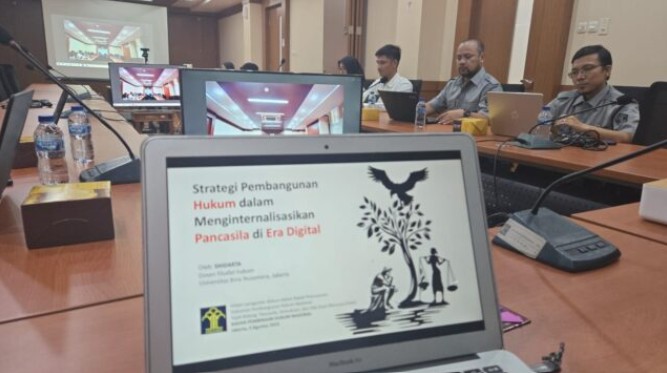
On 4 August 2025, Shidarta, a lecturer in Business Law at BINUS University, was invited by Indonesia’s National Legal Development Agency (Badan Pembinaan Hukum Nasional, BPHN) to provide input for the preparation of the 2025 National Legal Development Document. The discussion addressed issues relating to Pancasila, democracy, and human rights within Indonesia’s legal development framework.

Shidarta proposed strategies for strengthening the internalisation of Pancasila in the digital era. His recommendations included developing appropriate indicators, identifying communities that could serve as role models, and considering the integration of relevant indicators into Indonesia’s legal development index.

The contribution provided an academic perspective on how national legal values can be translated into practical approaches and measurable indicators. By participating in the preparation of a national legal development document, BINUS University contributed specialised knowledge to a government-led process concerned with the direction and implementation of legal development in Indonesia.

Supporting Evidence-Informed Government Decision-Making

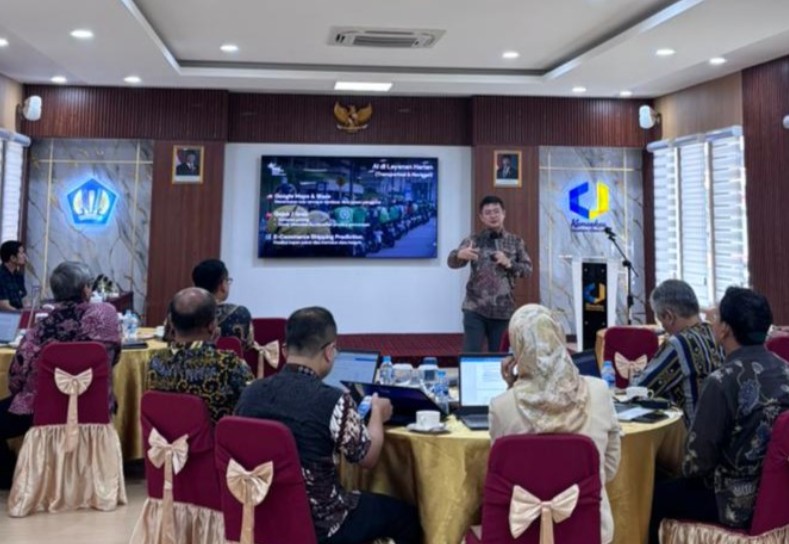
On 9 December 2025, Prof. Derwin Suhartono, Dean of the School of Computer Science at BINUS University, was invited as a speaker at a seminar organized by the Financial Education and Training Agency (Badan Pendidikan dan Pelatihan Keuangan/BPPK), Ministry of Finance of the Republic of Indonesia.

In a session entitled “Decision Intelligence: Strengthening Executive Decision-Making with AI,” Prof. Derwin provided expert insights into the global adoption of Artificial Intelligence (AI) and its potential to strengthen executive decision-making and enhance the competencies of Civil Servants (ASN). His contributions included recommendations on leveraging AI to predict training needs, recommend personalized learning paths, and develop adaptive, data-driven learning ecosystems.

He also provided expert perspectives on the responsible use of AI, highlighting potential risks such as algorithmic bias, hallucinations, privacy violations, and overdependence on technology.

Providing Legal Expertise to the Indonesian National Police

On 11 November 2025, Dr. Muhammad Reza Syariffudin Zaki, a lecturer in Business Law at BINUS University, served as a legal expert at the Indonesian National Police Headquarters (Mabes Polri) in a corporate-law case. His expertise addressed the legal responsibilities of corporations and the potential personal liability of company directors in circumstances involving negligence or wrongful conduct.

The discussion of corporate liability is relevant to the interpretation and application of company law, particularly when determining the responsibilities of corporations and their management. Expert analysis can help clarify complex legal issues and provide a professional perspective for consideration within formal law-enforcement processes.

Through this engagement, BINUS University demonstrated the practical application of academic legal expertise in a government institutional setting. The activity also illustrates how specialised knowledge from higher education can contribute to the examination of legal issues involving corporate accountability.

Supporting the Development of Bekasi City’s Regional Regulation

On 18 November 2025, Dr. Muhammad Reza Syariffudin Zaki joined the team preparing the Academic Paper for Bekasi City’s Draft Regional Regulation on Capital Participation in Regional-Owned Enterprises (Badan Usaha Milik Daerah, or BUMD). The initiative involved the examination of legal and regulatory considerations relating to local government investment in regional-owned enterprises.

As part of the preparation process, Dr. Zaki analysed applicable laws and regulations and reviewed previous regional regulations. This work supported the development of a legal framework for capital participation in five regional-owned enterprises through 2030.

The preparation of an Academic Paper is an important part of regulatory development because it provides a basis for examining the legal context, policy rationale, and implications of a proposed regulation. In this case, the work was intended to support clearer investment arrangements, accountability in regional financial management, and the effective governance of regional-owned enterprises.

The involvement of BINUS academic expertise in this process demonstrates the university’s contribution to local government regulatory development and evidence-informed public decision-making.

These activities demonstrate several ways in which BINUS University expertise can contribute to government-related work: providing perspectives in regional policy discussions, offering recommendations for national legal development, explaining complex legal issues to law-enforcement institutions, and contributing to the preparation of local regulatory documents.

Through the involvement of its academics in these initiatives, BINUS University helps bridge academic knowledge and professional expertise with public-sector needs. These engagements reflect the university’s contribution to policy dialogue, legal development, and governance at different levels.