
SUSTAINABLE CITIES AND COMMUNITIES
Make citties and human settlements inclusive, safe, resilient and sustainable.
322
ACTION GOALS
873
PUBLICATIONS

EXPERTS

Ubaidillah Nugraha, M.Ec., M.P.M.
Related Goals


BINUS University undertakes projects that support the documentation, preservation, and transmission of Indonesian intangible cultural heritage, particularly through digital technology, traditional arts, cultural knowledge, and student engagement.

Digital Documentation and Cultural Preservation
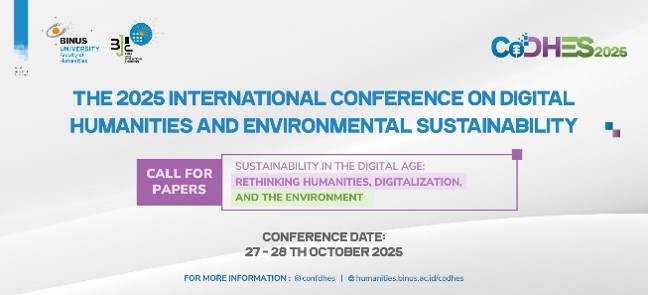
Through CoDHES 2025 (Conference on Digital Humanities and Environmental Sustainability), BINUS brings together digital humanities and cultural preservation. The initiative addresses areas including digital archiving, digital storytelling, digital cultural arts, digital ecolinguistics, and cultural preservation, supporting the use of digital approaches to document and preserve cultural knowledge, language, narratives, and traditions.

Preserving Traditional Arts through Technology
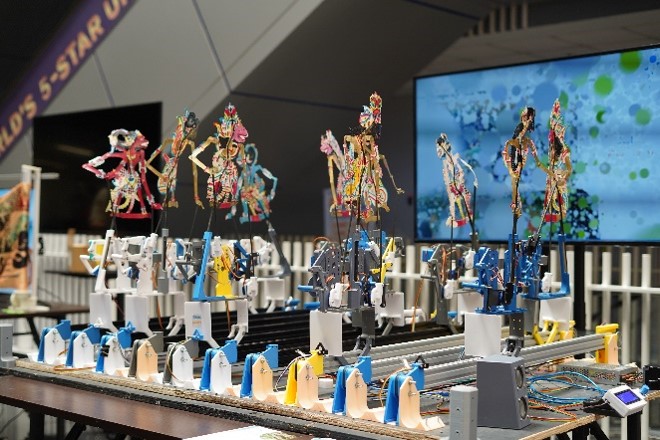
A direct example is the Maker Innovation Space Festival 2025, which showcased technology-based projects inspired by Indonesian cultural heritage. These included the Automated Leather Wayang Show, BINUS Automated Angklung (Bianca), and Automated Wayang Beber Player. By combining traditional wayang and angklung with automation and digital technology, these projects help preserve traditional performing arts, music, and storytelling while making them accessible to contemporary audiences.

Transmitting Cultural Knowledge to Younger Generations
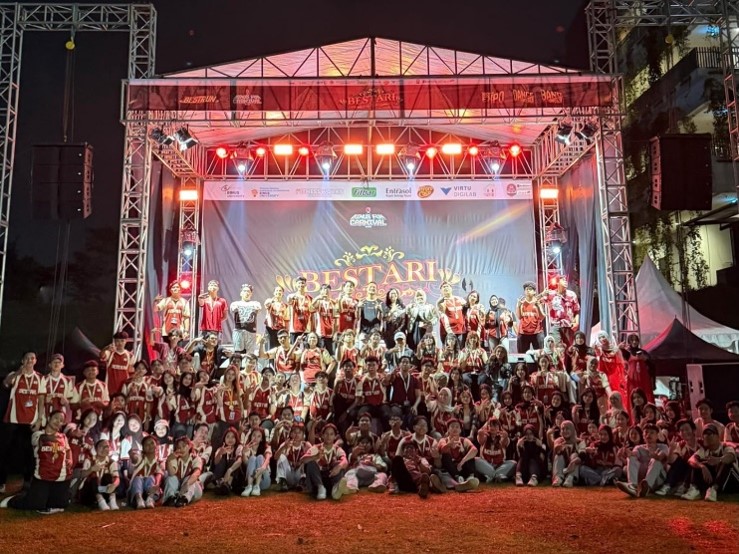
BESTARI Festival 2025 further supports cultural transmission through its theme of “Reviving the Spirit of Nusantara Through Enterprise.” The festival engaged students and the wider community through creative and cultural activities, providing a platform for Indonesian cultural values and knowledge to be expressed in contemporary forms and shared with younger generations.

Language, Arts, and Cultural Heritage
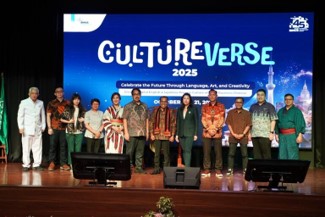
BINUS also supports the preservation and transmission of cultural knowledge through Cultureverse 2025, which brought together three BINUS literature programs through activities centered on language, arts, and popular culture. The program provided a platform for students to explore and express cultural narratives and creative works, helping connect language and cultural knowledge with younger generations through contemporary forms.

Together, these initiatives demonstrate BINUS University’s contribution to recording, preserving, and transmitting intangible cultural heritage. Through digital archiving and humanities, technology-enabled preservation of wayang and angklung, and programs that engage younger generations with Nusantara cultural values, BINUS helps ensure that cultural knowledge, traditions, performing arts, and narratives can continue to be documented and passed on to future generations.
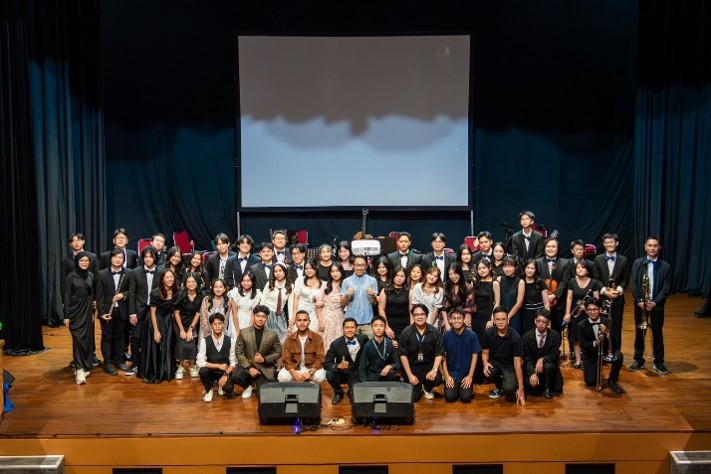
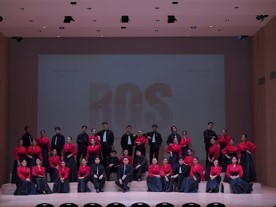
BINUS University contributes to local arts and cultural life through regular public performances organized by its student arts organizations and cultural initiatives. These activities provide opportunities for BINUS students, faculty, and alumni to develop their artistic abilities while presenting music, dance, and performing arts to public audiences. Through these activities, BINUS also supports the preservation and appreciation of Indonesia’s artistic and cultural heritage.

One example is Konser Awal Tahun (KAT) 9.0 – “Melodies Through the Ages”, organized by BINUS Delima Music (BDM) in February 2025. Held at Taman Ismail Marzuki, the concert featured BINUS musicians and artists performing a combination of classical, modern, and orchestral music. The event also included performers from BINUS @Malang, demonstrating collaboration between BINUS student arts communities across different locations.

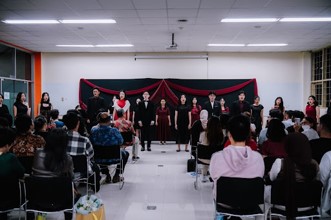
BINUS also contributes through PARAMABIRA (Paduan Suara Mahasiswa Bina Nusantara), which regularly presents public choral performances. In August 2025, PARAMABIRA held Ring of Songs 2025, its annual concert at Balai Resital Kertanegara. The performance featured 37 singers and attracted more than 350 audience members, presenting a diverse musical repertoire that brought together different cultures, periods, and musical traditions.

In December 2025, PARAMABIRA also revived its Recita recital program after a six-year hiatus. Recita 10 featured 51 singers, including solo, duet, and quartet performances, with repertoire from classical and musical theatre works such as West Side Story, Evita, Wicked, and The Phantom of the Opera. The event had 106 seats, all of which were sold within four days, providing another opportunity for the public to engage with BINUS’s performing arts.

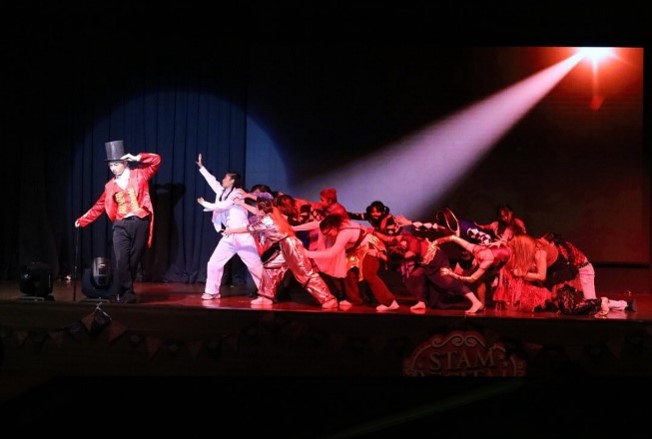
BINUS’s contribution to the performing arts also extends to dance. In February 2025, STAMANARA presented STAMRECITAL: The Greatest Show, its first dance recital. The performance brought together dancers from different BINUS regions, including Kemanggisan, Alam Sutera, and Bekasi, and featured multiple dance genres and collaborative performances. The event provided a platform for BINUS student performers to present their work to an audience as part of the university’s broader performing-arts activities.

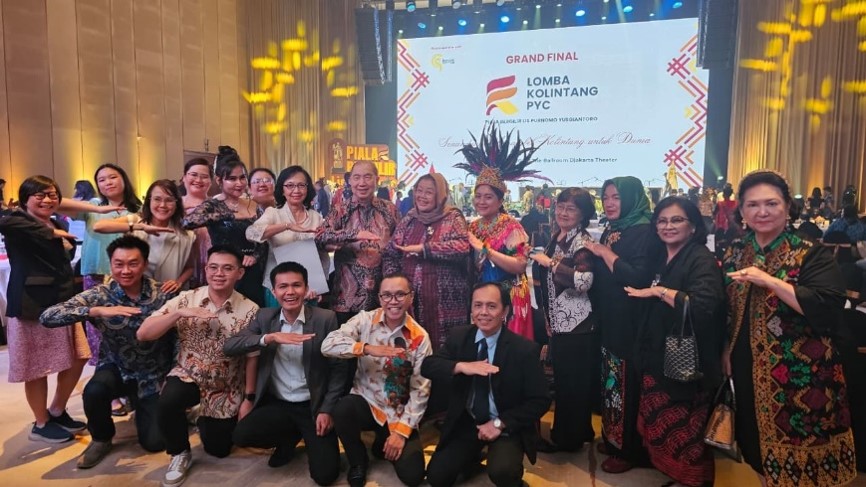
BINUS’s contribution to the arts also extends beyond contemporary performances to the preservation and promotion of Indonesian traditional arts. Through initiatives such as BeeLintang (BINUSIAN Berseni dengan Kolintang), BINUS faculty, students, and alumni perform the traditional Minahasan kolintang at university and national events. This complements BINUS’s broader efforts to preserve Indonesia’s intangible cultural heritage while introducing traditional arts to contemporary audiences.

Through recurring public performances and broader cultural initiatives, BINUS University provides opportunities for its arts communities to contribute to public cultural life while supporting the continuity, appreciation, and innovation of Indonesian arts and heritage.

BINUS University provides free public access to open and green spaces as part of its commitment to creating sustainable and environmentally friendly campuses. These spaces support environmental sustainability while also providing areas for learning, recreation, walking, community activities, and public engagement.

  • Green Campus

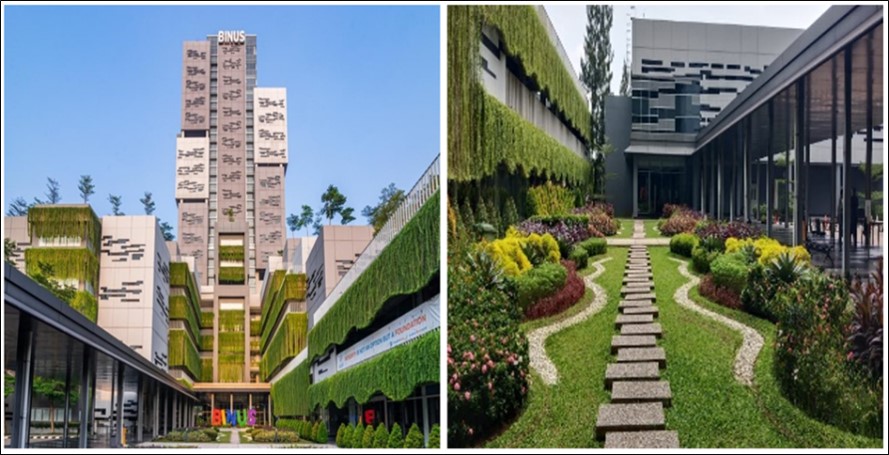
BINUS incorporates green spaces into its campuses through its Green Campus approach. At BINUS @Alam Sutera, the university maintains green areas through tree planting and vegetation management. The campus covers approximately 50,000 square metres and includes around 1,558 trees, contributing to improved air quality, oxygen provision, and a more comfortable environment for campus users and the surrounding community.

  • Educational Garden

BINUS also provides different types of open and green spaces that can be used for community activities. These include an Educational Garden, which provides a learning and discussion space with seating areas for outdoor seminars and community activities, as well as open spaces for events that can accommodate activities such as concerts and environmental festivals. These facilities demonstrate how BINUS’s green and open areas can support activities beyond conventional academic functions.

  • Green Open Space

At BINUS @Bandung – Dago Campus, the university has incorporated a dedicated Green Environment and Ruang Terbuka Hijau (RTH) as part of its green campus concept. The campus uses its natural surroundings and green areas to create a healthier and more comfortable environment while supporting environmental sustainability.

  • Open Space for Events

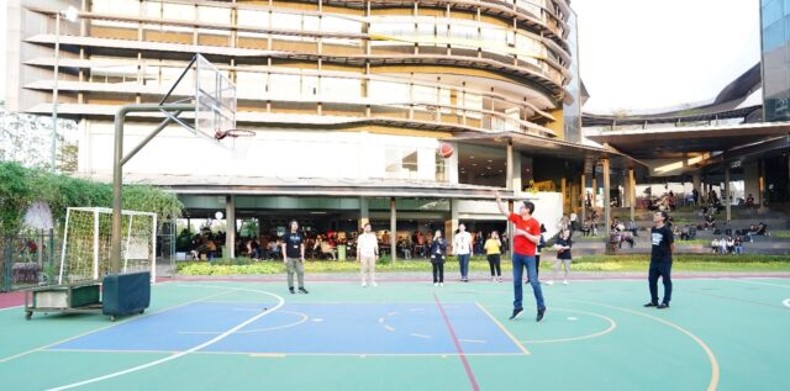
BINUS University provides open spaces that can accommodate various campus and community activities, such as outdoor performances, concerts, student gatherings, and environmental festivals. These spaces offer flexible venues for social interaction, collaboration, and community engagement beyond conventional indoor facilities. They can also support sustainability-related events and environmental awareness campaigns, providing opportunities for students, staff, and the wider community to participate in activities that promote environmental responsibility and strengthen campus-community relationships.

  • Pedestrian Pathways

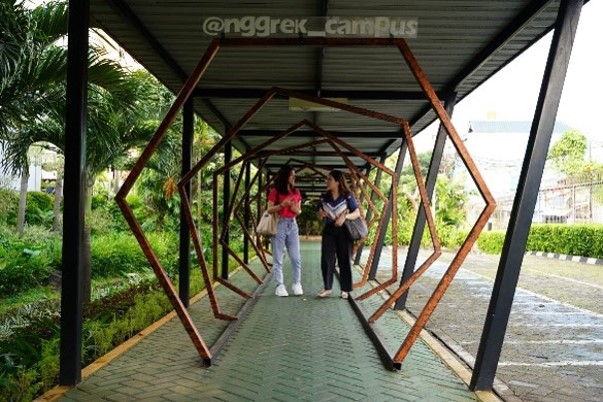
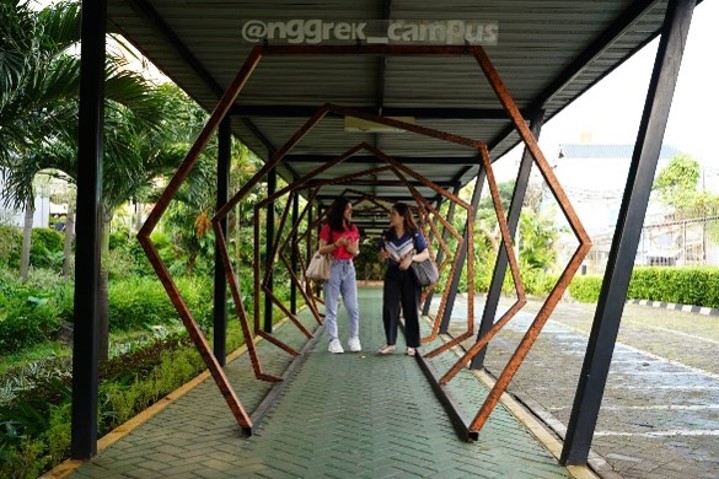
BINUS also prioritizes pedestrian access across its campuses. Dedicated pedestrian pathways are separated from motor vehicle traffic and are surrounded by trees and other vegetation. Canopies are also provided to improve pedestrian comfort, particularly during rainy weather. These pathways connect different areas of the campus and contribute to a more walkable and environmentally friendly campus environment.

Through the provision of green areas, educational gardens, open spaces, and pedestrian-friendly environments across its campuses, BINUS makes its open and green spaces available for community and public use.

BINUS University provides public access to works of art and exhibition spaces through a combination of virtual galleries and physical exhibitions. These initiatives allow members of the public to experience, explore, and appreciate creative works produced by BINUS students, lecturers, designers, and artists.
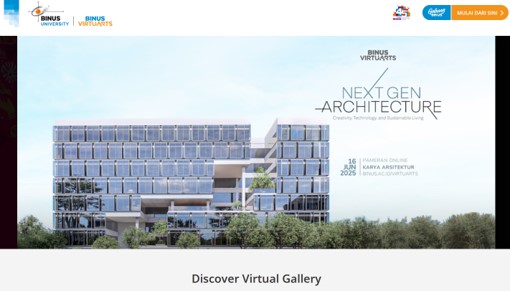
One of BINUS University’s initiatives is VirtuArts, a digital exhibition space developed by BINUS Digital and Digital Content Development (DCD) BINUS. VirtuArts provides an online space for presenting visual artworks and exhibitions, allowing audiences to experience art through a virtual gallery. The platform features a range of exhibitions covering visual art, design, architecture, cultural themes, and other creative works.

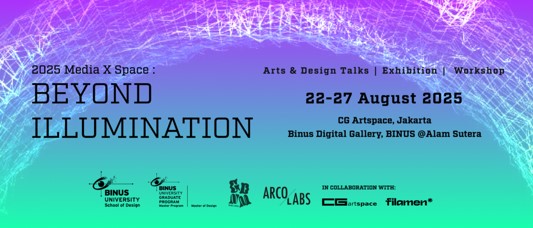
BINUS also provides public access to physical exhibition spaces through Media X Space: Beyond Illumination, organized by BINUS University’s School of Design and Master of Design in collaboration with partner organizations. The 2025 exhibition explored light through artistic experiments, digital media, and interactive works created by artists, students, and professional educators. The exhibition was presented at BINUS @Alam Sutera and other exhibition venues, with a gallery program that enabled audiences to experience the artworks directly. The program also included talks, performances, and other public activities, creating opportunities for the wider community to engage with art, design, and creative technology.
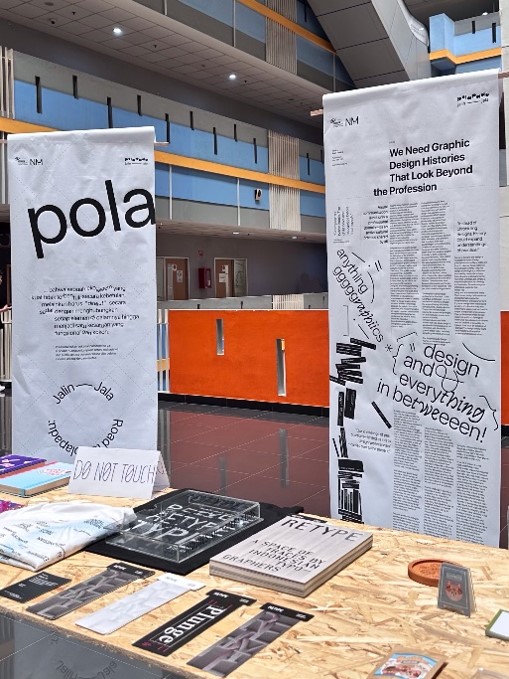
In addition to its virtual exhibition platform, BINUS provides physical public access to exhibitions. In October 2025, Polapadu, an exhibition of final projects by 30 DKV New Media students, was held at Plaza Hitam, BINUS @Kemanggisan. The exhibition presented interactive, experimental, and digital installations and was explicitly open to the public, allowing students, creative practitioners, and the wider community to experience and appreciate the works directly.

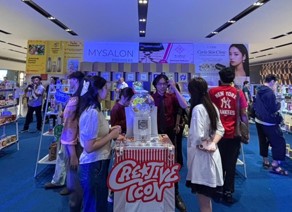
BINUS also brings student artworks into public spaces outside the university campus. Creative Icon 2025, organized by DKV Creative Advertising BINUS University, was held at Mall Taman Anggrek from 24–26 October 2025. The exhibition presented student works using various media, including photography, augmented reality, posters, and product design. The event was open to visitors and was designed to introduce visual communication design and creative works to the wider community, particularly young people.

Through these initiatives, BINUS makes artworks and exhibition experiences accessible through both digital and physical spaces. VirtuArts extends access to exhibitions beyond geographical boundaries, while public exhibitions such as Polapadu and Creative Icon allow communities to directly engage with student artworks in physical exhibition spaces.

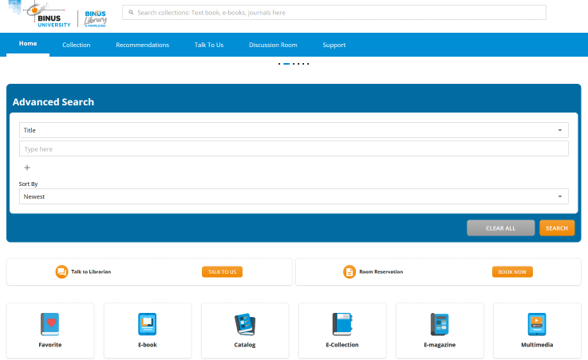
BINUS University provides access to library resources, books, and academic publications through its Library and Knowledge Center network and digital publication platforms. These resources support learning, research, and knowledge sharing while extending access to BINUS’s academic collections and publications.

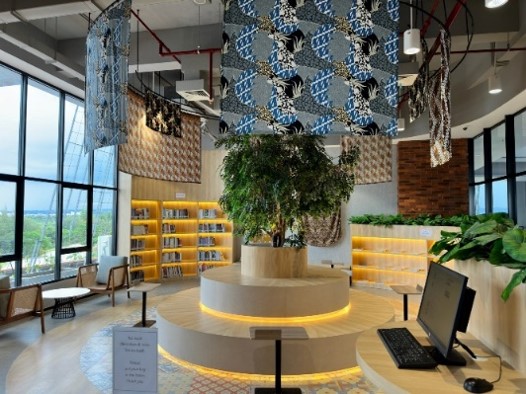
The BINUS Library and Knowledge Center (LKC) has supported the university’s learning, research, and community-service activities since 1982. The library has implemented automated library services and open-access services, allowing users to independently access its library collections. The LKC is also registered with the National Library of Indonesia (Perpusnas), demonstrating its formal role as a library resource provider.

The Library and Knowledge Center (LKC) is open to non-Binusian visitors who wish to utilize its facilities. External guests can register at the Circulation Desk by presenting a valid ID. Upon registration, visitors receive a printed access slip that allows them to enter and use the library facilities—such as reading areas, lockers, and digital catalogs—until closing hours. While external visitors are not permitted to borrow books, they are fully welcome to read on-site and consult with library staff for research assistance. This policy enables the public to benefit from BINUS’s academic environment in an orderly and inclusive manner.

BINUS University provides Library and Knowledge Center facilities across its various campus locations, including Anggrek, Kijang, JWC, FX, Bekasi, Malang, Bandung, and Semarang. These libraries provide access to a range of collections, including books and other learning resources, supported by digital library services that allow users to search and access collections across BINUS locations. Some facilities also provide multimedia resources, automated borrowing services, and virtual access to library facilities, enabling the BINUS community and library users to access knowledge resources through both physical and digital platforms.

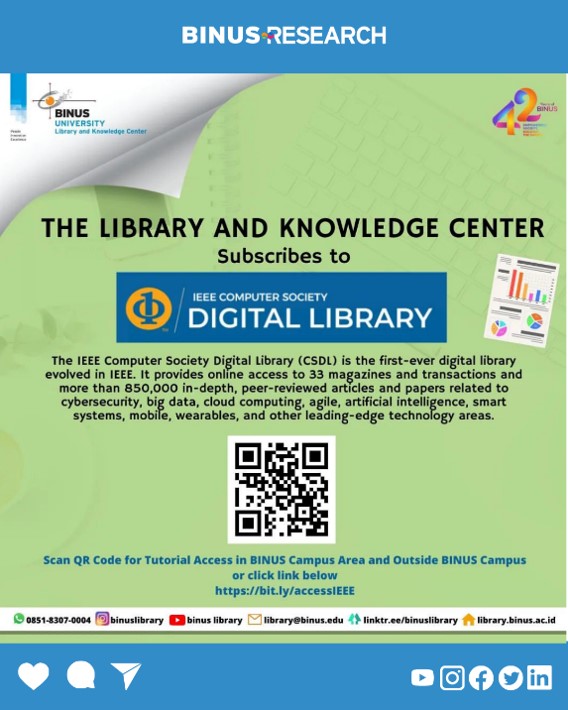
In addition to its physical library collections and institutional journal platform, BINUS University expands access to academic literature through subscriptions to specialized digital research databases. In April 2024, the BINUS Library and Knowledge Center subscribed to the IEEE Computer Society Digital Library, providing access to digital publications in computing and related technological fields. This subscription strengthens the availability of specialized academic literature to support teaching, learning, and research activities. By providing access to international scholarly publications through its library services, BINUS University helps students, faculty members, and researchers discover relevant research findings and keep up with developments in their respective disciplines.

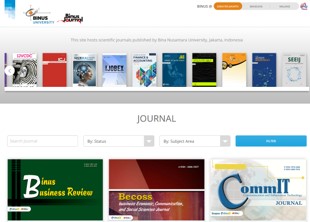
In addition to physical library facilities, BINUS provides public access to academic publications through BINUS Journal. The platform hosts scientific journals published by Bina Nusantara University and provides access to journals covering areas such as business, economics, communication, information technology, engineering, mathematics, culture, social sciences, and other disciplines. The platform includes journals indexed by services such as DOAJ, Crossref, Google Scholar, and Scopus, providing an online source of academic publications and research outputs.

Through its physical Library and Knowledge Centers and online academic publication platforms, BINUS University provides access to books, library collections, research journals, and other knowledge resources.

BINUS University provides public access to its buildings and facilities through campus visits, open house activities, cultural and virtual museum initiatives, and community-oriented services. These activities demonstrate BINUS University’s efforts to make its physical and cultural resources accessible beyond its immediate university community.

One example is BINUS @Malang, whose campus design incorporates local cultural and historical heritage. The campus architecture was inspired by Candi Tikus, reflecting the historical heritage of the Malang region and incorporating local cultural elements into the university’s built environment. The campus is designed as a smart and green campus and provides a range of facilities, including a library, laboratories, hall, coworking space, and other shared facilities.

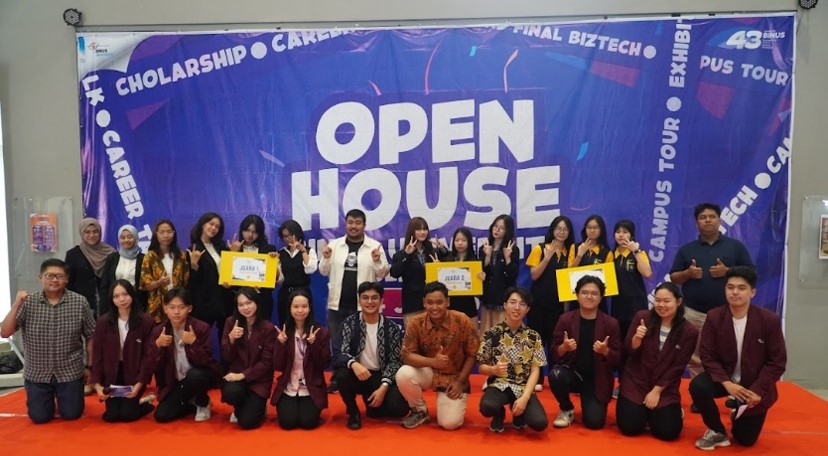
BINUS provides opportunities for the wider community, particularly school students and prospective students, to access and experience its campus facilities. In 2025, campus tours and BIZTECH Open House activities at BINUS @Summarecon Bekasi and BINUS @Semarang welcomed students, parents, teachers, and prospective students to explore campus facilities, participate in trial classes, and engage with student projects and academic programs. These activities demonstrate BINUS University’s practice of opening its campus facilities for educational engagement and community interaction.

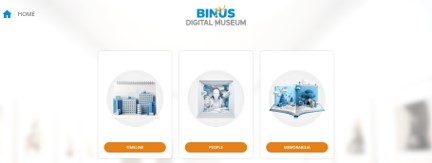
Beyond physical campus access, BINUS makes its institutional and cultural heritage available through digital platforms. The BINUS Digital Museum provides a virtual space for the public to explore BINUS’s institutional history and heritage, while VirtuArts provides an online platform for accessing BINUS-related art and cultural exhibitions. These initiatives extend public access to cultural resources beyond the physical campus environment.

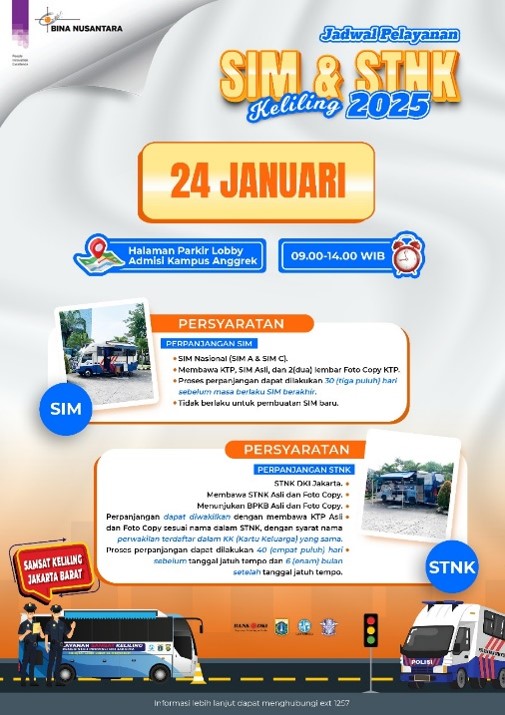
BINUS also contributes to public access and community engagement by opening university facilities for services that benefit the wider community. For example, the SIM & STNK Mobile Service 2025 was hosted at BINUS facilities, allowing members of the public to access government administrative services on campus. This demonstrates that BINUS facilities can function as accessible community spaces beyond their primary educational purposes.

Through these initiatives, BINUS University provides multiple forms of public access to its buildings, facilities, cultural resources, and community spaces. Physical campus visits and Open House activities provide direct access to university buildings, while the Digital Museum and VirtuArts extend access to cultural and institutional resources through digital platforms.

BINUS University integrates educational facilities into existing urban developments, utilizing established buildings and commercial environments to accommodate learning activities. Two examples are BINUS @Bandung at Paskal Hyper Square and the extension-class facility at Mall@Alam Sutera. Both initiatives demonstrate how educational functions can be integrated into existing commercial environments.

  • BINUS @Bandung: Educational Integration within a Former Railway-Related Area

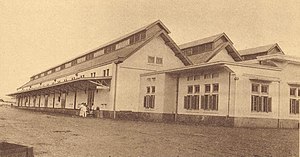
The Paskal area in Bandung has historical links to railway freight and warehouse activities around Bandung Gudang Station. Development of Paskal Hyper Square began in 2004, transforming the railway-related area into a commercial destination featuring retail, dining, and other urban activities.

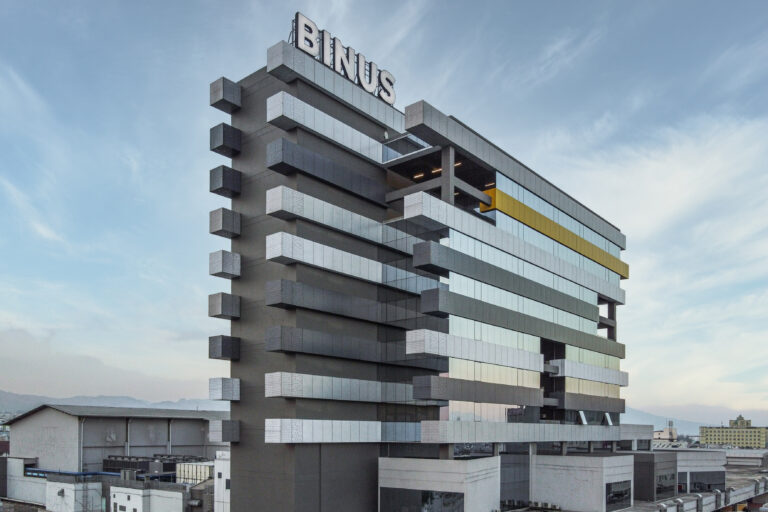
In September 2017, BINUS University established its Bandung campus at Paskal Hyper Square, introducing an educational function into the revitalized area. By integrating higher education into this existing commercial development, BINUS contributes to the area’s continued use as a destination for learning, commerce, and social activities.

  • BINUS @Alam Sutera: Reusing Existing Commercial Space for Education

In June 2023, detikFinance reported low visitor activity and several closed retail outlets at Mall@Alam Sutera. According to the mall’s management, occupancy was approximately 60%, alongside plans for renovation and tenant acquisition to improve the mall’s business performance.

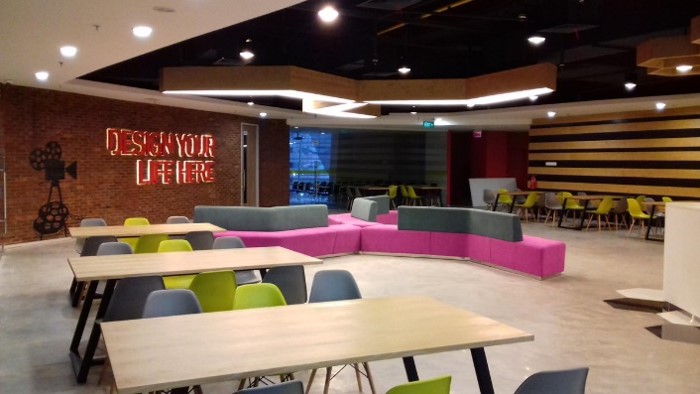
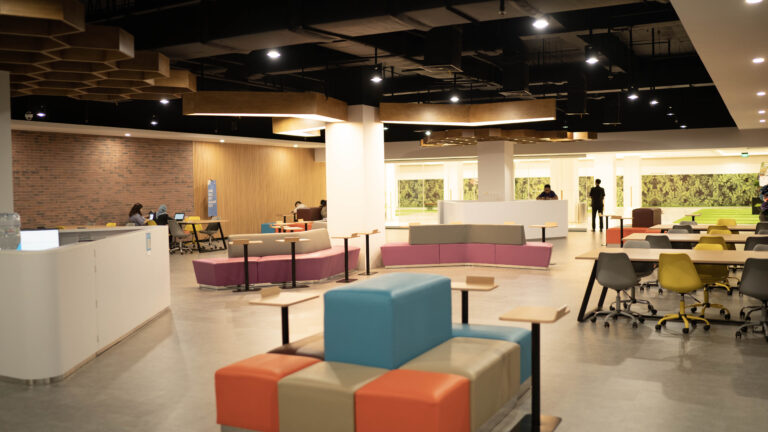
In September 2024, BINUS University opened an extension-class facility at Mall@Alam Sutera, introducing eight classrooms on the first floor, east side of the mall. Equipped with digital technology, lounge areas, discussion rooms, and collaborative learning spaces, the facility expands BINUS’s educational capacity within an existing commercial building without requiring a new standalone building.

The facility brings recurring student activity into the mall throughout the academic week. Students can access food and beverage outlets and other facilities before and after classes, creating opportunities for interaction between educational and commercial activities. This arrangement integrates learning into the mall’s existing retail, dining, and leisure environment.

Sustainable living has emerged as a central global conversation, driven by the pressing environmental challenges posed by human activity. Embracing environmentally friendly practices in various sectors, including building architecture, is essential for fostering a sustainable and resilient future. 

The Green Campus Initiative Joint Workshop was successfully held by BINUS University’s Faculty of Engineering from October 7th to 10th, 2024, in partnership with the National University of Singapore (NUS). This workshop included NUS’s online lectures and featured discussions with representatives from NUS and Atma Jaya Yogyakarta University (UAJY) on sustainable and eco-friendly building. 

Dr. Marcel Ignatius, a Senior Researcher from NUS, kicked off the first day of the workshop with a sharing session about his research on climate change and eco-friendly building design at the College of Design and Engineering and further discussed NUS’s BEAM (Baselining, Evaluating, Action, and Monitoring) Initiative program. 


Following Dr. Marcel’s session, Lu Yijun, a Research Assistant from NUS, took the floor to discuss Sustainable Attempts for Urban Greenery and Architecture in Tropical Climate. The session was then followed by a discussion with representatives from NUS and UAJY, focusing on future partnership activities, including joint research programs and case studies. 

Participants had an engaging session with Joie Lim on ‘Interactive Urban Heat Island Assessment: Dynamic Data Fusion in Digital Twins’ that provided insight into how technology can help humans understand the potential impact of climate change before engaging with BINUS University’s student work on weather detectors as part of their research track in the Enrichment Program option.  

Ting Shi An, one of the Graduate Tutors at NUS who also present virtually, shared a presentation titled “Photovoltaic System and Technologies: Exploring Their Environmental Impact.” This talk highlighted the potential of harnessing solar energy to mitigate climate change and reduce reliance on fossil fuels. Following this session, Dr. Marcel Ignatius covered the “STEVE Tool and the Binus Syahdan Case Study.” 


The Green Campus Initiative Workshop concluded on the fourth day with discussions focused on future research plans, particularly urban heritage and vegetation in Yogyakarta’s palace area, and other projects in Jakarta and Singapore. This collaborative effort between BINUS University, the National University of Singapore, and Atma Jaya Yogyakarta University has not only facilitated the exchange of knowledge on eco-friendly technologies and campus policies but has also strengthened inter-institutional relationships. By fostering these connections, the workshop has laid the groundwork for future partnerships and positioned our university to effectively adopt green building technologies, contributing to a more sustainable future. 

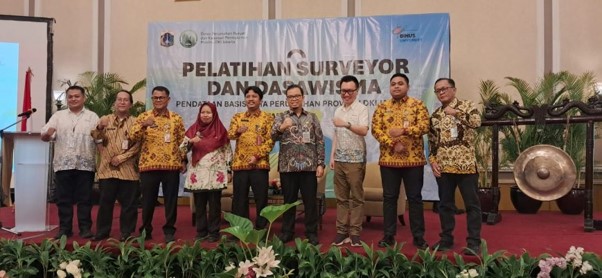
BINUS University works with local authorities and community stakeholders to support more inclusive and sustainable housing development in Jakarta. Through its community empowerment initiatives, BINUS contributes academic expertise, data analysis, and community-based approaches to help address local housing and planning challenges.

One of these collaborations focuses specifically on housing data for Jakarta. BINUS University has worked with relevant government stakeholders to support the development and improvement of a housing database for DKI Jakarta. The collaboration focuses on improving the availability and quality of housing data, including information that can support the identification of housing conditions and community needs. Reliable housing data provides an important basis for local authorities to develop more targeted housing policies and planning interventions.

BINUS has also participated in initiatives to improve the quality and management of housing data in DKI Jakarta. Through collaboration with local government stakeholders, BINUS contributes to data-related activities that support more accurate and integrated information for sustainable housing planning. These efforts help strengthen the evidence base available to authorities when addressing housing challenges and planning future development.

The university’s collaboration also addresses the broader goal of creating inclusive and sustainable housing in Jakarta. BINUS’s initiatives bring together university expertise, government stakeholders, and communities to identify local housing issues and support solutions that are responsive to residents’ needs. By contributing knowledge, data, and community engagement, BINUS supports local authorities in addressing housing development as part of wider urban and community planning.

These activities are aligned with BINUS University’s broader BINUS Bangun Desa approach, which promotes collaboration between the university, government, communities, and other stakeholders to address local development challenges. Through this model, BINUS applies its academic and professional expertise to real community needs and supports sustainable local development.

Overall, BINUS University works with local authorities to address housing and planning issues through collaborative data development, housing assessment, and community-based initiatives. By helping improve the availability and quality of housing information for Jakarta and supporting inclusive and sustainable housing planning, BINUS contributes to efforts that can help local authorities better identify community needs and develop appropriate housing interventions, including for residents who require access to adequate and affordable housing.

BINUS University prioritises pedestrian access as an integral part of its campus design, accessibility, and sustainable mobility approach. Walking pavements are provided as a mandatory facility across all BINUS University campus areas, while pedestrian-friendly infrastructure, including connecting bridges between buildings, is integrated into campus design to encourage walking as a primary mode of movement.

  • Pedestrian Pathways

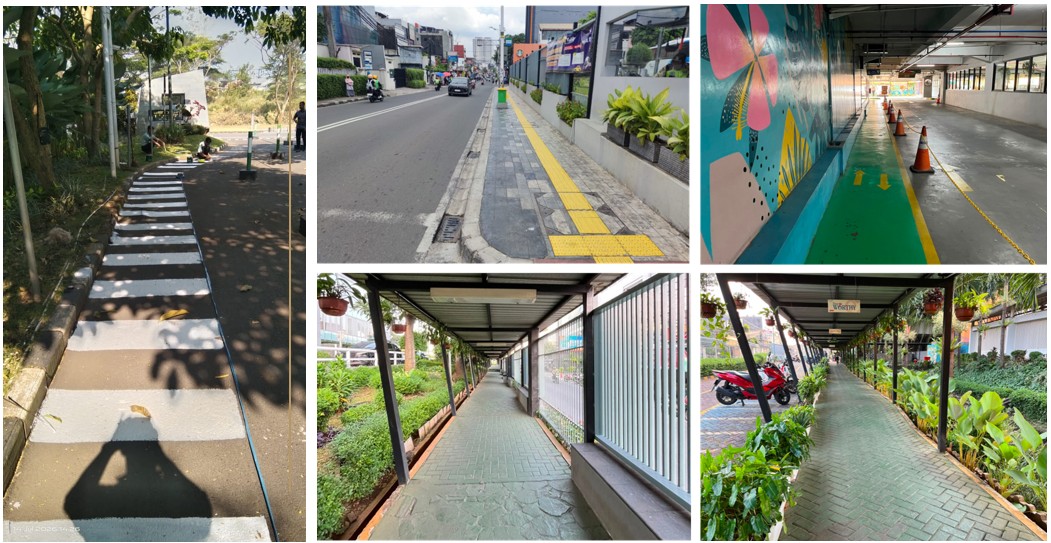
BINUS provides dedicated pedestrian pathways that are elevated above the surrounding road surface, creating a clear separation between pedestrians and motor vehicles. The pathways are complemented by trees and other plants, creating a greener and cooler walking environment, while canopies provide additional protection and comfort for pedestrians, particularly during rainy weather.

  • Accessibility for All

Pedestrian access is further supported by facilities designed to accommodate users with different mobility needs.

BINUS campuses provide :

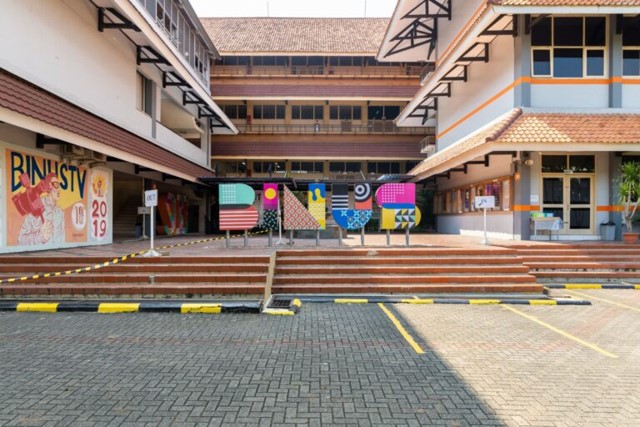
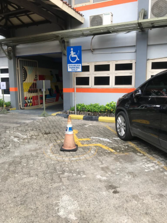
  1. Designated accessible parking areas near building entrances : The availability of these dedicated parking spaces enables students with disabilities who require mobility support, such as wheelchair users or individuals using other mobility aids, to enter campus facilities more comfortably and efficiently.
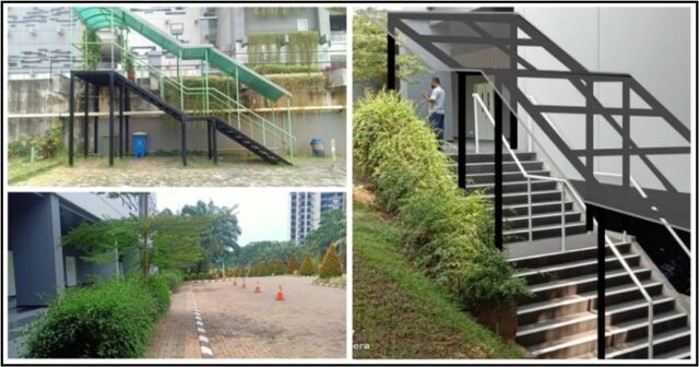
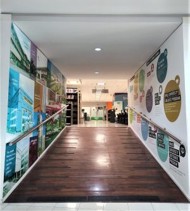
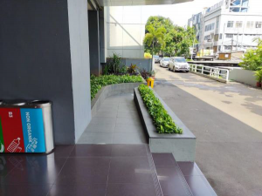
  1. Ramps alongside stairs : In areas that cannot be accessed by elevators but are located at a higher level than the surrounding pathways, ramps are provided alongside stairs to ensure that students with disabilities can reach these locations without being limited to stairways or escalators. Some campus facilities are located in recessed areas, corners, or elevated sections that may not be directly accessible from the main pathways. For students with disabilities who rely on mobility aids, ramps provide an essential means of access to these spaces.
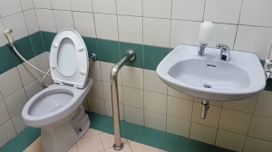
  1. Accessible restrooms : These accessible restrooms are carefully designed to meet the needs of their users and provide greater comfort and independence. These facilities support students with disabilities as well as other users, such as elderly individuals, parents with strollers, and staff transporting goods.
  • Sustainable Mobility

Pedestrian infrastructure forms part of BINUS University’s broader sustainable commuting strategy. The university promotes walking, cycling, shuttle buses, and electric vehicles as lower-emission mobility options and aims to reduce reliance on private vehicles. By making walking infrastructure mandatory across its campuses and connecting pedestrian routes with other sustainable transportation options, BINUS integrates pedestrian access into its wider campus mobility planning.

  • Information Signage

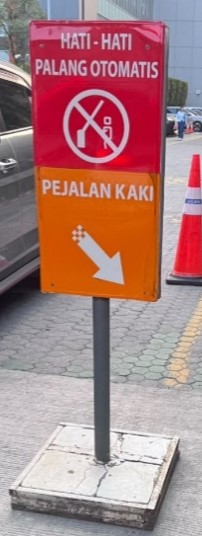
Information signage is provided across campus to help students, staff, and visitors identify facilities, navigate buildings, and find their destinations more easily. Clear and accessible signage supports independent movement and improves the overall campus experience. Strategically placed signage also helps users understand directions and locate important campus facilities, particularly in areas with multiple pathways, buildings, or entrances.

  • Guiding Blocks

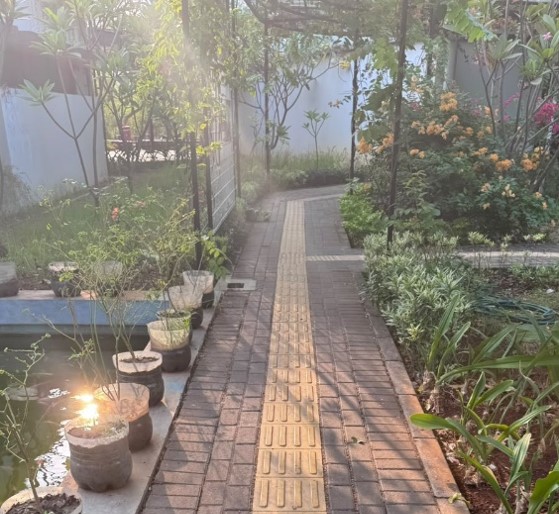
Guiding blocks are provided along pedestrian routes to support way finding for students and visitors with visual impairments. The tactile pathways help users navigate campus spaces more independently and safely. By integrating guiding blocks with the campus pedestrian network, BINUS supports a more inclusive walking environment and improves accessibility for users with different mobility and sensory needs.

Overall, BINUS University’s mandatory pedestrian pathways, dedicated and separated walkways, weather-protection features, connecting bridges, and accessibility facilities demonstrate that pedestrian access is prioritised across its campuses. These measures make walking safer, more comfortable, accessible, and practical for students, faculty, staff, and visitors, while supporting BINUS University’s commitment to inclusive and sustainable campus mobility.

BINUS University supports location-flexible working and learning through established digital platforms that enable academic activities to be conducted without requiring physical presence on campus. This digital approach provides an alternative to commuting for activities that can be delivered remotely and contributes to BINUS’s broader efforts to reduce unnecessary travel and its associated environmental impact.

Established Online Learning Infrastructure

BINUS has operated BINUS Online Learning since 2009, providing fully online higher education through a flexible learning model. The program uses digital learning systems that allow activities to be conducted without being tied to a particular physical location. BINUS Online Learning was also formally recognized as a distance-learning provider in 2014.

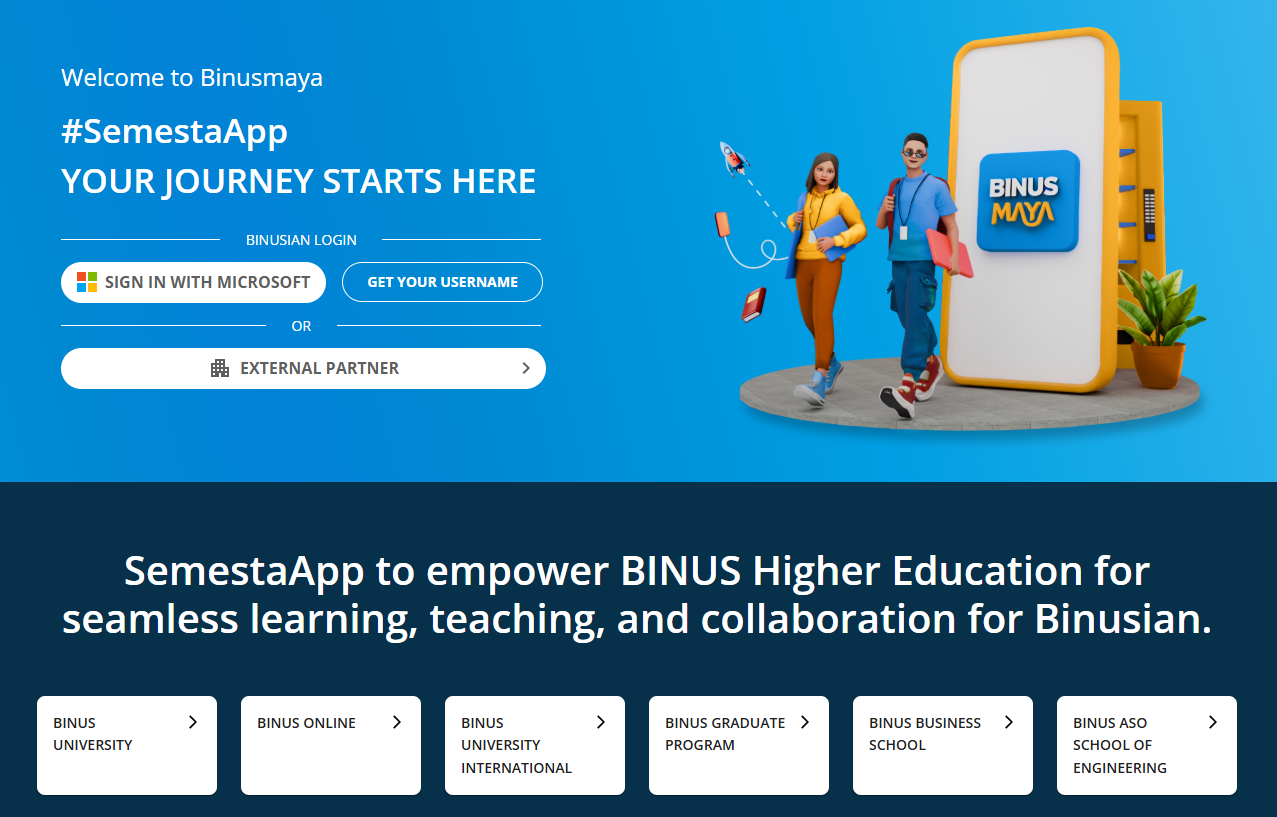
The model supports location flexibility for academic activities. BINUS’s 2025 description of online learning also notes that lecturers are not restricted by time and location when delivering online teaching through BINUSMAYA, enabling teaching activities to take place remotely.

The same initiative incorporates Ride Share and Eco Carbon Balance features to address commuting and transportation emissions, linking digital participation with efforts to reduce private-vehicle use and carbon emissions.

Through its established online-learning infrastructure and expanding digital campus approach, BINUS provides mechanisms that enable academic and selected university activities to be conducted remotely or with greater location flexibility. These practices can reduce the need for physical commuting where on-campus presence is not required, supporting BINUS’s broader sustainability efforts to reduce transportation-related environmental impacts.

BINUS University undertakes several actions to promote more sustainable commuting across its campuses, providing alternatives to private vehicle use through free shuttle services, bicycle facilities, pedestrian infrastructure, and electric vehicle support.

Free Shuttle Bus Services

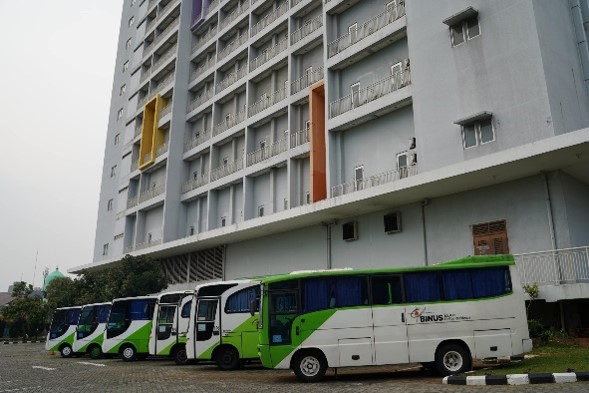
BINUS provides free shuttle bus services for students and staff to travel between campuses. The service reduces reliance on private vehicles by providing shared transportation for the university community. Shuttle usage is also monitored to determine appropriate bus capacity based on demand.

At BINUS @Bekasi, for example, a free shuttle connects BINUS @Bekasi and BINUS @Kemanggisan, providing students with a convenient shared-transport option for cross-campus activities without additional transportation costs.

Cycling and Pedestrian Facilities

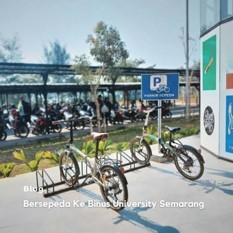
BINUS also promotes non-motorized transportation by providing bicycle parking areas and organizing cycling groups. In addition, walking pavements are provided as a mandatory facility across BINUS campuses, supporting walking as an alternative mode of campus mobility.

Supporting Electric Mobility

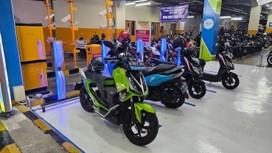
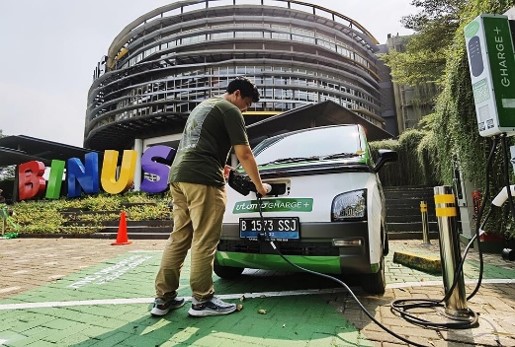
To encourage the use of lower-emission vehicles, BINUS provides electric vehicle recharging stations for its university community. The initiative supports the adoption of electric transportation and provides practical infrastructure for students, faculty, and staff using electric vehicles.

Through these initiatives, BINUS University provides multiple sustainable commuting options—shared shuttle transportation, cycling, walking, and electric mobility—that help reduce dependence on conventional private vehicles and support more environmentally sustainable transportation across its campuses.

BINUS University measures commuting patterns and sets sustainability targets to reduce the environmental impact of transportation. As part of its sustainability strategy, BINUS monitors vehicles entering campus and sets a 2.10% annual carbon-footprint reduction target for 2024 and 2025, while progressively promoting lower-emission mobility options.

Monitoring Campus Vehicle Use

BINUS monitors the average number of motor vehicles entering campus as part of its transportation and emissions measurement. Between 2024 and 2025, the average number of vehicles recorded decreased:

Vehicle Type 2024 2025 Change
Cars 571/day 476/day ↓ 16.6%
Motorcycles 647/day 570/day ↓ 11.9%
Total 1,218/day 1,046/day ↓ 14.1%

The reduction in recorded campus vehicle entries provides a measurable indicator of changes in campus mobility patterns and supports BINUS’s broader objective of reducing transportation-related emissions.

Promoting Lower-Emission Commuting

To support these targets, BINUS provides shuttle buses for students and employees, monitors shuttle users to determine appropriate capacity, and provides pedestrian infrastructure across its campuses. BINUS also promotes cycling through bicycle parking facilities and supports electric mobility through EV charging infrastructure.

At BINUS @Bandung, for example, the free shuttle service connects the Paskal and Dago campuses, providing an alternative to private vehicles for students, lecturers, and staff traveling between campuses.

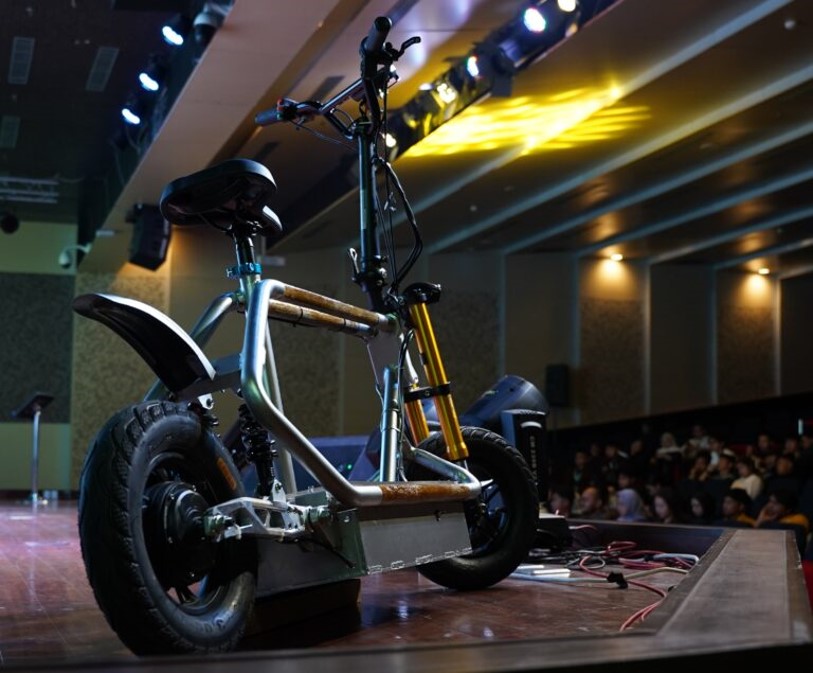
BINUS further supports the transition to electric mobility through initiatives such as SCOTERA, an electric vehicle developed by BINUS Industrial Engineering students as a sustainable urban mobility solution.

Through the combination of measured vehicle use, annual carbon-reduction targets, and alternative transportation initiatives, BINUS University demonstrates an institutional approach to measuring and progressively improving sustainable commuting across its campuses.

BINUS University is committed to providing safe, comfortable, and affordable housing for students through its official residence facility, BINUS Square. Located in West Jakarta, BINUS Square serves as more than just a dormitory — it is a vibrant residential community designed to support students’ academic and personal development while ensuring an inclusive and accessible living environment for all.

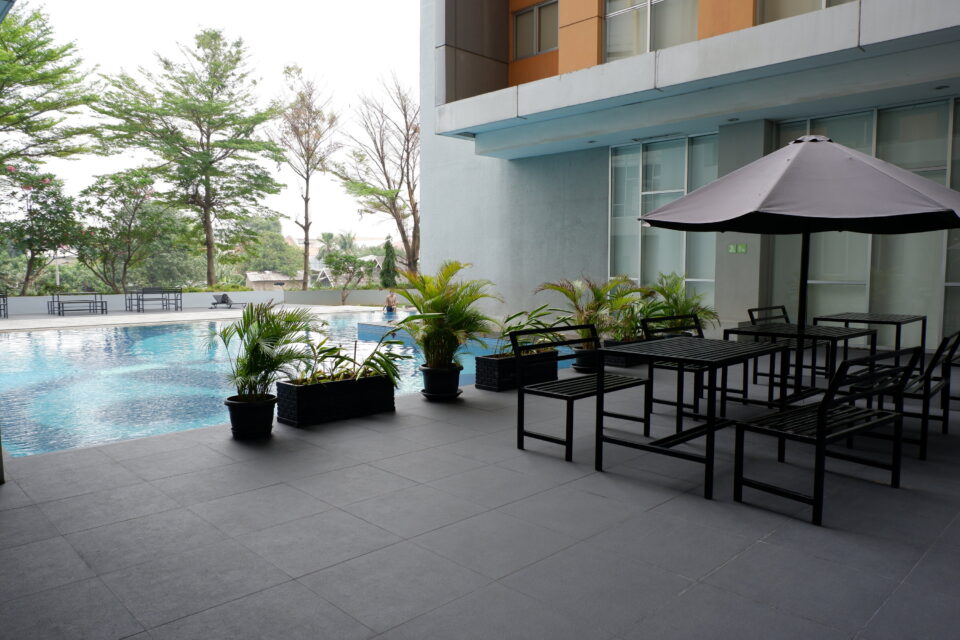
BINUS Square offers a variety of facilities that enhance students’ daily lives, including a swimming pool, study rooms, a fitness center, a communal kitchen, game rooms, and shared social spaces. These facilities are designed to promote a healthy balance between study and recreation while fostering interaction and collaboration among students from diverse backgrounds. Through a dedicated residential management team, BINUS ensures that all residents receive continuous support in maintaining their well-being, safety, and academic progress.

To promote affordability, BINUS University provides special scholarship opportunities for BINUS Square residents, offering up to 25% reduction in accommodation fees. This scholarship is open to active BINUS students who are selected through an application and interview process to serve in various student leadership roles within BINUS Square. This program not only reduces financial barriers to housing but also empowers students to develop leadership and community management skills during their stay. 

Additionally, BINUS supports incoming international and domestic students through its International Office, which provides comprehensive guidance on accommodation options and living arrangements in Jakarta, including BINUS Square and other nearby housing alternatives. Students can access detailed information and support for accommodation. These resources ensure that all students—especially those coming from other regions or countries—receive proper assistance in finding affordable and secure housing during their studies. 

Through these initiatives, BINUS University demonstrates its ongoing commitment to student welfare and inclusivity. By combining affordability, accessibility, and community engagement within its housing policy, BINUS provides a supportive environment that allows students to focus on their academic success and personal growth while ensuring equitable access to safe living spaces.