REDUCED INEQUALITIES
Reduce inequality within and among countries.
175
ACTION GOALS
375
PUBLICATIONS

EXPERTS

Dr. Ezmieralda Melissa
Related Goals
Dr. Lianna Wijaya, Amd., S.E., M.MSI
Related Goals
Roosalina Wulandari. S.Psi., M.Psi. Ph.D (Cand.)
Related Goals
Dr. Dina Fitria Murad, S.Kom., M.Kom., CEAA., SMIEEE.
Related Goals
Dr. Kukuh Lukiyanto, S.T., M.M., M.T.
Related Goals


BINUS University, as an educational institution, firmly upholds a Zero Tolerance Policy towards all forms of violence and discrimination, including physical, psychological, and emotional abuse. This commitment is outlined in the circular letter regarding “Implementation of Anti-Discrimination and Anti-Violence.”

The Rector’s Circular No. 1677A/REK/IX/2023 reiterates BINUS University’s commitment to creating a safe and respectful environment for all community members, reinforcing the Zero Tolerance Policy against harassment and violence. This policy also includes clear procedures for reporting any instances of discrimination or harassment, with assurances of confidentiality and a commitment to addressing complaints seriously. Disciplinary actions are outlined in the policy, which can range from warnings to more severe penalties depending on the nature of the violation.

In accordance with the Ministry of Education, Culture, Research, and Technology Regulation No. 30 of 2021 on the Prevention and Handling of Sexual Violence in Higher Education Institutions, BINUS has established a Task Force for the Prevention and Handling of Sexual Violence (Satgas PPKS). This task force is responsible for addressing cases of harassment, providing education, and ensuring the effective implementation of both the anti-harassment policy and the Zero Tolerance Policy.

The university has a comprehensive anti-harassment policy aimed at creating a safe campus environment where all forms of violence and harassment, including but not limited to sexual violence, are strictly prohibited.

BINUS University is committed to providing comprehensive support for students with disabilities through a well-defined reasonable accommodation policy and strategy, which includes adequately funded mechanisms:

  • Allocation of resources for support programs: Ensuring essential services are available.
  • Funding for personal assistance programs: Support for initiatives like Friends Care Community and i-Buddy that connect students with personal assistants.
  • Financial support for innovative systems: Funding for applications like “Hearo” and Teman Netra that assist students with disabilities.
  • Resources for the Student Advisory and Support Center (SASC): Ensuring guidance and support services are adequately funded.
  • Budget for training programs: Providing faculty and staff training on disability issues to ensure effective support.
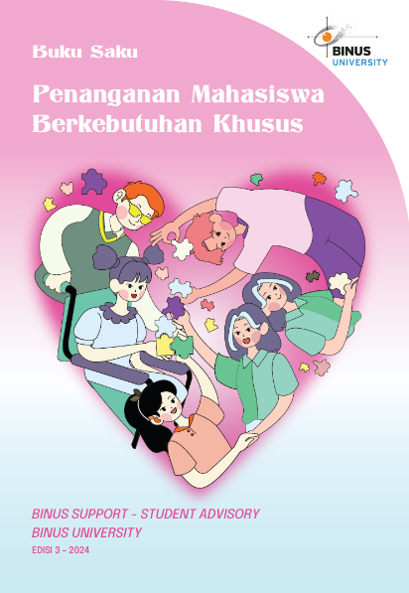
  • Production of informational resources: Funding for the “Buku Saku Disabilitas”, which outlines accommodations and support services to promote awareness and access.
  • Physical Facilities: Investment in accessible infrastructure, such as ramps, elevators, and designated study areas, to ensure that the campus is navigable for all students.

These elements collectively illustrate BINUS University’s commitment to implementing a reasonable accommodation policy that includes adequately funded mechanisms and innovative systems to support persons with disabilities in their academic journeys.

BINUS University is committed to promoting inclusive and equitable access to higher education through dedicated disability access schemes. These initiatives provide students with disabilities with individualized assistance, counseling, mentoring, and support resources to help them participate in academic activities and make the most of their university experience.

  1. Peer Support and Personal Assistance Programs

BINUS University provides disability access schemes through the Friends Care Community (FCC), particularly its Peer Partner programme. Through this initiative, student volunteers serve as companions and discussion partners for students with disabilities, assisting them with daily academic activities and university-related needs.

The programme is conducted throughout the semester under the guidance, monitoring, and evaluation of the Student Advisory and Support Center (SASC) at each campus. By providing structured peer mentoring, the programme helps students with disabilities navigate academic and social environments and participate more confidently in university life.

  1. Dedicated Disability Services through SASC

The Student Advisory and Support Center (SASC) is an institutional support unit that provides services for students in academic and non-academic matters. Its Disability Services specifically serves students with special needs or disabilities who require accommodations or assistance related to their individual study requirements.

The main services include counseling and individual assistance, helping students participate in teaching and learning activities according to their needs and potential. SASC also offers training and workshops related to soft skills and career preparation, as well as wellness activities that encourage students to connect with their peers.

These services provide a dedicated institutional channel through which students with disabilities can seek support tailored to their circumstances.

  1. Individualized Counseling and Accommodation

BINUS University’s disability support approach recognizes that students may experience different academic, personal, and participation-related challenges. Through SASC’s Disability Services, students with disabilities can access counseling and individual assistance related to their specific needs.

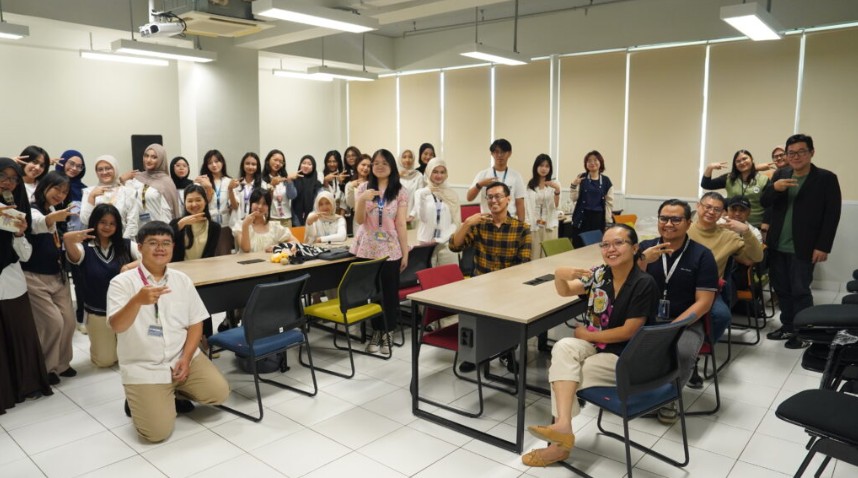
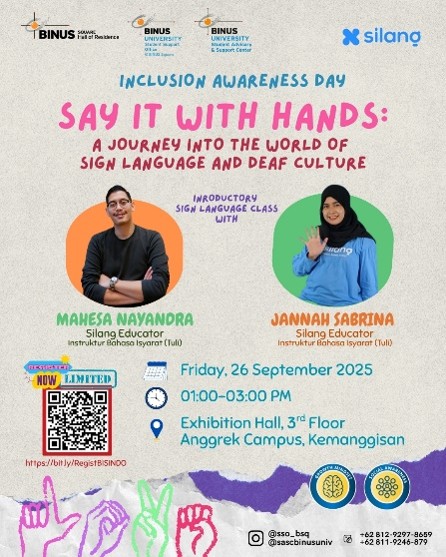
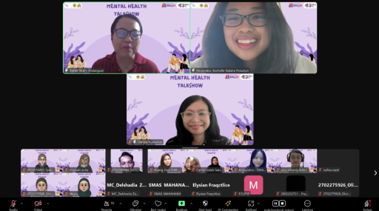
SASC also provides psychoeducation sessions for parents, lecturers, and other members of the campus community. Through formats such as seminars, talk shows, exhibitions, and mini-classes, these activities help stakeholders understand disability-related needs and identify appropriate ways to support students.

This approach helps create a more responsive learning environment by combining individual support with broader awareness of disability and accommodation needs.

BINUS University is committed to fostering an inclusive learning environment by providing support services for students with disabilities. Through its disability support initiatives, the Student Advisory and Support Center (SASC), and student support resources, the University aims to help students access educational services, participate in academic activities, and engage in campus life with greater independence.

  1. Dedicated Disability Support Services

BINUS University provides dedicated Disability Services to support students with disabilities and address their individual needs. These services include counselling for students and their parents to support students’ adjustment to university life and provide guidance to families.

The University also conducts capacity-building activities and disability awareness programmes to strengthen the understanding and ability of the university community to support students with disabilities.

Students who require assistance or experience difficulties related to their studies can contact Student Advisory at their respective campuses to seek support. Through these services, BINUS University provides support for students’ academic adjustment, personal well-being, and participation in university life.

  1. Student Assistance and Support Resources

The University provides student support resources through its official support platform, serving as a point of reference for students seeking assistance and guidance regarding university services. The Student Advisory and Support Center (SASC) also plays an important role in supporting student well-being and inclusion. The University’s official communication identifies a Section Head of Disability Services within SASC BINUS Kemanggisan, demonstrating that disability support is recognized within its student support structure.

BINUS University also facilitates peer support through the Friends Care Community (FCC), particularly its Peer Partner programme. Through this initiative, student volunteers serve as companions and discussion partners for students with disabilities, assisting them with daily academic activities and university-related needs. The programme is conducted throughout the semester under the guidance, monitoring, and evaluation of SASC at each campus.

A student testimonial featured in the University’s video, BINUS University Kampus Bersahabat untuk Teman Netra, illustrates how these support mechanisms work in practice. The student with visual impairment described receiving assistance from fellow students when navigating campus. When arriving alone, the student can also rely on campus security personnel who have been informed of their needs and can provide assistance. The student also highlighted the support received from a counsellor and the welcoming attitude of fellow students, which helped create a comfortable and inclusive campus experience.

  1. Commitment to an Inclusive Learning Environment

BINUS University provides academic support through regular briefings for lecturers who teach students with disabilities. These briefings help lecturers understand individual student needs and prepare appropriate support throughout the learning process.

To complement these briefings, the University provides a Disability Pocket Book as a practical reference for lecturers. The guide covers the characteristics of different types of disabilities and provides guidance on appropriate communication and interaction, including recommended practices and things to avoid. It also helps lecturers recognize possible signs that a student may require additional attention or support and understand how to respond appropriately.

In addition, the availability of digital learning materials through the University’s Learning Management System (LMS) supports students with visual impairments in accessing course content. As described in the student testimonial, the student can use assistive technology to listen to learning materials available through the LMS. The availability of e-books instead of printed textbooks in the student’s study programme also facilitates access to academic resources in formats that can be used with assistive devices.

Beyond these academic support initiatives, the BINUS ecosystem also contributes to accessibility through technology-driven innovation. Alumni of Apple Developer Academy @BINUS have developed Hearo, an application designed to facilitate communication with people with hearing impairments through sign language translation. This innovation demonstrates the potential of technology and alumni contributions to address accessibility challenges and promote a more inclusive society.

Through these efforts, BINUS University supports an academic environment that recognizes diverse learning needs while encouraging innovation to address accessibility challenges in the wider community.

BINUS University is committed to providing an inclusive and accessible learning environment for people with disabilities. Through accessible campus infrastructure, disability support services, and institutional guidelines, the university seeks to reduce barriers to education and campus participation and to ensure that students with disabilities can access facilities and receive appropriate support according to their needs.

  1. Accessible Campus Infrastructure

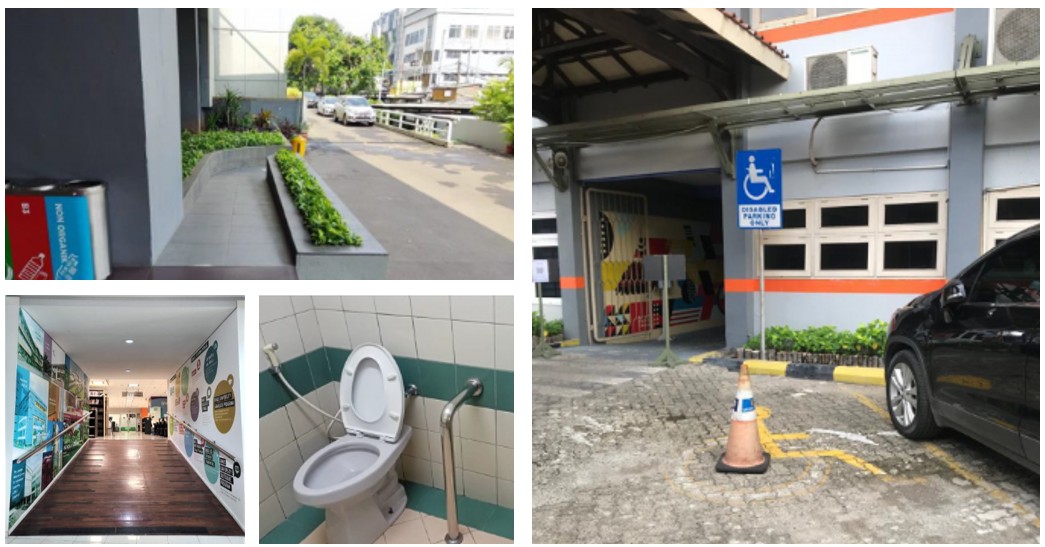
BINUS University recognizes the importance of physical accessibility in enabling people with disabilities to navigate campus facilities safely and independently. As documented in its Accessible Facilities initiative, the university provides accessibility features designed to support mobility and access to campus buildings and learning spaces. These facilities are intended to help students and other members of the university community with disabilities participate more comfortably in academic and campus activities.

Documented accessibility features include ramps, designated parking spaces for people with disabilities, and accessible restrooms. These facilities help reduce physical barriers and support access to campus buildings and other university spaces.

BINUS University also provides campus maps to help members of the university community identify campus locations and navigate university facilities, including accessible routes and facilities.

Together, the campus maps and documented accessibility features support the university’s efforts to improve campus access and reduce physical barriers for people with disabilities.

  1. Disability Support and Student Services

Beyond physical infrastructure, BINUS University supports an inclusive campus experience through dedicated Disability Services provided by the Student Advisory and Support Center (SASC). These services help students with disabilities navigate their academic experience, adapt to the campus environment, and receive appropriate support according to their individual needs.

The services include counselling for students and parents, capacity-building and educational activities on disability, and awareness initiatives to promote inclusive interactions across the university community. Students who experience difficulties in their studies related to accessibility needs can also contact Student Advisory at their respective campuses for assistance, including those who did not declare their disability during admission.

In addition, BINUS University facilitates individualized peer support through the Friends Care Community (FCC), particularly its Peer Partner program. Peer Partners serve as companions and discussion partners for students with disabilities, assisting them with their daily academic activities and university-related needs. The program operates throughout a full semester under the guidance, supervision, and evaluation of SASC at each campus. Selected student volunteers receive preparatory training, including Psychological First Aid and role-specific training, to help them provide appropriate peer assistance.

These services provide an institutional framework for addressing individual needs, supporting academic participation, and promoting a more inclusive campus environment.

  1. Disability Guidelines and Awareness

BINUS University provides a Pocket Guide on Disability (Buku Saku Disabilitas) as a practical reference to help lecturers recognize, understand, and appropriately support students with disabilities.

The guide provides information on the characteristics of different disabilities, practical do’s and don’ts when interacting with individuals with disabilities, appropriate communication approaches, and guidance on responding to their specific needs. It also helps lecturers recognize possible signs that a student may require additional attention or support, including situations where specific needs or disabilities have not previously been disclosed or identified.

When students with disabilities are identified in their classes, lecturers receive additional briefings to help them understand the students’ specific needs and prepare appropriate approaches and academic accommodations. This guidance also encourages lecturers to respond sensitively and refer students to the appropriate support services when additional assistance may be needed.

Through the provision of this guide and lecturer briefings, BINUS University strengthens disability awareness and promotes more responsive and inclusive teaching practices across its academic community.

BINUS University supports students, staff, and faculty through institutional counselling and mentoring services, mental health awareness initiatives, inclusivity training, and targeted assistance for students from financially disadvantaged backgrounds. These initiatives address emotional, personal, academic, and financial challenges that may affect well-being and participation in the university community. Together, they contribute to an inclusive environment in which individuals can access support according to their needs.

  1. Institutional Counselling and Student Support Services

The Student Advisory and Support Center (SASC) serves as an institutional resource for student guidance and support at BINUS University. Through its student support services, BINUS provides a channel for students seeking assistance with personal concerns, emotional well-being, and challenges encountered during their university experience.

SASC-related support includes:

  • Student Well-being Services: Comprehensive psychological and personal development services designed to enhance emotional well-being and resilience among students.
  • Counselling Services: Free academic and non-academic counselling for students and their parents, enabling them to navigate academic stress, personal challenges, and life transitions effectively.
  • Academic Monitoring Services: Personalized mentoring and follow-up programs to support students with learning difficulties or declining academic performance.
  • Mentoring Program: BINUS pairs students with trained mentors and tutors who provide both academic and emotional support. These mentors also help new students adapt to university life and foster a sense of belonging within the BINUSIAN community.
  • Disability Support Services: Tailored assistance and learning accommodations for students with physical or learning disabilities, ensuring that all students can thrive equally in the academic environment. 

These services provide an institutional foundation for student support and contribute to a more supportive university experience.

  1. Mental Health Awareness and Emotional Well-being Initiatives

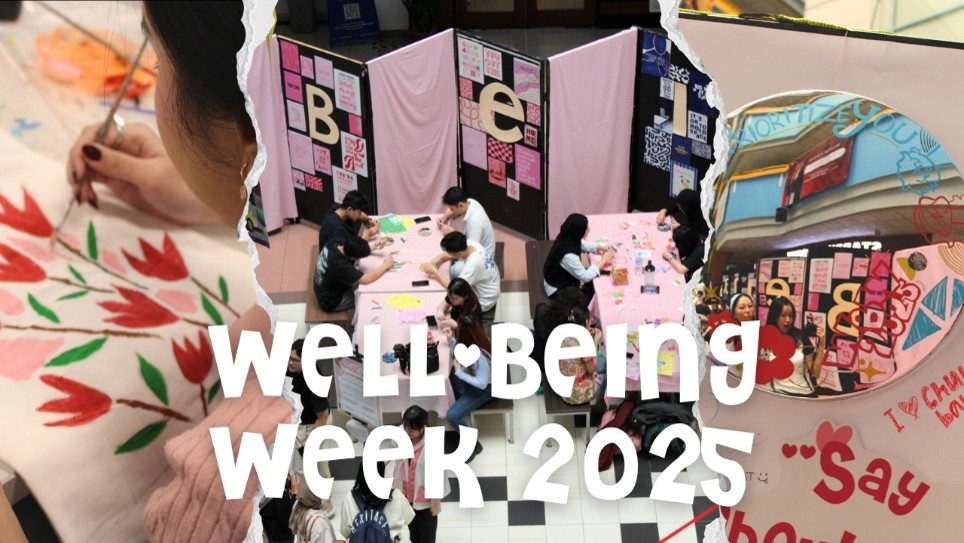
BINUS University also promotes mental health awareness through campus activities that encourage students to reflect on their emotional well-being and recognize the importance of psychological health. In November 2025, BINUS published “Mosaic of Me: Pause and Find Your Pieces,” an activity associated with World Mental Health Day 2025.

  • Mental Health Awareness: The initiative provides a platform for engaging the university community in conversations and activities related to mental well-being.
  • Self-reflection and Emotional Well-being: The theme encourages participants to pause, reflect on their experiences, and recognize the importance of caring for their mental health.
  • A Supportive Campus Environment: Mental health awareness activities complement institutional counselling by encouraging openness around well-being and helping build a campus culture that recognizes the importance of psychological support.

Together, awareness initiatives and counselling services represent complementary approaches to student well-being: one encourages awareness and engagement, while the other provides an institutional channel for seeking assistance.

  1. Targeted Support for Students from Low-Income and Underrepresented Backgrounds

BINUS University provides financial and practical assistance to students from financially disadvantaged backgrounds through scholarship programmes supported by institutional partners, foundations, and alumni. These initiatives help address financial barriers that may affect students’ ability to access and continue higher education.

Relevant programmes include:

  • Affirmation Scholarship: Supports eligible students from designated disadvantaged regions.
  • Wibowo Scholarship: Provides assistance to students from financially disadvantaged backgrounds.
  • ADIK Scholarship: Supports eligible students from designated groups and regions, including students from Papua and children of Indonesian migrant workers, subject to programme eligibility criteria.
  • Additional Educational Assistance: Depending on the programme, support may include living stipends, textbooks, laptops, transportation, accommodation, and meals.

By addressing financial and practical barriers, these initiatives complement BINUS University’s counselling and mentoring services and help students from disadvantaged backgrounds participate in higher education.

  1. Faculty and Staff Training on Inclusivity and Well-being

In addition to student programs, BINUS University provides training sessions, workshops, and professional development programs for faculty and staff.

These activities address relevant topics such as:

  • Recognizing and supporting the needs of underrepresented or vulnerable groups.
  • Promoting mental well-being in the workplace.
  • Creating a more empathetic and inclusive learning and working environment. 

By strengthening awareness and the capacity to respond to diverse needs, these initiatives complement student support services and extend the university’s commitment to well-being and inclusion across its academic and professional community.

BINUS University has established a strong institutional framework dedicated to promoting diversity, equality, inclusion, and human rights within its academic community. The university enforces comprehensive anti-discrimination policies that ensure every member of the BINUS community—students, faculty, and staff—are treated with respect and dignity regardless of race, gender, ethnicity, religion, disability, or sexual orientation.

BINUS University has established a strong institutional framework to promote diversity, equality, inclusion, and human rights within its academic community. The university enforces comprehensive anti-discrimination policies, ensuring that students, faculty, and staff are treated with respect and dignity regardless of race, gender, ethnicity, religion, disability, or sexual orientation.

To uphold ethical standards and foster inclusion, BINUS has established several dedicated units overseen by senior officials, including Good Organization Governance (GOG), Human Capital (HC), Student Advisory and Support Center (SASC), International Office (BIO), Student Club & Activity Center (SCAC), and Lecturer Services Center (LSC).

  • Good Organization Governance (GOG) oversees institutional ethics and integrity. One of its key initiatives is the Whistleblowing System (WBS), which enables stakeholders to report integrity violations such as bribery, conflicts of interest, fraud, or other misconduct. Reports are submitted in good faith via the official GOG website, ensuring privacy and protection. The GOG Center, supported by university management, investigates and resolves reported issues, promoting a culture of transparency and accountability.

  • Human Capital (HC) manages conflicts and conducts investigations into internal and external inquiries. HC provides guidance on HR policies, conflict resolution, and employee engagement, ensuring a safe and supportive work environment. It also develops communication strategies to facilitate two-way dialogue and feedback between executives and employees, helping to prevent conflicts and enhance organizational effectiveness.

  • Student Advisory and Support Center (SASC) provides comprehensive support for students, addressing both academic and non-academic issues. It offers psychological counseling, guidance for academic challenges, and safe channels for reporting ethical violations. SASC supports student well-being and ensures that individuals can reach their full academic potential.

  • Student Club & Activity Center (SCAC) nurtures student involvement in campus organizations, including religious, cultural, and diversity-focused initiatives. SCAC fosters both hard and soft skills development, encouraging leadership, collaboration, and community engagement. The center also facilitates religious freedom and dedicated time for worship, ensuring an inclusive environment for all faiths.

  • BINUS International Office (BIO) supports international students throughout their academic journey, assisting with orientation, visa and administrative issues, health services, and counseling. BIO ensures that international students adapt smoothly to the campus environment and are integrated into the academic and social community.

  • Lecturer Services Center (LSC) addresses academic support, including advising, curriculum guidance, and ethical concerns such as academic misconduct. LSC acts as the first point of contact for students and faculty reporting academic ethical violations, ensuring fair and timely resolution.

In addition, BINUS has established the PPKPT Task Force (Satuan Tugas Pencegahan dan Penanganan Kekerasan) to ensure a safe, inclusive, and violence-free campus environment. The task force is responsible for preventing and handling all forms of violence, including physical, psychological, sexual, as well as discrimination and intolerance. By involving faculty, staff, and students, PPKPT receives reports, provides education, offers guidance and support, and monitors the implementation of anti-violence policies across the university.

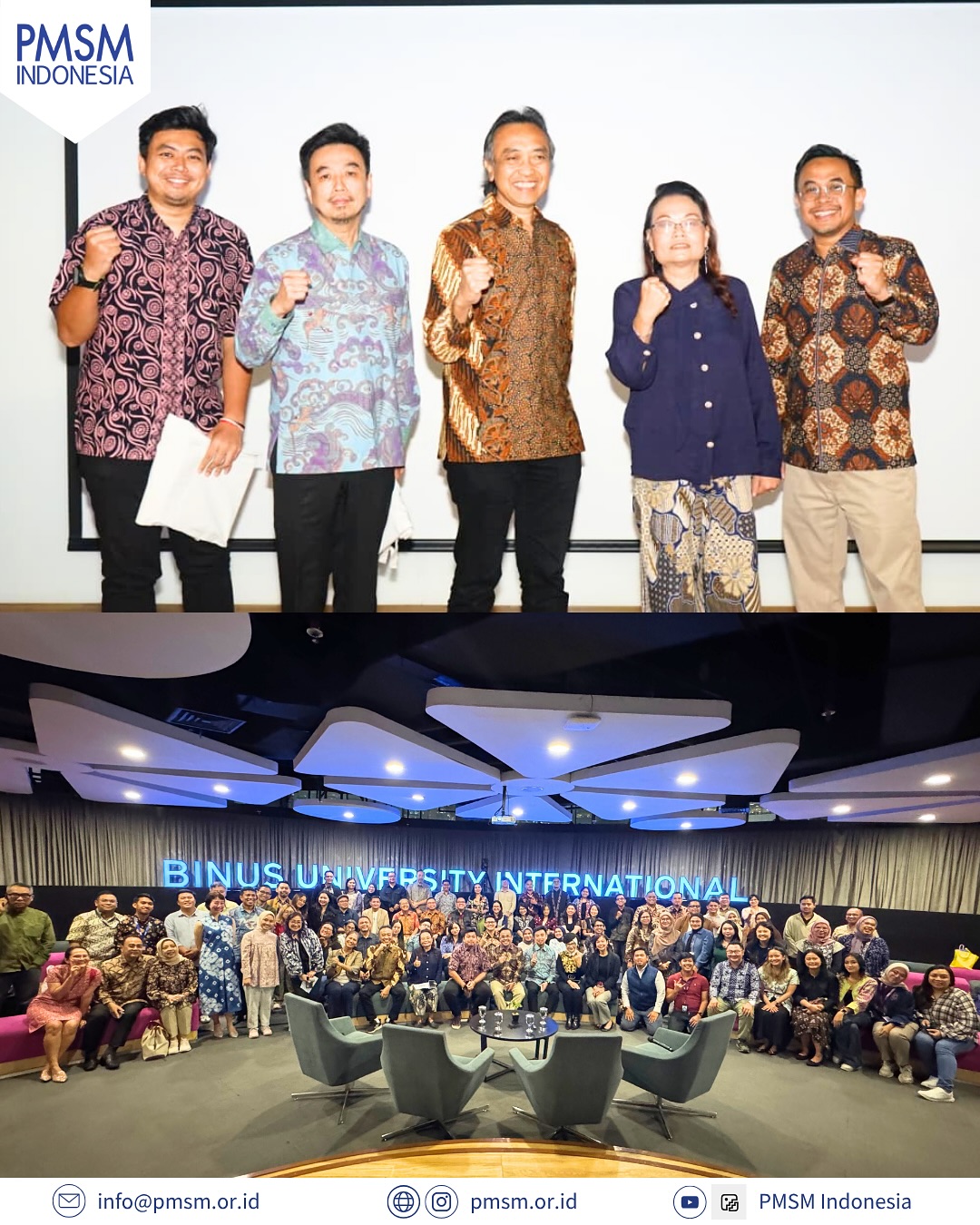
In 2025, BINUS University collaborated with PMSM Indonesia through the HR Meet & Talk event, “New Ways of Working: A Strategy or Necessity,” held on 2 October 2025 at BINUS fX Senayan. The discussion explored how flexible work arrangements can support employee well-being, productivity, organizational effectiveness, and a culture of learning and collaboration.

According to PMSM Indonesia’s research presented at the event, 52% of surveyed organizations in Indonesia had adopted New Ways of Working (NWW), citing employee happiness, productivity, and talent attraction as key considerations, while 48% continued to follow conventional work arrangements due to operational requirements or management policies.

These efforts are supported by official policies such as Rector’s Decree 0136A, which outlines the university’s commitments to equality, non-discrimination, and human rights, as well as the Student Handbook and Staff Regulations that govern respectful conduct within the community. Together, these frameworks provide a strong foundation for inclusive practices and ethical behavior across all levels of the institution.

Through these policies, committees, support units, and student initiatives, BINUS University ensures that ethics, diversity, and equality remain central to its governance and community life. These efforts reflect the university’s vision of nurturing a globally engaged academic environment that values respect, fairness, and inclusivity, while supporting holistic development for students, staff, and faculty alike.

BINUS University has established institutional policies to prevent discrimination, harassment, and violence and to maintain a safe, inclusive, and respectful environment for all members of its university community, including students, faculty, and staff. The university’s commitment to equality, diversity, and inclusion is formalized through Rector’s Decree No. 0136A and reinforced by its Zero Tolerance Policy on discrimination and violence.

The university’s commitment is further demonstrated through Rector’s Circular Letter No. 1677A/REK/IX/2023 on the Implementation of Anti-Discrimination and Anti-Violence. This circular reinforces BINUS University’s prohibition of discriminatory and violent behavior, including physical and psychological violence. The policy promotes equal treatment and respect for individuals regardless of their backgrounds, including differences in ethnicity, race, religion, gender, and disability status.

In addition to its anti-discrimination framework, BINUS University has an explicit anti-harassment policy. The university prohibits harassment and other forms of violence that threaten the safety, dignity, and well-being of its community members. Its commitment is also reflected in the Employment Guideline, which applies to employees and business units under BINUS management. Article 68 addresses negative conduct involving ethnicity, religion, race, and inter-group relations (SARA), as well as sexual harassment. Violations may result in disciplinary measures in accordance with institutional regulations and applicable laws.

BINUS University also provides mechanisms for reporting and addressing incidents of discrimination and harassment. Complaints are handled seriously and confidentially, with appropriate follow-up and disciplinary action based on the nature of the violation. Furthermore, the university has established a task force for the prevention and handling of sexual violence in higher education, supporting the implementation of preventive measures, education, and responses to reported cases.

These policies and implementation mechanisms demonstrate that BINUS University’s commitment extends beyond general statements of equality. Through formal rectoral regulations, employment guidelines, a zero-tolerance approach, and reporting and response mechanisms, BINUS University establishes an institutional framework to prevent discrimination and harassment and to promote a safe, fair, and inclusive environment for its entire university community.

BINUS University takes planned actions to expand access to higher education and promote equitable employment opportunities for individuals from underrepresented groups. These efforts include students from low-income families and underserved regions, as well as staff and faculty members from diverse backgrounds. Through targeted educational access initiatives, institutional anti-discrimination policies, and employment guidelines, BINUS University establishes a framework to support diversity, equal opportunity, and inclusive participation within its academic and professional community.

These initiatives align with BINUS University’s vision of “Fostering and Empowering the Society in Building and Serving the Nation,” reflecting its commitment to making educational and professional opportunities more accessible to people from diverse backgrounds.

  1. Targeted Recruitment and Educational Access for Underrepresented Groups

BINUS University promotes wider access to higher education through initiatives designed to reach students who may face financial, geographical, or other barriers to university participation. Its Access to University Underrepresented Groups Recruit initiative highlights planned efforts to recruit students from underrepresented backgrounds, including individuals from low-income families and remote regions.

  • Affirmative Scholarship Opportunities: BINUS supports access to higher education through scholarship initiatives, including the Affirmation Scholarship and the ADik (Afirmasi Pendidikan Tinggi) Scholarship, which help eligible students from disadvantaged backgrounds pursue university education.
  • Access for Students from Diverse Regions: These initiatives help broaden educational opportunities for students from underserved areas, including regions such as Papua, where geographical and economic circumstances may create additional barriers to higher education.
  • Flexible Educational Pathways: BINUS provides flexible learning options to accommodate individuals whose work schedules or family responsibilities limit their availability for conventional study arrangements. BINUS Online Learning offers an alternative pathway for individuals who require greater flexibility, while evening classes for postgraduate programs, accommodate working professionals who pursue higher education alongside their careers.

Together, these initiatives demonstrate BINUS University’s approach to widening participation and reducing barriers to university access for underrepresented student groups.

  1. Institutional Anti-Discrimination Policy for Fair Recruitment and Employment

Beyond student access, BINUS University establishes institutional policies to promote fair treatment and prevent discrimination in its employment practices. Its Employment Policy on Discrimination provides a policy foundation for an inclusive workplace in which employment opportunities and professional participation are not unfairly restricted by personal background or characteristics addressed by institutional policy.

  • Non-Discriminatory Employment Principles: BINUS’s employment policy reinforces the importance of preventing discrimination and promoting fair treatment in the workplace.
  • Equal Opportunity for Staff and Faculty: By establishing institutional standards against discriminatory practices, BINUS supports an environment in which academic and administrative personnel from diverse backgrounds can participate in the university community.
  • Institutional Accountability: Formal policies provide a framework for communicating expected conduct and addressing discriminatory practices, supporting fairer employment processes and a more inclusive working environment.

These measures complement BINUS University’s efforts to broaden access to education by addressing the importance of fairness and equal opportunity in staff and faculty participation.

  1. Implementation of Fair and Inclusive Employment Practices

BINUS University further reinforces its employment commitments through its Full Commitment for Employment Sustainability, published on 11 June 2025. The institutional employment guideline applies to employees and business units under BINUS management, with implementation involving the Human Capital & Legal Division. It addresses workplace conduct, nondiscrimination, harassment prevention, grievance mechanisms, and fair compensation.

  • Fair Employment Practices: Employment guidelines promote fair treatment and compensation based on job responsibilities, performance, expertise, and proficiency rather than arbitrary personal characteristics.
  • Protection Against Discrimination and Harassment: Institutional expectations and complaint channels provide mechanisms for addressing workplace concerns and reinforcing respectful professional relationships.
  • Consistent Implementation Across the Institution: The application of employment guidelines across relevant employees and business units supports a consistent institutional framework for inclusive employment practices.

By establishing and implementing these employment standards, BINUS University strengthens the institutional conditions needed to support diverse staff and faculty members and promote equitable participation in the workplace.

BINUS University demonstrates its commitment to diversity, inclusion, and equitable access to higher education by monitoring and supporting the participation of underrepresented groups among prospective applicants and admitted students. These groups include ethnic minorities, low-income students, women, students with disabilities, non-traditional adult learners, and students from remote and underdeveloped regions, including Papua and other designated 3T areas.

  1. Support and Admission Pathways for Students from Papua and 3T Regions

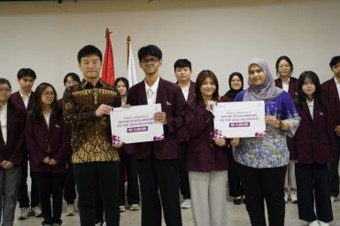
Throughout 2025, BINUS University supported access to higher education for students from disadvantaged, frontier, and outermost regions (3T), particularly Papua, through the Afirmasi Pendidikan Tinggi (ADik) Scholarship Program, in collaboration with the Indonesian government.

Introduced in 2012, the ADik program provides eligible students from designated underrepresented regions with an opportunity to pursue higher education at participating universities, including BINUS University.

Admission pathway and eligibility. According to the official ADik guidelines published by Indonesia’s Ministry of Higher Education, Science, and Technology, applicants from Papua and designated special regions must meet the program’s eligibility requirements and complete the prescribed registration and selection procedures. The process includes:

  • Applicant identification and recommendation: Eligible students are identified and recommended through the relevant education authorities and program coordinators.
  • Registration and application: Applicants are registered through the ADik information system, with the required identification details and supporting documents.
  • Eligibility verification: The program administrators verify and validate applicants’ submitted documents.
  • University selection: Eligible candidates undergo the applicable admission selection process. The university leadership, supported by the ADik implementation team, determines the scholarship recipients at the university selection stage.
  • Final determination: The designated government authority establishes the final list of new ADik scholarship recipients.

These publicly documented procedures demonstrate the existence of a structured affirmative admission pathway for eligible students from underrepresented regions. Together with BINUS’s documented participation in the program, they provide supporting evidence of the university’s efforts to widen access to higher education.

The impact of expanding higher education access is reflected in the experience of Yasinta Nunggut, a student from Agats, Asmat Regency, South Papua, who pursued a degree in Primary School Teacher Education (PGSD) at BINUS University through a scholarship. After completing her degree, Yasinta expressed her intention to return to Agats and contribute to improving education for children in Papua. Her journey illustrates how access to higher education can help students from remote regions develop the knowledge and skills needed to contribute to their home communities.

These experiences illustrate how affirmative access initiatives can support students beyond admission through academic development and career preparation.

  1. Target Setting, Performance Measurement, and Tracking Data

BINUS University has established an annual target through its Affirmation Scholarship program to provide scholarships to 1,000 students from the lowest 20% of household income groups. This initiative seeks to reduce financial barriers and expand access to higher education for students from economically disadvantaged backgrounds.

To demonstrate systematic monitoring of applications and admissions, BINUS can report the number of applicants, admitted students, and scholarship recipients from eligible low-income groups, where these data are collected and available. Comparing these figures against annual targets would help assess participation and identify opportunities to improve access.

  1. Commitment to Gender Equality and Disability Inclusion

BINUS University promotes gender equality and female participation across academic programs. Initiatives such as Women in Tech, faculty mentorship, and leadership forums support women’s participation, including in traditionally underrepresented fields.
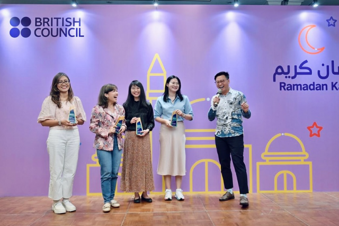
For students with disabilities, BINUS provides support through mechanisms that identify individual accessibility requirements and facilitate appropriate academic accommodations. These may include assistive technologies, accessible campus infrastructure, and specialized support services managed by the Student Advisory and Support Center (SASC).

To address the indicator’s admission focus, evidence of how applicants and admitted students are monitored by gender and disability status would further demonstrate the extent of BINUS’s systematic tracking practices.

  1. Empowering Non-Traditional Students and Career Pathways

BINUS Online Learning offers flexible study opportunities for learners who may face barriers associated with work, age, family responsibilities, or other commitments. This pathway can support broader participation by non-traditional learners who require flexibility in their higher education experience.
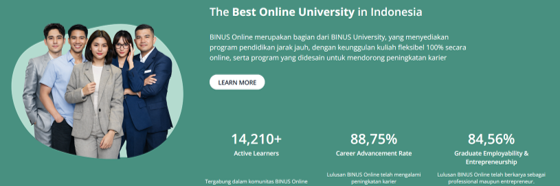
Monitoring applications, admissions, and enrollment through flexible learning pathways, where available, can help the university assess access among non-traditional students.

BINUS also supports students’ career development through career counseling and internship opportunities. These initiatives complement equitable access efforts by helping students prepare for employment and transition into professional careers.

BINUS University implements a non-discriminatory admissions policy based on Rector’s Decree No. 044A (Chapter I, Article 2) regarding new student recruitment. Admission decisions are based on the academic knowledge and potential skills of prospective students, ensuring that the selection process focuses on their educational qualifications rather than discriminatory considerations. The university’s policy emphasizes equal educational opportunities for prospective students regardless of their religion, ethnicity, race, gender, social status, or disability.

The policy is publicly available through BINUS University’s official website, which outlines the university’s commitment to providing equal opportunities for prospective students from diverse backgrounds. The admissions process and its requirements are also communicated through the official admissions website, allowing applicants to access relevant information about admission procedures and requirements.

Furthermore, BINUS University supports equitable access to higher education by recognizing the needs of academically capable prospective students who face financial barriers or have disabilities. These considerations reflect the university’s commitment to inclusive education and its efforts to ensure that personal circumstances do not become unjustified barriers to pursuing higher education. Where targeted assistance is provided, such measures support the broader objective of reducing inequalities in access to educational opportunities.

The university’s commitment to non-discrimination is further reinforced by Rector’s Circular Letter No. 1677A/REK/IX/2023 concerning anti-discrimination and anti-violence measures on campus. This institutional commitment complements the admissions policy by promoting an inclusive and respectful educational environment.

Through its formally documented admissions policy, publicly accessible admissions information, and institutional commitment to preventing discrimination, BINUS University demonstrates its commitment to fair admissions and equal educational opportunities for prospective students.