NO POVERTY
NO POVERTY
End poverty in all its forms everywhere.
142
ACTION GOALS
121
PUBLICATIONS

EXPERTS

Maria Loura Christhia, S.T., M.Sc.
Related Goals
149
Dr. Kukuh Lukiyanto, S.T., M.M., M.T.
Related Goals


BINUS University has established the BINUS World Class Equity Scholarships, specifically designed to support students from low or lower-middle income countries. This scholarship program aims to promote equitable access to higher education by providing comprehensive financial assistance to economically disadvantaged students.

Key Features of the Program:

  • Financial Support: The scholarship covers tuition fees, room and board, stay permits, and health insurance, thereby alleviating the financial burden on students.
  • Inclusivity: It targets students from underrepresented backgrounds, ensuring that those who face economic challenges have the opportunity to pursue their academic goals.
  • Comprehensive Benefits: In addition to the extensive coverage, recipients gain access to educational resources, mentoring programs, and personal development workshops, further enhancing their educational experience.
  • Commitment to Equity: This initiative reflects BINUS University’s commitment to fostering an inclusive academic environment, addressing disparities in education, and empowering students from diverse backgrounds to succeed.

By implementing the BINUS World Class Equity Scholarships, BINUS University actively supports poor students, enabling them to access quality education and achieve their full potential.
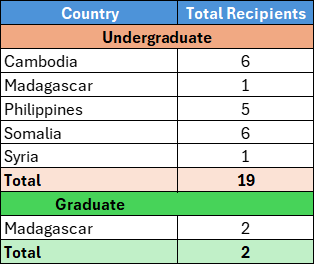
In 2024, BINUS University awarded scholarships to the following number of students:

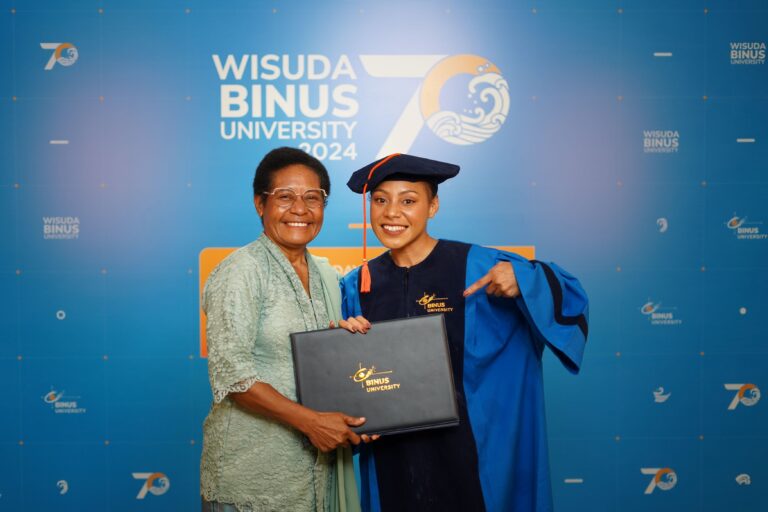
   Dari Nabire Menuju Kelas Dunia

BINUS has a target of a minimum of 80% for on-time graduation among all scholarship recipients, particularly for students who fall into the bottom 20% of household income groups. We offer various programs and facilities designed to help address the challenges these students face in achieving their academic goals. Additionally, scholarship recipients are provided with specific academic targets to assist them in attaining good grades and graduating successfully.

For instance, you can read about inspiring stories of our graduates, such as:

  • Farida, overcame economic and geographic barriers to graduate from BINUS with a scholarship and strong determination.
  • Gilbert, who faced extreme financial struggles and personal loss, completed his studies at BINUS with the help of the Wibowo Scholarship.

BINUS University is deeply committed to increasing access to higher education for students from economically disadvantaged backgrounds. To support this commitment, BINUS offers a variety of scholarship programs aimed at helping students with financial need, including:

  • Beasiswa Wibowo, designed for students demonstrating both academic potential and financial hardship.

  • Beasiswa BINUS Bagi Negeri, targeting talented students from remote and underserved regions of Indonesia.

  • BINUS Talent Kids Scholarship, which supports academically gifted children from low-income families within the local community.

  • Several merit-based scholarships that also take financial background into consideration during selection.

Through our Affirmation Scholarship program, we set an annual goal to provide scholarships to 1,000 students from this income bracket. This initiative is designed to improve access to higher education for individuals facing financial challenges, ensuring that all deserving candidates can pursue their academic aspirations without being burdened by financial constraints. By meeting these annual intake targets, BINUS demonstrates its commitment to fostering a more inclusive and diverse academic environment, ensuring equal educational opportunities for students from various socioeconomic backgrounds.

BINUS University has several programs and initiatives designed to assist students from the bottom 20% of household income groups in successfully completing their studies. To support the graduation targets for scholarship recipients in this group, BINUS implements a variety of programs:

  • Support Services: Through the Student Academic Support Center (SASC), we offer a range of counseling services—both academic and non-academic—as well as mentoring, study resources, and disability services to help students navigate their educational journey.
  • Training Programs: We provide diverse training opportunities aimed at enhancing students’ skills and preparing them for academic success.
  • Blended Learning Facilities: Our blended learning approach enables students to study more flexibly, accommodating their personal circumstances and schedules.
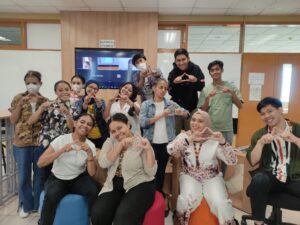
  • Engagement Activities: This program focuses on building a supportive community among students, encouraging them to connect, share experiences, and support one another throughout their academic journeys. Activities include workshops, group discussions, and social events designed to foster engagement and collaboration. This initiative emphasizes the importance of community support in helping students succeed and navigate their university experience.

An example of this is the Engagement Program for ADIK scholarship recipients, which is specifically designed for children from Papua, areas classified as 3T (Terluar, Terdepan, Tertinggal), and children of immigrant workers in Indonesia.

BINUS University actively collaborates with various partners, including corporations, foundations, and alumni, to provide extensive support for students from low-income families. This collaboration ensures that students can complete their studies effectively through a range of scholarship programs that not only cover tuition fees but also offer additional benefits, including Monthly stipends, Textbooks, Laptops (for specific programs), Internship opportunities, Bus services, Dormitory accommodation, and Free lunches.

These initiatives are designed to address the various challenges faced by financially disadvantaged students. Specific scholarship programs include:

  • Affirmation Scholarship: Targeted at students from regions requiring special attention.
  • Wibowo Scholarship: Offered by the BINA NUSANTARA Foundation for financially disadvantaged students.
  • ADIK Scholarship: For students from specific areas, including Papua and children of migrant workers.
  • ASAK Scholarship: A social movement providing educational funding for underprivileged families.
  • Adik Asuh Scholarship: Funded by donations from BINUS alumni, aimed at helping disadvantaged students.

These comprehensive support measures demonstrate BINUS University’s commitment to assisting students from low-income backgrounds, enabling them to pursue their education without financial barriers.

BINUS University has intensified its active role in supporting sustainable development and poverty alleviation efforts in Labuan Bajo, East Nusa Tenggara, by collaborating closely with local governments, community members, and various stakeholders.

A key aspect of BINUS’s engagement lies in its contribution to local policy development and implementation. Through comprehensive research including social-economic mapping and community surveys in Batu Cermin village, BINUS provides critical data that informs evidence-based policymaking. This collaboration ensures that development plans truly reflect community needs and address the multidimensional aspects of poverty in the region.

Beyond research, BINUS has implemented impactful programs that empower the community economically and socially:

  • MABAR Smart Digital Platform:
    Developed jointly with local government and MSMEs, this innovative digital application enhances market access and operational efficiency for small enterprises. Training workshops accompanying the platform boost digital literacy and entrepreneurial skills among local business owners.

  • Organic Farming Initiatives:
    Partnering with Aliansi Organis Indonesia, BINUS promotes environmentally sustainable farming techniques, enabling farmers to reduce chemical inputs, improve crop yields, and increase incomes.

  • Digital Skills and Entrepreneurship Training for Youth and Women:
    BINUS provides targeted programs to enhance digital competencies and entrepreneurial capacity, with a focus on empowering women and youth, thus fostering inclusive economic growth.

  • Sustainable Tourism Collaboration:
    Working alongside local stakeholders, BINUS supports tourism models that balance economic development with environmental conservation and cultural preservation, benefiting marginalized communities.

  • Community-Based Disaster Risk Reduction:
    Recognizing regional vulnerabilities, BINUS assists in formulating preparedness plans to enhance community resilience as part of sustainable development strategies.

  • Inclusive Education and Capacity Building:
    Through workshops and educational initiatives, BINUS strengthens local human capital, providing tools necessary for long-term poverty reduction.

BINUS’s role extends beyond program implementation to active participation in policy dialogues, offering research-based recommendations and facilitating multi-stakeholder forums. This integrated approach supports the creation of inclusive and effective policies that promote economic opportunity, environmental sustainability, and social resilience.

The impact of BINUS University’s initiatives in Labuan Bajo is evident: increased income for entrepreneurs, more sustainable farming practices, and a strengthened community capacity to adapt and grow. These efforts demonstrate how academic institutions can play a transformative role in ending poverty — by combining expertise, innovation, and partnership with policy and grassroots action.

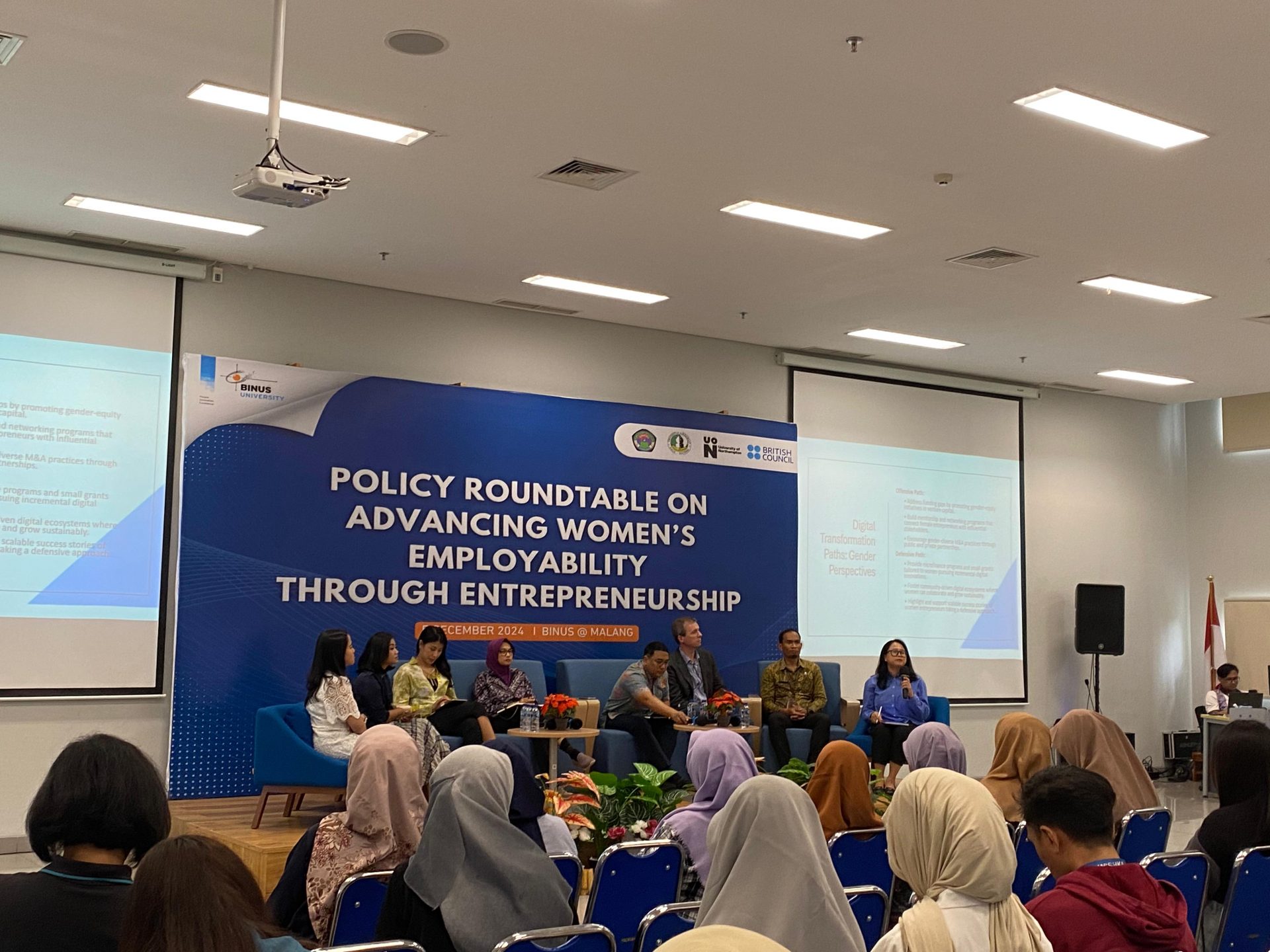
In addition to its impactful work in Labuan Bajo, BINUS University extends its commitment to poverty reduction through international collaborations focused on empowering women entrepreneurs. In December 2024, BINUS partnered with the University of Northampton, UK, to hold a Policy Roundtable on Advancing Women’s Employability Through Entrepreneurship. Supported by the British Council’s Gender Equality Partnership Program, this event gathered policymakers, academics, and students to discuss strategies for building an inclusive women’s entrepreneurship ecosystem in Indonesia.

The roundtable highlighted the challenges women face in starting and growing businesses and emphasized the importance of supportive policies and educational programs. This collaboration fosters knowledge exchange between Indonesian and UK universities, aiming to develop innovative approaches that promote economic inclusion and sustainable growth for women.

Through such international partnerships, BINUS plays a crucial role in shaping policies and programs that empower marginalized groups, thereby contributing to poverty alleviation on a broader scale.

BINUS University has consistently demonstrated its commitment to community empowerment by organizing various training programs and initiatives that directly improve access to essential services such as health, sanitation, and digital literacy. These efforts reflect a comprehensive approach that blends practical action with academic research to support communities, particularly those in underserved areas.

Stunting Reduction Program in Serdang Bedagai

One of the most significant health-related initiatives was a collaborative program to reduce stunting in Serdang Bedagai Regency, North Sumatra. In partnership with the Serdang Bedagai local government, Universitas Sumatera Utara (USU), and PT Mega Medica Pharmaceuticals (MMP), BINUS University helped design and execute a six-month stunting intervention covering 243 villages, 6 urban wards, and 20 community health clinics (puskesmas).

This intervention involved two main components: nutritional support and data-driven monitoring. Children who were identified as at risk of stunting received a specially formulated syrup made from local ingredients such as fish extract (ikan gabus), temulawak, and meniran. This was accompanied by the use of a digital platform called StuntingDB, which allowed health workers to record and analyze child growth data, ensuring the intervention’s effectiveness could be properly tracked.

As a result of this program, local authorities reported a decrease in stunting prevalence, along with improved appetite, weight, and height among participating children. The program serves as a strong example of how academic institutions like BINUS can contribute to solving complex public health issues through coordinated, multi-sector collaboration.
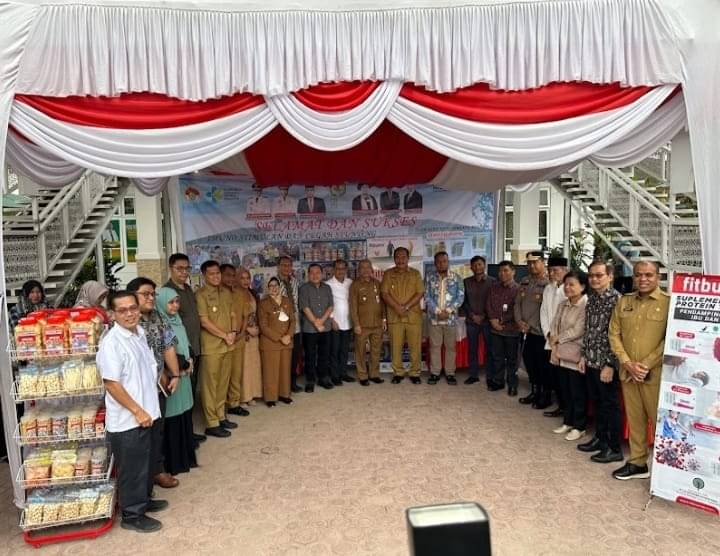
Kolaborasi Binus, Pemkab Sergai, USU, dan PT MMP Sukses Turunkan Angka Stunting

Community Waste Management and Sanitation Training in West Jakarta

In an urban context, BINUS University supported efforts to improve sanitation through a community waste management program in Taman Alfa Indah, West Jakarta. This program engaged local residents in both education and action, with the goal of increasing awareness, responsibility, and participation in maintaining a clean living environment.

The initiative began with training sessions on how to conduct satisfaction surveys regarding local waste collection services. These surveys helped residents communicate their needs and concerns more effectively to service providers and neighborhood administrators. In addition, BINUS provided hands-on workshops about waste segregation at the household level, teaching participants to properly sort organic, recyclable, and non-recyclable waste.
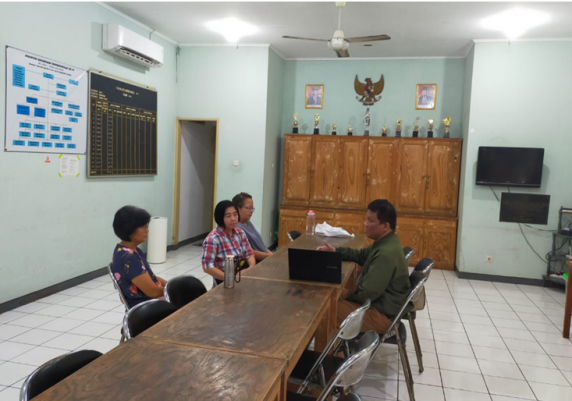
Research on Sanitation Infrastructure in Ciamis

In addition to its fieldwork, BINUS University also engages in academic research that supports improved access to basic services. One such study, published in the EMACS Journal, examined the condition and management of sanitation infrastructure in Ciamis Regency, West Java. The paper, titled “Study of Sanitation Infrastructure Operations,” assessed 63 MCK (public bathing, washing, and toilet) facilities across 62 villages.

The research revealed that while many units remained operational, others had deteriorated or were not being used optimally. The study highlighted the importance of community involvement in the maintenance of sanitation infrastructure and recommended mechanisms for local contributions to promote sustainability.

By producing and publishing research on community sanitation issues, BINUS contributes knowledge that can influence policy, strengthen local governance, and inform future programs across the country.

Through targeted health interventions, sanitation training, rural digital empowerment, and academic research, BINUS University continues to play an active and meaningful role in improving access to basic services for all. These initiatives demonstrate a university-wide commitment to inclusive development, showing how higher education institutions can serve as agents of change for both urban and rural communities. By combining community engagement with evidence-based strategies, BINUS helps ensure that essential services become more accessible, equitable, and sustainable for everyone.

BINUS University actively supports the development of financially and socially sustainable businesses in the local community through structured educational programs, resource access, and external funding facilitation. This commitment is reflected in initiatives such as the BINUS Incubator, BINUS StartUp Accelerator (BiSA), and Community Development Academic (CDA) programs.

  1. Incubation & Mentorship Programs

The BINUS Incubator provides a comprehensive platform for nurturing entrepreneurship among students, alumni, and external community members. Its key features include:

  • Structured business incubation for students in the Entrepreneurship Track (Program Enrichment), with modules on business model development, marketing, and operations.
  • Mentorship & expert guidance from industry professionals for both students and non-student entrepreneurs.
  • Co-working spaces at BINUS campuses (Anggrek, Alam Sutera, Bekasi) to foster collaboration and innovation.
  • Regular Demo Days, Pitch Deck sessions, and lecturer expert series for practical exposure and investor readiness.
  1. Funding Facilitation & Investment Support

Beyond training and infrastructure, BINUS also supports access to external funding for start-ups. Through the BINUS StartUp Accelerator (BiSA) and Incubator programs, start-ups are connected with:

  • Angel investors, venture capital firms, and corporate partners
  • Government grant programs
  • Alumni networks and family-based funding
  • In-kind support (mentorship, tools, office space) from external collaborators

These connections are facilitated through curated events such as Demo Day and networking sessions, while entrepreneurs are guided in preparing investment proposals and navigating funding negotiations.

  1. Community Development & MSME Empowerment

BINUS also engages the broader local community through its Community Development Academic (CDA) unit. Programs under CDA include:

  • BINUS Bangun Desa, a flagship initiative that partners with over 28 villages to support local development through business training, digital skills development, and entrepreneurship coaching.
  • Konsultasi untuk Desa dan UMKM, offering free online and offline training to micro, small, and medium enterprises (MSMEs), covering areas such as financial literacy, product development, marketing strategy, and supply chain management.

Notable examples include:

  • Empowering UMKM in Kelurahan Banjardowo (Semarang) with digital marketing and financial training.
  • Transforming Desa Pasirmulya into a sustainable tourism village through collaborative planning, branding, and economic empowerment activities.
  1. Social and Financial Sustainability Focus

All programs are designed not only to drive business creation but also to encourage social responsibility, sustainability, and inclusive growth. BINUS ensures that supported ventures promote ethical practices, community engagement, and long-term financial viability.

  1. Evidence of Impact
  • 28+ villages engaged in community development programs
  • Dozens of MSMEs and local entrepreneurs trained annually
  • Start-ups connected to real investors and mentors
  • Cross-disciplinary collaboration between students, lecturers, and local partners

These initiatives demonstrate BINUS University’s strong commitment to fostering innovation, entrepreneurship, and local economic development. By combining education, mentorship, facilities, and access to funding, BINUS ensures that both students and members of the surrounding community have meaningful opportunities to grow sustainable businesses that create real impact.

BINUS University is committed to empowering both students and local communities by fostering sustainable business growth, technological innovation, and tourism development. Through educational resources, incubation programs, and community engagement, BINUS supports the creation of financially and socially sustainable enterprises.

A cornerstone of this effort is the BINUS Incubator, which transforms business ideas into real ventures. Key features of the BINUS Incubator include:

  • Business Incubation Programs: Designed for students who choose the Entrepreneurship Track in the Program Enrichment, equipping them with essential skills and knowledge to start their own businesses.
  • Co-Working Space: Facilities like co-working spaces available at campuses such as Anggrek, Alam Sutera, and Bekasi, foster collaboration among start-ups.
  • Lecturer Expert Series: Sessions featuring industry experts who share valuable insights and best practices.
  • Demoday and Pitchdeck Sessions: Opportunities for students and local community entrepreneurs to present their business ideas to potential investors and receive constructive feedback.
  • Mentorship and Guidance: Comprehensive support that includes mentorship for grant applications and guidance for both student and local community start-ups.
  • Start-Up Expo: An event designed to connect start-ups with the local community and potential investors.

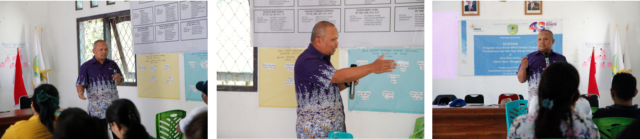
Beyond campus, BINUS strengthens communities through various initiatives. In November 2024, BINUS Community Empowerment (CE) and Teach For Indonesia (TFI) held the PkM Merdeka Smart Village 2024 in Cianjur . The program introduced digital literacy training for health data reporting and POS systems to empower local MSMEs, engaging lecturers, students, and village organizations.

BINUS has also been actively involved in developing sustainable tourism. Since 2023, the university has provided continuous support to Desa Wisata Pulau Komodo. Through workshops, collaborations, and product development initiatives, BINUS helps enhance creative products, promote sustainable tourism management, and strengthen the local economy. Participation in national forums like the Pentahelix Forum further amplifies these efforts, ensuring strong multi-stakeholder collaboration.

By combining entrepreneurship incubation with smart village initiatives and community-based tourism development, BINUS demonstrates its holistic commitment to innovation, sustainability, and social impact—empowering students, alumni, and local communities alike.