NO POVERTY
NO POVERTY
End poverty in all its forms everywhere.
160
ACTION GOALS
158
PUBLICATIONS

EXPERTS

Maria Loura Christhia, S.T., M.Sc.
Related Goals
149
Dr. Kukuh Lukiyanto, S.T., M.M., M.T.
Related Goals


Supporting Students from Low- and Lower-Middle-Income Countries

BINUS University is committed to promoting equitable access to higher education for international students from economically disadvantaged contexts. Through the BINUS World Class Equity Scholarship, the University provides financial support to help reduce the financial barriers associated with studying abroad.

Key Features of the Programme

  • Financial Support: The scholarship provides financial assistance, including coverage of tuition fees and other eligible costs such as accommodation, stay permits, and health insurance.
  • International Accessibility: The programme is open to international students from diverse geographical and economic backgrounds, supporting access to higher education across different contexts.
  • Supportive Educational Environment: Scholarship recipients become part of the BINUS academic community and have access to the University’s educational resources and learning environment.
  • Commitment to Equity: By providing financial assistance to international students, the programme supports BINUS University’s broader commitment to inclusive and equitable access to quality higher education.


Scholarship Recipient Distribution by Income Classification

In 2025, BINUS University awarded scholarships to international students representing different World Bank income classifications. This demonstrates the programme’s contribution to improving access to higher education for students from economically disadvantaged contexts.

Country Income Classification  Total Recipients
Low income 12
Lower-middle income 12


BINUS University has several programs and initiatives designed to assist students from the bottom 20% of household income groups in successfully completing their studies. To support the graduation targets for scholarship recipients in this group, BINUS implements a variety of programs:

  • Support Services: Through the Student Academic Support Center (SASC), we offer a range of counseling services—both academic and non-academic—as well as mentoring, study resources, and disability services to help students navigate their educational journey.
  • Training Programs: We provide diverse training opportunities aimed at enhancing students’ skills and preparing them for academic success.
  • Blended Learning Facilities: Our blended learning approach enables students to study more flexibly, accommodating their personal circumstances and schedules.
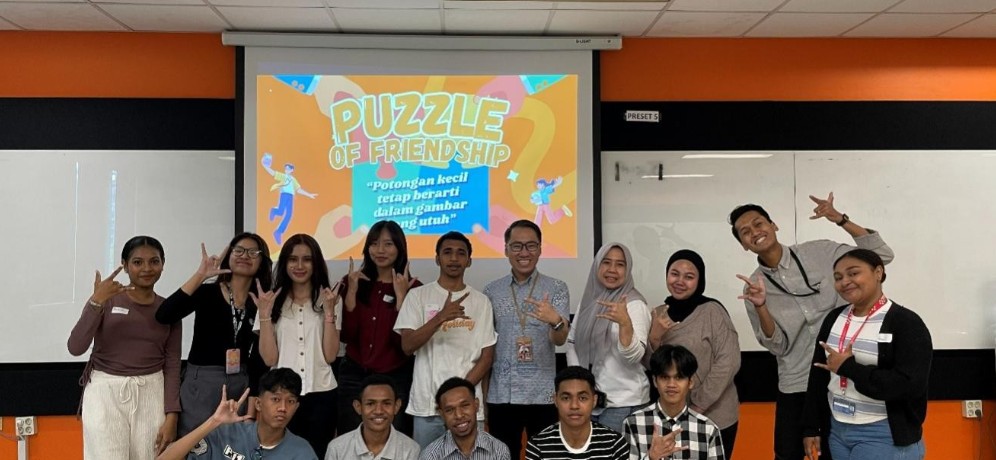
  • Engagement Activities: This program focuses on building a supportive community among students, encouraging them to connect, share experiences, and support one another throughout their academic journeys. Activities include workshops, group discussions, and social events designed to foster engagement and collaboration. This initiative emphasizes the importance of community support in helping students succeed and navigate their university experience.

An example of this is the Engagement Program for ADIK scholarship recipients, which is specifically designed for children from Papua, areas classified as 3T (Terluar, Terdepan, Tertinggal), and children of immigrant workers in Indonesia.

BINUS University actively collaborates with various partners, including corporations, foundations, and alumni, to provide extensive support for students from low-income families. This collaboration ensures that students can complete their studies effectively through a range of scholarship programs that not only cover tuition fees but also offer additional benefits, including Monthly stipends, Textbooks, Laptops (for specific programs), Internship opportunities, Bus services, Dormitory accommodation, and Free lunches.

These initiatives are designed to address the various challenges faced by financially disadvantaged students. Specific scholarship programs include:

  • Affirmation Scholarship: Targeted at students from regions requiring special attention.
  • Wibowo Scholarship: Offered by the BINA NUSANTARA Foundation for financially disadvantaged students.
  • ADIK Scholarship: For students from specific areas, including Papua and children of migrant workers.
  • ASAK Scholarship: A social movement providing educational funding for underprivileged families.
  • Adik Asuh Scholarship: Funded by donations from BINUS alumni, aimed at helping disadvantaged students.

These comprehensive support measures demonstrate BINUS University’s commitment to assisting students from low-income backgrounds, enabling them to pursue their education without financial barriers.

Supporting Timely Graduation for Students Facing Financial Constraints

BINUS University is committed to supporting students in successfully completing their studies, including students who face financial constraints. As part of its institutional quality assurance and student success efforts, BINUS establishes a university-wide target for timely graduation and monitors student completion outcomes.

The University has set a target of 65–70% for on-time graduation. This university-wide target applies across student groups, including students receiving scholarships associated with financial constraints, and provides a benchmark for monitoring completion outcomes.

Support for Students

BINUS provides a range of scholarship programs and student support initiatives to help students access and successfully complete higher education. Specific scholarship programs are designed to support undergraduate students facing financial constraints, helping to reduce financial barriers to continuing their studies.

In addition to financial assistance, BINUS provides academic counseling, mentoring, and other forms of student support as part of its broader student success efforts. These initiatives are available across student groups, including students receiving scholarships associated with financial constraints.

BINUS also offers other scholarship programs based on different eligibility criteria, providing additional opportunities for students to access financial support and pursue their studies.

Graduation Outcomes

BINUS monitors student progression and graduation outcomes as part of its academic quality assurance processes.

Student-level data provide evidence of successful completion among recipients of scholarships specifically designed to address financial constraints.

Among these students, 67.3% completed their studies within four years, while 78.6% have been confirmed to have completed their studies within five years. The five-year completion figure may increase as one remaining graduation period is reviewed.

This ongoing monitoring supports the University’s efforts to strengthen student success and improve timely graduation outcomes.

A Student Success Story

For instance, you can read about the inspiring stories of our graduates, highlighting how financial support and determination can help students from financially disadvantaged backgrounds succeed:

  • Yasinta Nunggut, who received a scholarship to pursue higher education and aspires to contribute to education in her home region of Agats, South Papua.

  • Adriyano Nayah Rizky, who received financial assistance and graduated as the top graduate of the School of Accounting, entering the professional world before graduation.

Commitment to Student Success

Through its university-wide graduation target, financial-need scholarship programs, and broader academic and student support initiatives, BINUS University supports students in overcoming financial and academic barriers to successful degree completion.

BINUS University is deeply committed to increasing access to higher education for students from economically disadvantaged backgrounds. To support this commitment, BINUS offers a variety of scholarship programs aimed at helping students with financial need, including:

  • Beasiswa Wibowo, designed for students demonstrating both academic potential and financial hardship.

  • Beasiswa BINUS Bagi Negeri, targeting talented students from remote and underserved regions of Indonesia.

  • BINUS Talent Kids Scholarship, which supports academically gifted children from low-income families within the local community.

  • Several merit-based scholarships that also take financial background into consideration during selection.

Through our Affirmation Scholarship program, we set an annual goal to provide scholarships to 1,000 students from this income bracket. This initiative is designed to improve access to higher education for individuals facing financial challenges, ensuring that all deserving candidates can pursue their academic aspirations without being burdened by financial constraints. By meeting these annual intake targets, BINUS demonstrates its commitment to fostering a more inclusive and diverse academic environment, ensuring equal educational opportunities for students from various socioeconomic backgrounds.

BINUS University participates in policy development and implementation at the local and national levels through collaboration with government institutions, communities, and other stakeholders. In 2025, BINUS contributed to evidence-based planning, policy recommendations, and community development initiatives addressing socio-economic development and poverty-related challenges through the following initiatives.

  1. Sustainable Island Development Initiative in Panggang and Pramuka Islands

In July 2025, BINUS University participated in the Sustainable Island Initiative in Panggang and Pramuka Islands, Kepulauan Seribu, in collaboration with the Ministry of National Development Planning (BAPPENAS), the Geospatial Information Agency (BIG), and the Ministry of Women’s Empowerment and Child Protection (KPPPA), alongside local communities, academics, and private-sector partners. Through an Academic–Policy–Private Sector Collaboration and a multi-stakeholder forum, BINUS contributed to community-led development planning and the co-creation of a Sustainable Island Development Blueprint, resulting in a joint commitment to support sustainable community development. The initiative further promoted MSME development, women’s entrepreneurship, digital market access, sustainable tourism, and new income opportunities for local communities, supporting inclusive local economic development and strengthening socio-economic resilience.

  1. Governance in Green Tourism – Policy Development in Labuan Bajo

In July 2025, BINUS University’s Center of Excellence (CoE) Governance and Policy Studies conducted the “Governance in Green Tourism – Study Case: Labuan Bajo” in collaboration with the Manggarai Barat Regency Tourism Office and other local stakeholders. The team gathered primary data and perspectives from government representatives, local MSMEs, tourism businesses, and tourists to identify challenges related to sustainable and inclusive tourism development. The findings were translated into concrete policy recommendations and a policy brief intended to support the local government in developing sustainable tourism policies and programmes. Through this initiative, BINUS contributed research-based evidence to local policy development and implementation, with a focus on inclusive local economic development and opportunities for local communities and MSMEs.

  1. Policy Roundtable on Advancing Women’s Employability Through Entrepreneurship

In December 2024, BINUS University participated in an international policy roundtable with the University of Northampton to discuss advancing women’s employability through entrepreneurship. The discussion focused on how policies and collaborative initiatives can strengthen women’s economic participation, entrepreneurial capacity, and access to employment opportunities.

This initiative demonstrates BINUS University’s engagement in international policy dialogue to promote inclusive economic development. By addressing barriers to women’s employment and entrepreneurship, the discussion supports broader efforts to improve economic opportunities, strengthen financial independence, and reduce vulnerability to poverty.

Together, these initiatives demonstrate BINUS University’s contribution to policy development and implementation addressing the socio-economic dimensions of poverty, combining government collaboration, evidence-based planning, policy recommendations, community empowerment, MSME development, entrepreneurship, and inclusive local economic development.

In 2025, BINUS University organised and supported various community programmes that contributed to improving access to basic services, particularly healthcare, hygiene, education, and social services for communities with specific needs. Some of the programmes included:

  • Happiness You 2025 – BINUS @Bekasi: As part of this annual BINUS @Bekasi event, a community service component provided free health examinations for waste-picker communities in Bantar Gebang. BINUS collaborated with local healthcare institutions, including Puskesmas Marga Mulya, Puskesmas Sumur Batu, and RS Citra Arafiq, to provide health screening services directly to the community..
  • Hygiene Awareness Session – Bali: BINUS International students partnered with Yayasan Tunas Bangsa to organise a hygiene awareness session for 25 children living in circumstances with restricted access to clean water and hygiene necessities. The programme provided practical training on proper handwashing, toothbrushing, and germ prevention. Participants also received personal hygiene kits containing soap, toothbrushes, toothpaste, and hand sanitiser, helping them apply the practices introduced through the training.
  • BINUSIAN Care Program – Yayasan Sayap Ibu Banten: BINUS conducted a community engagement programme at Yayasan Sayap Ibu Cabang Banten, an organisation providing special education, medical care, therapy, surgery facilitation, and social services for children with disabilities. BINUS staff and faculty participated in social and educational activities with the children, supporting the organisation’s broader provision of essential services to this vulnerable group.

Through these programmes, BINUS contributes to improving access to essential services through direct health screening, practical health and hygiene training, provision of basic hygiene necessities, and community support for vulnerable groups.

BINUS University Supports Sustainable Business through Incubation and Community Engagement

BINUS University supports students and local communities in starting and developing sustainable businesses, technological innovation, and tourism. Through educational resources, incubation programs, mentoring, and community engagement, BINUS helps aspiring entrepreneurs turn their business ideas into real businesses and supports existing businesses in developing their capabilities. These initiatives aim to support financially and socially sustainable businesses.

BINUS Incubator

The BINUS Incubator supports students and local community entrepreneurs in developing their business ideas into real businesses. The program provides several forms of support, including:

  • Business Incubation Programs: Programs for students who choose the Entrepreneurship Track in Program Enrichment to learn the skills and knowledge needed to start and develop their own businesses.
  • Co-Working Space: Facilities at campuses such as Anggrek, Alam Sutera, and Bekasi that support collaboration and interaction among start-ups.
  • Lecturer Expert Series: Sessions with industry experts who share their knowledge, experience, and business insights.
  • Demoday and Pitch Deck Sessions: Opportunities for entrepreneurs to present their business ideas, receive feedback, and connect with potential investors.
  • Mentorship and Guidance: Support for business development, including guidance on grant applications and mentoring for student and local community start-ups.
  • Start-Up Expo: An event that allows start-ups to introduce their products and services to the local community and potential investors.

Supporting Local Businesses through Training and Mentoring

In addition to supporting student start-ups, BINUS University also provides assistance to local businesses through training, mentoring, and community engagement activities.

Examples of these activities include:

  1. Intensive Mentoring for BINUS-Supported Micro, Small, and Medium-sized Enterprises (MSMEs)

On January 10, 2025, Community Empowerment BINUS University provided intensive mentoring for 10 supported MSMEs. The activity involved experienced lecturers from the Faculty of Management to help business owners solve business problems and improve their business capabilities.

The mentoring covered several areas, including business operations, digital marketing, financial management, and product development. Through this activity, BINUS University provided practical guidance to help local MSMEs improve their management and develop their businesses sustainably.

One of the participating businesses was Pawon Tombo, which operates in the food and beverage sector.

  1. Value Proposition Canvas and Digital Promotion Coaching

On May 2, 3, and 5, 2025, Community Empowerment BINUS University, in collaboration with BINUS Entrepreneurship Center, organized a training program called “Value Proposition Canvas & Digital Promotion” as part of BINUS Entre Festival.

The training helped supported MSMEs understand customer needs and identify the unique value of their products or services. On the second day, participants practiced creating a Value Proposition Canvas and developing digital promotion strategies based on their business needs. On the third day, participants presented their work and received feedback through a judging session.

One of the participants was Cleome, an MSME that shared how the training provided new insights and more structured guidance for future business development.

Through this activity, BINUS University provided practical business education and coaching to help local entrepreneurs improve their marketing strategies and strengthen their business competitiveness.

  1. Business Sustainability and Entrepreneurship Training

On July 12, 2025, Community Empowerment BINUS University organized an online training on Business Sustainability and Entrepreneurship for 8 MSME partners in Jakarta.

The training provided knowledge about business sustainability, entrepreneurship, and digitalization. Through presentations and discussions, participants learned how to develop businesses that are financially sustainable, environmentally friendly, and socially responsible.

Through this activity, BINUS University supported local entrepreneurs by providing relevant knowledge to help them develop their businesses sustainably.

  1. BizTech Business Management Training

On August 8, 2025, BINUS University conducted BizTech Business Management BINUS @Bekasi 2025 for MSMEs supported by BEC (BIFEST). The activity was led by Chandra Restu Pradipto, a lecturer from the Entrepreneurship Study Program.

The training combined business management theory with real business cases. Participants discussed business challenges and learned about sustainable business strategies, the use of technology in business operations, digital marketing, financial management, and brand development.

Through this activity, BINUS University provided practical knowledge and guidance to help local MSMEs improve their business management and develop their businesses sustainably.

Supporting Sustainable Business Development

Through incubation programs, training, mentoring, and access to relevant resources, BINUS University supports both new entrepreneurs and existing local businesses. These activities help entrepreneurs improve their knowledge, develop their business capabilities, and explore opportunities for business growth.

By sharing its knowledge and resources with the local community, BINUS University contributes to the development of sustainable businesses that can support local economic development and create positive social impacts.

BINUS University actively supports the development of financially and socially sustainable businesses in the local community through structured educational programs, resource access, and external funding facilitation. This commitment is reflected in initiatives such as the BINUS Incubator, BINUS StartUp Accelerator (BiSA), and Community Development Academic (CDA) programs.

  1. Incubation & Mentorship Programs

The BINUS Incubator provides a comprehensive platform for nurturing entrepreneurship among students, alumni, and external community members. Its key features include:

  • Structured business incubation for students in the Entrepreneurship Track (Program Enrichment), with modules on business model development, marketing, and operations.
  • Mentorship & expert guidance from industry professionals for both students and non-student entrepreneurs.
  • Co-working spaces at BINUS campuses (Anggrek, Alam Sutera, Bekasi) to foster collaboration and innovation.
  • Regular Demo Days, Pitch Deck sessions, and lecturer expert series for practical exposure and investor readiness.
  1. Funding Facilitation & Investment Support

Beyond training and infrastructure, BINUS also supports access to external funding for start-ups. Through the BINUS StartUp Accelerator (BiSA) and Incubator programs, start-ups are connected with:

  • Angel investors, venture capital firms, and corporate partners
  • Government grant programs
  • Alumni networks and family-based funding
  • In-kind support (mentorship, tools, office space) from external collaborators

These connections are facilitated through curated events such as Demo Day and networking sessions, while entrepreneurs are guided in preparing investment proposals and navigating funding negotiations.

  1. Community Development & MSME Empowerment

BINUS also engages the broader local community through its Community Development Academic (CDA) unit. Programs under CDA include:

  • BINUS Bangun Desa, a flagship initiative that partners with over 28 villages to support local development through business training, digital skills development, and entrepreneurship coaching.
  • Konsultasi untuk Desa dan UMKM, offering free online and offline training to micro, small, and medium enterprises (MSMEs), covering areas such as financial literacy, product development, marketing strategy, and supply chain management.

Notable examples include:

  • Empowering UMKM in Kelurahan Banjardowo (Semarang) with digital marketing and financial training.
  • Transforming Desa Pasirmulya into a sustainable tourism village through collaborative planning, branding, and economic empowerment activities.
  • Strengthening financial literacy among local entrepreneurs and community members in Desa Sibandang, Tapanuli Utara, through digital financial literacy training and business development initiatives.
  1. Social and Financial Sustainability Focus

All programs are designed not only to drive business creation but also to encourage social responsibility, sustainability, and inclusive growth. BINUS ensures that supported ventures promote ethical practices, community engagement, and long-term financial viability.

  1. Evidence of Impact
  • 28+ villages engaged in community development programs
  • Dozens of MSMEs and local entrepreneurs trained annually
  • Start-ups connected to real investors and mentors
  • Cross-disciplinary collaboration between students, lecturers, and local partners

These initiatives demonstrate BINUS University’s strong commitment to fostering innovation, entrepreneurship, and local economic development. By combining education, mentorship, facilities, and access to funding, BINUS ensures that both students and members of the surrounding community have meaningful opportunities to grow sustainable businesses that create real impact.