



DECENT WORK AND ECONOMIC GROWTH
Promote sustained, inclusive and sustainable economic growth, full and productive employment and decent work for all.
940
ACTION GOALS
855
PUBLICATIONS

EXPERTS

Ubaidillah Nugraha, M.Ec., M.P.M.
Related Goals
Dr. Ezmieralda Melissa
Related Goals
Dr. Lianna Wijaya, Amd., S.E., M.MSI
Related Goals
Dr. Dina Fitria Murad, S.Kom., M.Kom., CEAA., SMIEEE.
Related Goals
Dr. Minsani Mariani, S.T., M.B.A.
Related Goals
48


BINUS University has a formal process for employees to raise grievances and submit complaints regarding their employment rights, employment terms, and working conditions. This process is established in Chapter 11 – Penyelesaian Keluhan dan Pengaduan (Grievance and Complaint Resolution), Article 57, of the BINA NUSANTARA Employee Handbook 2024–2025.

Article 57 explicitly establishes the following provisions:

  1. Grievances (Keluhan): Defined as any issue experienced by an employee concerning employment terms or working conditions.
  2. Complaints (Pengaduan): Defined as reports submitted by employees concerning employment terms or working conditions.
  3. Resolution process: All grievances and complaints are handled in accordance with the institution’s internal regulations and policies (Ketentuan Internal Lembaga).
  4. Employee responsibilities: Employees are required to continue performing their duties and responsibilities while their grievances or complaints are being resolved.

These provisions establish a formal institutional framework for employees to raise workplace concerns and have them addressed through BINUS University’s internal procedures.

BINUS also provides a mechanism known as Letters to Leaders, which allows employees to communicate concerns directly to university leadership. This channel complements the formal grievance framework by providing an avenue for employees to raise issues concerning their employment rights and workplace conditions.

Furthermore, BINUS University’s Human Capital (HC) function supports employee relations through conflict management, fact-finding investigations into complaints and internal issues, and guidance on human resource policies and practices. These responsibilities support the handling of employee concerns and the implementation of applicable institutional policies.

Through Article 57 of its Employee Handbook, the Letters to Leaders mechanism, and Human Capital’s employee-relations responsibilities, BINUS University demonstrates that it has established procedures and channels for employees to raise grievances and complaints concerning their employment rights and working conditions. This framework supports institutional accountability, employee participation, and fair employment practices in alignment with Sustainable Development Goal 8: Decent Work and Economic Growth.
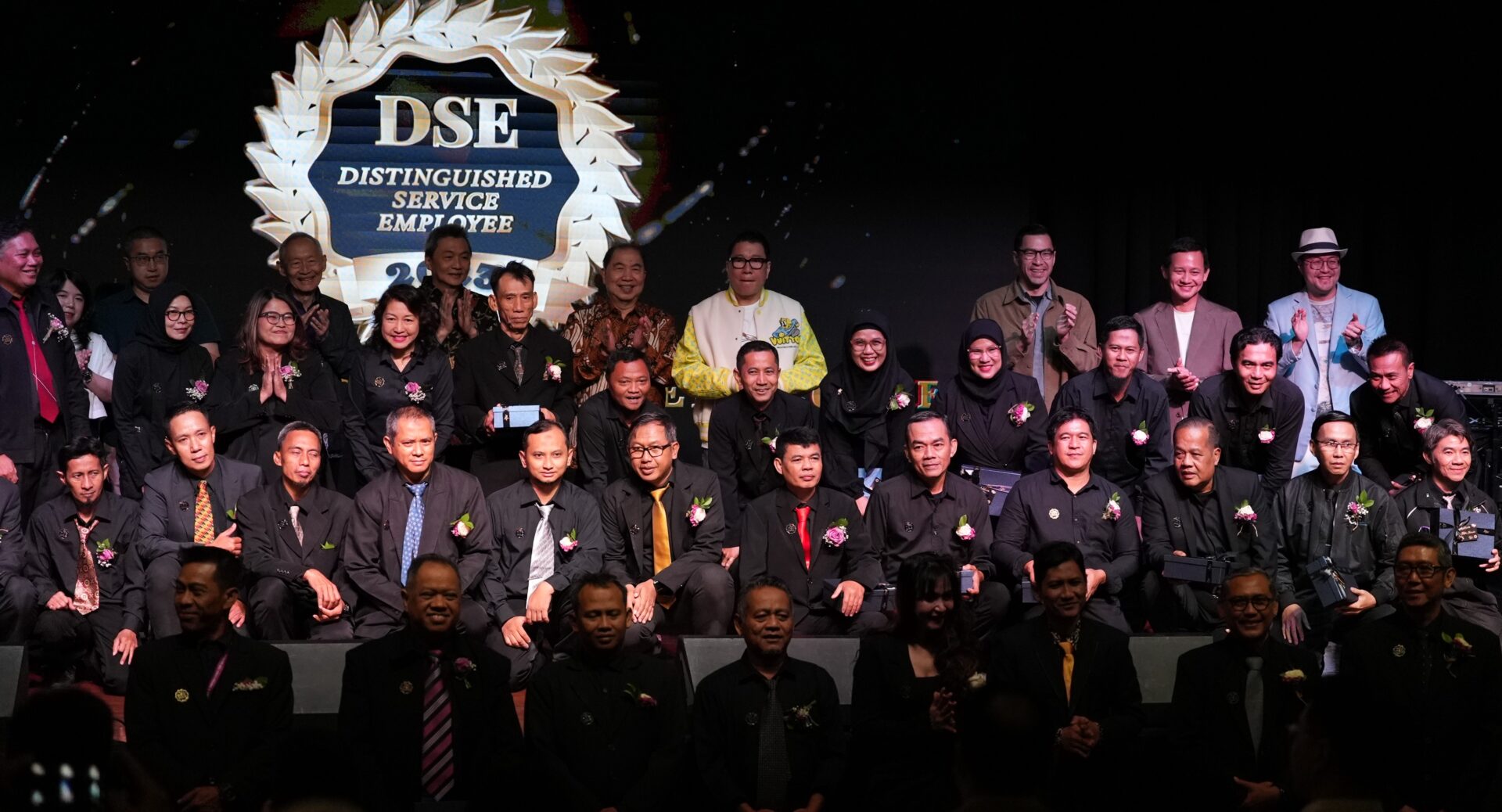
BINUS University is committed to measuring and tracking pay scale gender equity to promote fair and equitable compensation for all staff and faculty, regardless of gender. This commitment is documented in the university’s Sustainable Development Goals (SDG) reporting under SDG 8: Decent Work and Economic Growth.

According to BINUS University’s official publication on Tracking Pay Scale for Gender Equity, the university reviews its salary structures and compensation policies to identify potential pay disparities, including those related to gender. This approach supports the identification of potential inequalities and the implementation of corrective measures where necessary, demonstrating the university’s commitment to monitoring compensation fairness.

The university’s approach is supported by Rector’s Decree No. 136A, Part II, point (i), which establishes objective criteria for determining employee compensation, including job position, contributions, performance, expertise, and competencies. These criteria provide a structured basis for determining remuneration according to professional responsibilities and qualifications.

Furthermore, Article 14 – Kebijakan Pengupahan (Wage Policy), page 18, of the BINA NUSANTARA Employee Handbook (Pedoman Karyawan) 2024–2025 establishes a formal wage determination and review framework. Under this policy, wages are determined according to job value and the employee’s BINUSian Grade, taking into account job position, performance, expertise, and competence. The handbook also provides for annual wage reviews based on performance evaluations, productivity, and competence, as well as further reviews following job movement or other applicable circumstances.

These objective compensation criteria and periodic wage reviews provide a structured framework for administering and evaluating remuneration across employee positions and grades. Combined with BINUS University’s stated commitment to reviewing salary structures for potential gender-related pay disparities, they support the institution’s approach to tracking pay scale gender equity and promoting equal treatment in compensation.

The implementation of employment policies and regulatory compliance is also supported by designated Human Capital functions within BINUS Group, including the Human Capital – Policy & Compliance Relation function. These functions support the alignment of human resource policies and practices with applicable employment regulations.

Through its commitment to reviewing compensation structures, identifying potential gender-related pay disparities, applying objective wage determination criteria, and conducting periodic wage reviews, BINUS University demonstrates an institutional commitment to tracking pay scale gender equity and promoting fair remuneration. These practices support gender equality, responsible employment, and Sustainable Development Goal 8: Decent Work and Economic Growth.
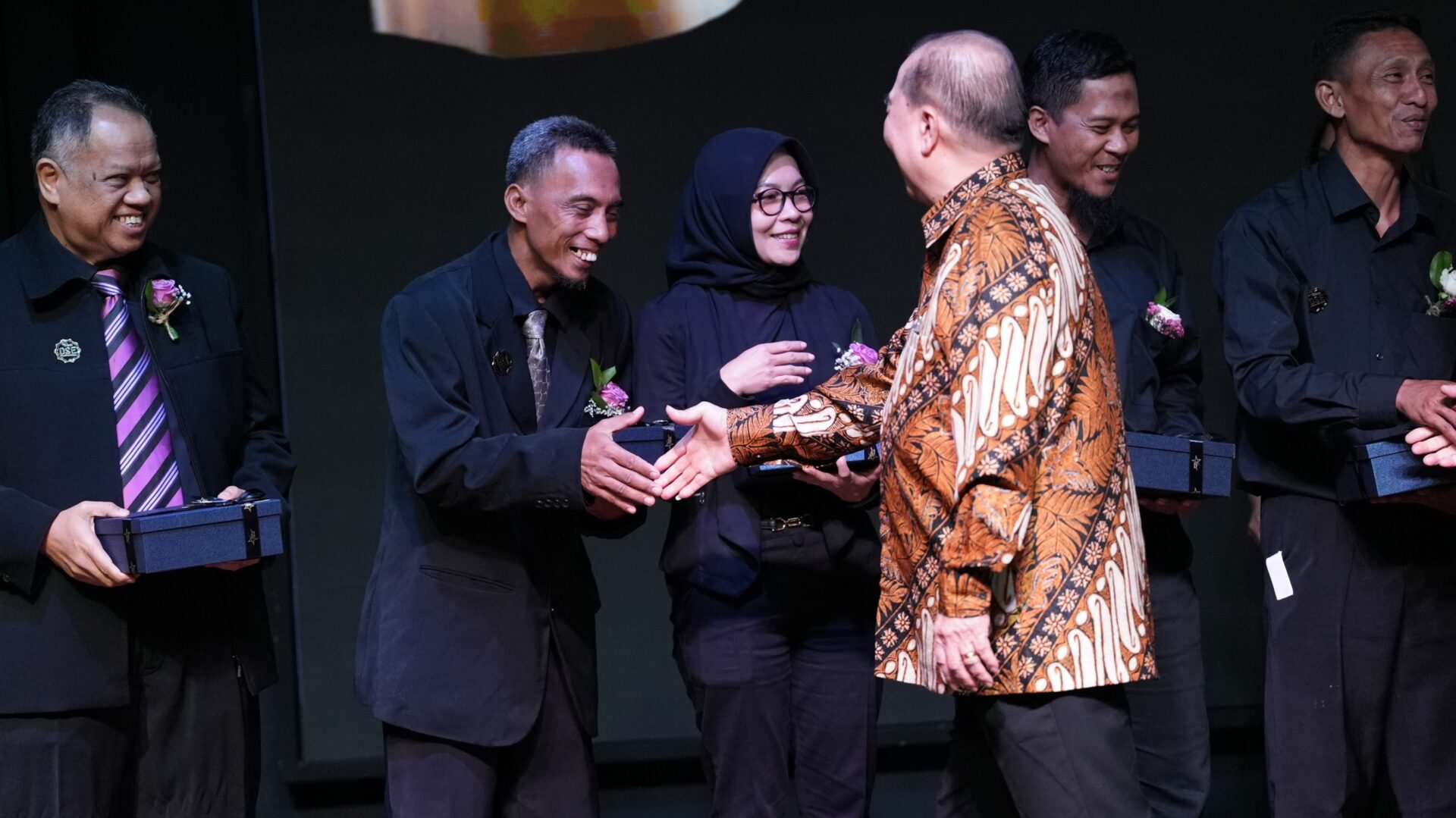
BINUS University implements an institution-wide wage policy for its staff and faculty, as documented in the BINA NUSANTARA Employee Handbook (Pedoman Karyawan) 2024–2025.

The handbook defines “Upah” (wages) as an employee’s right received and expressed in monetary form as compensation from the institution, determined and paid in accordance with the employment agreement, mutual agreement, or applicable laws and regulations (Peraturan Perundang-undangan). This definition establishes that employee remuneration is governed by formal employment arrangements and the applicable regulatory framework.

Specifically, Article 14 – Kebijakan Pengupahan (Wage Policy), page 18, establishes BINUS University’s formal wage determination and review framework:

  1. Wage system: The institution establishes its wage system based on job value and the employee’s BINUSIAN Grade.
  2. Wage determination: Wages are determined based on the employee’s position, performance, expertise, competence, and other relevant factors, as reflected in the wage structure and scale.
  3. Annual wage review: Employee wages are reviewed annually based on performance evaluations, productivity, and competence, taking into account relevant institutional considerations and financial capacity.
  4. Other wage reviews: Wage reviews may also be conducted following job movement or other applicable circumstances.

These provisions establish a formal and structured mechanism for wage determination and periodic review. They also demonstrate that wage determination and payment are subject to applicable employment agreements and regulations. This framework supports BINUS University’s alignment with Indonesian employment and wage regulations, including for staff and faculty covered by the relevant employment policies.

The implementation of employment policies and regulatory compliance is also supported by designated Human Capital functions within BINUS Group. Publicly available professional information identifies a Human Capital – Policy & Compliance Relation function associated with aligning human resource policies and processes with the applicable legal framework. Furthermore, a published job description for the Human Capital Representative Associate Manager identifies responsibility for ensuring that business units comply with labor laws and other applicable Human Capital legal requirements. These functions provide an institutional mechanism for supporting the implementation of employment policies and compliance with relevant employment regulations.

BINUS University’s commitment to employee welfare is also reflected in its workplace recognitions. BINA NUSANTARA has received HR Asia’s Best Companies to Work for in Asia recognition in multiple years, including 2017, 2021, and 2023. In 2023, the institution received this recognition for the fourth time and also received the HR Asia Most Caring Companies Award for the second time. These recognitions provide additional context regarding the institution’s efforts to promote employee well-being, workplace quality, and employee care.

Taken together, the formal wage policy, structured wage scale, annual wage review mechanism, reference to applicable laws and regulations, and designated Human Capital compliance functions demonstrate BINUS University’s institutional framework for fair remuneration, employment governance, and regulatory compliance. These practices support the institution’s commitment to employee welfare and Sustainable Development Goal 8: Decent Work and Economic Growth.
The regulations regarding compensation are outlined in the employee guidelines, which are developed in reference to Law No. 13 of 2003 concerning Manpower (State Gazette of the Republic of Indonesia Year 2003 Number 39; Supplement to the State Gazette of the Republic of Indonesia Number 4279). These guidelines are further detailed in the Employee Handbook, particularly in Article 14 on Wage Policy, which states:
1. The institution sets the wage system according to the job value and BINUSIAN grade.
2. The amount of wage is determined based on job position, performance, skills, proficiency, and other factors, which are then reflected in the wage structure or scale, arranged according to the type of work and position.
3. Wage reviews for each employee are conducted annually, based on evaluations of work achievements, productivity, and competence, while considering the institution’s financial capacity.
4. Wage reviews can also occur due to job promotion, demotion, or other factors, which remain the prerogative right of the institution.

This is also part of BINUS’s commitment to supporting the Sustainable Development Goals (SDGs), as reflected in Rector’s Decree Number 136A, Part II (point i), which establishes that compensation is based on objective criteria such as position, contributions, performance, expertise, and competencies. This policy ensures that disparities based on gender, religion, ethnicity, age, disability status, or socioeconomic background are not tolerated.

To uphold this commitment, BINUS fosters openness in its compensation framework and encourages ongoing dialogue about pay equity. The university is proactive in identifying any potential inequities and taking corrective actions as needed.

In recognition of its continuous efforts to promote employee well-being, BINUS University has been distinguished multiple times by HR Asia as one of the Best Companies to Work for in Asia and as a recipient of the Most Caring Company Award. These accolades underscore the university’s unwavering commitment to fostering a work environment that values respect, inclusivity, and personal growth.

The repeated recognitions serve as a testament to BINUS’s sustained commitment to people-centered policies that go beyond compliance with labor regulations. Employee welfare, professional development, and institutional empathy are deeply embedded within BINUS’s organizational philosophy, shaping its approach to human capital management across all campuses.

While these awards were granted in past years, they continue to reflect BINUS University’s enduring reputation as a caring and equitable workplace, where every faculty and staff member is valued, supported, and empowered to grow. This sustained commitment not only strengthens the university’s internal community but also exemplifies its broader contribution to advancing SDG 8: Decent Work and Economic Growth—ensuring that dignity, fairness, and opportunity remain at the heart of BINUS’s people-centered development.

BINUS University demonstrates a clear institutional commitment to upholding labour rights for all employees, including women and international staff. This includes recognising the principles of freedom of association and collective bargaining through internal policies, reporting mechanisms, and workplace governance structures.

1. Freedom of Association and the “Letter to Leaders” Platform

While BINUS does not operate a formal labour union, it provides structured avenues for employee voice and feedback. One key channel is the “Letter to Leaders” platform (https://bv05.typeform.com/to/JnEw7E), which allows all staff to submit complaints, suggestions, or concerns directly to university leadership.

This platform functions as an internal mechanism for collective expression, supporting transparency, accountability, and dialogue on issues such as compensation, contract terms, and workplace conditions.

2. Employee Handbook and Labour Rights Protections

The BINUS Employee Handbook outlines key labour policies that align with national regulations and international labour standards. It includes:

  • Provisions against discrimination and harassment based on gender, religion, race, or nationality.

  • Clear procedures for grievance handling and reporting violations without fear of retaliation.

  • Guidance on fair termination practices and employee protections.

  • Compensation structures based on objective criteria such as job role, experience, and performance.

These policies reflect BINUS’s adherence to Indonesia’s Labour Law (UU No. 13 Tahun 2003) and the university’s internal standards of fairness and professionalism.

3. Pay Equity and Gender Fairness

BINUS applies a structured and transparent compensation system to ensure equitable pay across roles and demographics. The university maintains specific policies aimed at:

  • Preventing wage discrimination based on gender or nationality.

  • Tracking and reviewing pay scales to support gender equity.

  • Conducting regular evaluations of salary structures to maintain fairness and competitiveness.

Relevant documentation includes the Pay Scale Equity Policy and the Tracking Pay Scale for Gender Equity initiative, which are publicly referenced on BINUS’s SDG reporting platform.

4. Ethical Reporting and Whistleblower Protections

To support ethical governance, BINUS has implemented a formal whistleblowing mechanism under its Good Organization Governance (GOG) framework. Employees can confidentially report misconduct, ethical violations, or breaches of employee rights through this channel, with protection against retaliation.

This mechanism reinforces the institution’s broader commitment to employee wellbeing, organisational integrity, and inclusive decision-making.

5. Participation in Professional Associations

In addition to institutional mechanisms, BINUS faculty members are also actively engaged in national and international professional organisations that advocate for academic and labour rights. Notable examples include:

  • Prof. Dr. Ir. Harjanto Prabowo, Head of Knowledge Affairs at the National Executive Board of APTIKOM (Association of Indonesian Informatics and Computer Science Higher Education Institutions)

  • Prof. Ford Lumban Gaol, Vice Chair of the IEEE Indonesia Section and Chair of the IEEE Computer Society Indonesia Chapter
  • Prof. Dr. Juneman Abraham, Board Member of the Indonesian Psychological Association (HIMPSI) and co-founder of the Indonesian Forensic Science Association (AIFI)

Such involvement reflects BINUS’s culture of academic participation in professional networks that influence labour standards, ethical practices, and higher education policy.

BINUS University recognises and protects the rights of its employees through clear policies, transparent processes, and accessible communication platforms. While it may not operate a traditional union structure, the university provides equivalent mechanisms—such as the “Letter to Leaders” platform—that enable collective feedback, employee advocacy, and fair treatment for all staff, including women and international personnel.

These practices reflect BINUS’s commitment to fostering a professional, respectful, and inclusive work environment in line with both national and global labour standards.

In every outsourcing recruitment, BINUS University is committed to providing equivalent benefits to outsourcing employees, aligning their rights with those of regular staff. This commitment is clearly outlined in the university’s policy related to Human Resource Management and is formalized in Rector’s Decree Number 136A Part II (Point K). This policy underscores BINUS University’s dedication to upholding fair and equitable employment practices, ensuring that all individuals, regardless of employment type, enjoy comparable rights and benefits.

As a tangible expression of this policy, BINUS University annually recognizes employees who have made outstanding contributions to the institution. Among these awards is the Best Support Service Employee (BSSE) category, specifically designated for the best outsourced employees. This award aims to appreciate the hard work and dedication of outsourced staff in supporting campus operations, while also motivating them to continuously improve the quality of their services​.

BINUS University is firmly committed to addressing critical issues such as forced labor, modern slavery, human trafficking, and child labor. To uphold this commitment, the university enforces strict penalties for any violations in accordance with established campus regulations and the employee handbook. This dedication is clearly outlined in Rector’s Decree Number 136A, Part II (point J), which emphasizes the importance of fostering a healthy and safe working environment for all, while unequivocally prohibiting any practices related to forced labor, slavery, child labor, and human trafficking.

This policy is also reflected in the Employee Handbook. Article 7, which addresses Working Hours and Attendance, specifies that working hours are determined based on the needs of each business unit or division, with a minimum requirement of 40 hours per week. Additionally, Article 5 outlines the responsibilities of the institution, particularly in point 3, which mandates adherence to current laws and regulations in reference to Law No. 13 of 2003 concerning Manpower (State Gazette of the Republic of Indonesia Year 2003 Number 39; Supplement to the State Gazette of the Republic of Indonesia Number 4279). This commitment to safety further underscores the university’s efforts to create a secure and equitable workplace.

BINUS University is firmly committed to upholding equality and rejects all forms of discrimination, including that based on religion, sexuality, gender, and age. The university enforces strict penalties for violations in accordance with campus regulations and the employee handbook.

  1. Employee Handbook
    The Employee Handbook at BINUS University clearly prohibits discrimination based on SARA (religion, ethnicity, race, social groups) and sexual harassment. If an employee engages in discriminatory behavior, they can face serious consequences, including termination. The handbook also provides a clear process for employees to file complaints about discrimination, ensuring their concerns are taken seriously and handled confidentially.
  2. Rector’s Decree (No. 136A)
    The Rector’s Decree states that any form of discrimination will result in severe sanctions. It emphasizes the university’s zero-tolerance policy towards discrimination, ensuring that all members of the university community behave respectfully and inclusively. The decree sets clear expectations and penalties for discriminatory actions.
  3. Circular Letter (No. 1677A/REK/IX/2023)
    The Circular Letter reinforces the Zero Tolerance Policy against discrimination and violence. It makes clear that all members of the BINUS community should be treated with respect, regardless of religion, ethnicity, gender, or disability. The letter encourages reporting any incidents of discrimination, assuring confidentiality, and outlining disciplinary actions for violations.

Through these policies, BINUS University strives to create a fair and inclusive workplace for all individuals.

BINUS University recognizes the existence of trade unions for all employees, including women and international staff. The university supports the establishment of trade unions as a platform for employees to voice their interests and needs. Thus, every employee has the right to join a trade union without discrimination.

In addition, many BINUS faculty members are engaged in professional associations, such as:

  • REZA ZAKI, Executive Director of the International Law Faculty Association.

  • Prof. Dr. Juneman Abraham, Board Member of the Indonesian Psychological Association (HIMPSI) and co-founder of the Indonesian Forensic Science Association (AIFI).

Furthermore, faculty members from BINUS actively participate in discussions at the Indonesian House of Representatives (DPR RI) alongside the Indonesian Association of Lecturers (IDRI) to advocate for the welfare of lecturers and contribute to the “Buku Kajian pendidikan tinggi Ikatan Dosen RI (IDRI)”, published by the Indonesian Lecturers Association (IDRI) in 2018, which contains recommendations for enhancing the higher education system in Indonesia.

These examples highlight BINUS’s support for collective representation, ensuring that all employees have a voice in matters that affect their professional lives, thereby fostering an equitable work environment.