

The Future of Graphic Design in the Digital Era and Beyond: Between Technology, Aesthetics, and Humanism
We live in the midst of a very rapid digital revolution. The world has entered the fourth phase of The Age of Information, known as The Digital and Beyond. This is not just a digital era like before, but an era marked by human collaboration with intelligent technologies such as Artificial Intelligence (Al), virtual reality, and generative software. In the midst of this great flow, graphic design has undergone a very fundamental change.
Graphic design is no longer just an activity of creating beautiful visuals. It has evolved into a bridge between humans and data, between information and emotions, between brands and user experiences. So, what will graphic design look like in the future? Let’s examine it more deeply from various aspects.
Adaptive and Dynamic Design: Identity in Motion
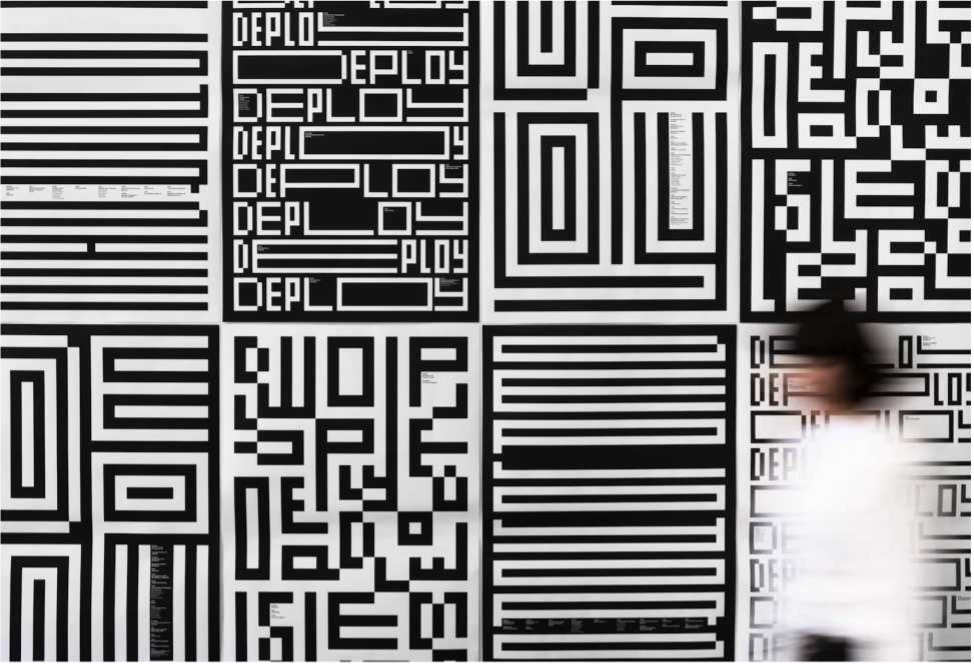
One of the biggest shifts in the future of graphic design is the emergence of adaptive design. In the early digital era, visual identities such as logos or layouts were static and uniform. But now, we are witnessing the emergence of dynamic branding, a visual system that can change according to context.
An example is the MIT Media Lab identity design, which was designed so that each unit has a different logo, but still falls into one cohesive design system. With today’s technology, design can respond to time, weather, location, and even user behavior. So, the future of graphic design is not just about visual beauty, but also relevance and flexibility.
In the fast-paced world of digital marketing, this flexibility allows brands to stay relevant, fresh, and contextual to their audience.
Artificial Intelligence: From Supporting Tool to Creative Partner It is undeniable that Al has become a part of the lives of graphic designers. In the past, a designer needed hours to create a visual composition. Now, with the help of Al such as Midjourney, DALL E, and Adobe Firefly, visuals can be generated simply by entering a text prompt or command.
However, this is where the role of the designer becomes more strategic. Al can only generate images based on trained data. Meanwhile, designers have a role to direct ideas, curate Al results, embed cultural context, and keep messages authentic. So, future designers are not just software operators, but creative directors of ideas, data, and visual narratives.
Al speeds up the process, but humanity in design—emotion, empathy, and unique perspective—remains irreplaceable.
Multidisciplinary and Data-Driven: Designers as Interpreters of Reality
The future of graphic design is a multidisciplinary future. A designer is now required to not only understand the principles of aesthetics, but also understand data, user psychology, interactive behavior, and even digital ethics.
Visual design will be increasingly used to translate data into visual stories that can be understood by the wider community. Data visualization is not just a graph, but the art of conveying complex information intuitively. In the future, professions such as data designers or information artists will be increasingly needed.
A real example can be seen in The New York Times infographic projects that combine design, journalism, and data science to educate the public visually.
Ethics and Originality: A Major Challenge in the Age of Automation The advancement of technology brings major challenges in terms of design ethics. Who owns the rights to the work produced by Al? How do we ensure that designs are not only aesthetic, but also free from bias, plagiarism, or manipulation?
Future graphic designers need to have a high level of ethical awareness. They must be able to filter information, verify visual sources, and use technology wisely. Originality will remain a core value, even amidst the flood of automated visual content.
In addition, issues such as dark patterns—designs that manipulate users to act against their will—will also become important topics in the world of ethical design. Thus, designers are not only creators, but also guardians of the values of truth and justice in visual communication. The Role of Humans Remains Irreplaceable
Amidst all the automation and Al assistance, there are concerns that the profession of designer will be replaced. However, it is the opposite. The more technology enters, the greater the need for humans who can set the direction, understand the meaning, and maintain the feeling. Technology can help make things fast and abundant, but only humans can make something meaningful and touch the soul. Future designers are those who are able to think critically, build narratives, understand culture, and continue to learn from various disciplines.
Graphic Design Will Be the Language of the Future
The future of graphic design in the era of The Digital and Beyond promises not only technical changes, but also paradigm shifts. Design is no longer just an art form, but a language across disciplines, cultures, and technologies. Design will become the primary medium for conveying complex ideas to the wider public—visually, interactively, and empathetically.
Graphic designers of the future are translators of a complex world into meaningful visuals. They will work not only with their hands, but also with algorithms, hearts, and intuition.
In an increasingly digital world, the human touch is more important than ever.