

Tracing the Digital Revolution in Visual Communication Design
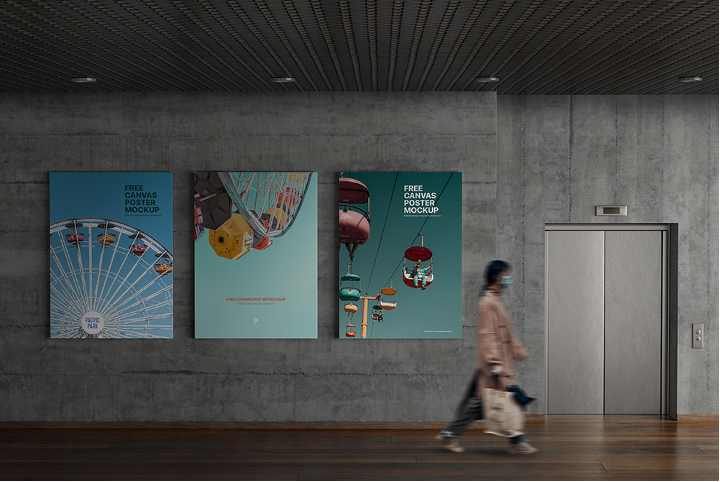
Source : Free Large Canvas Posters Mockup | Pixpine.com
In the past few decades, the digital revolution has significantly transformed the landscape of visual communication design. From the way consumers interact with visual content to the evolution of reading behaviors and the integration of technology in the art world, these changes have reshaped how we create, share, and perceive visual information. This article delves into these transformations, drawing insights from recent discussions on visual content’s influence on consumer behavior, the shift from text to visuals in reading habits, and the art world’s embrace of digital technology.
Visual Content and Consumer Behavior
The proliferation of digital platforms has led to an increased emphasis on visual content in marketing and consumer engagement. Visual storytelling has emerged as a powerful tool for brands to connect with audiences on a deeper level. By leveraging compelling imagery and videos, companies can evoke emotions, build trust, and foster a sense of community among consumers.
User-generated content (UGC) has further revolutionized the marketing landscape. When consumers share their experiences with products or services through photos and videos, it adds authenticity to brand narratives. This peer-driven content often resonates more with potential customers than traditional advertising, influencing purchasing decisions and enhancing brand loyalty.
Platforms like Instagram have capitalized on this trend by integrating shopping features directly into visual content. The seamless transition from browsing to purchasing within the same platform exemplifies how visual content drives consumer behavior in the digital age.
The Shift from Text to Visual in Reading Behavior
The digital era has not only changed how we consume content but also how we read and process information. Traditional linear reading patterns are giving way to more dynamic, visual-centric approaches. Infographics, icons, and videos are increasingly used to convey complex information efficiently, catering to the modern reader’s preference for quick and easily digestible content.
This shift is particularly evident in fields like healthcare, where visual aids can enhance patient comprehension and engagement. For instance, replacing dense text with intuitive icons and diagrams can lower cognitive load and improve the accuracy of patient-reported outcomes. However, it’s essential to consider cultural differences in interpreting visuals to ensure effective communication across diverse populations
The move towards visual communication also raises questions about developing a standardized “visual grammar” to convey complex ideas consistently. As visuals become more prevalent, establishing clear guidelines for their use will be crucial in maintaining clarity and preventing misinterpretation.
Source : https://id.pinterest.com/pin/227924431135661226/
Embracing Technology in the Art World
The art world is experiencing a renaissance driven by digital technology. Artists are exploring new mediums, such as digital painting, 3D modeling, and virtual reality, to push the boundaries of creativity. These tools offer unprecedented flexibility, allowing for experimentation with layers, textures, and effects that were previously unattainable with traditional methods.
Artificial intelligence (AI) is also making its mark in the creative process. AI-powered tools can assist artists in generating ideas, creating backgrounds, or even composing entire pieces of art. While some debate whether AI-generated art can possess true creativity, many view AI as a collaborative partner that enhances human artistic expression.
Moreover, digital platforms have democratized access to art, enabling artists to share their work with global audiences and engage with communities beyond geographical limitations. This increased accessibility fosters a more inclusive art world, where diverse voices and perspectives can thrive.
Conclusion
The digital revolution has not merely influenced the practice of visual communication design—it has entirely redefined its foundation. Where once design followed rigid linear processes and was bound by physical tools and traditional print media, it now thrives in a space that is fluid, interactive, and user-centered.
The rise of visual platforms, mobile interfaces, and responsive design has placed the user at the center of the communication loop. This shift forces designers not only to consider how a visual looks, but how it behaves, how it adapts to context, and how it resonates across cultures and devices. The once-isolated role of the graphic designer has expanded into that of a strategist, a storyteller, a UX thinker, and sometimes even a data interpreter.
Moreover, visual content is no longer passive. It is expected to inform, guide, convert, and interact—all in milliseconds. In a world where attention is scarce and content is abundant, the clarity, relevance, and emotional intelligence of visual design become crucial. Visuals are not just decorative; they carry strategic weight in influencing decision-making, memory retention, and brand perception.
The tools may have changed—from typesetting machines to Figma and generative AI—but the mission of visual communication remains: to bridge information and emotion, function and beauty. Understanding this historical trajectory is not only intellectually enriching for designers but essential for navigating the future.
As technology continues to evolve, the most resilient and effective visual communication will come from those who honor the lessons of the past, stay curious about the present, and remain agile toward the possibilities of tomorrow. In this light, the digital revolution is not an end—but an ever-unfolding beginning.
Source :
Embracing Change: How Visual Content Influences Consumer Behavior | The Game About Internet
From Text to Visual: How Reading Behaviour is Changing in the Digital Age – My Framer Site
Art in the Digital Age: How Tech Is Transforming Creativity – Toxigon