

The Age of Information 4: Graphic Design in the Digital and Beyond
How they invented computer graphic design
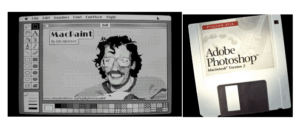
First lets start how computers were developed, because in modern era we design using electronics such as “COMPUTERS”, in the early era they use Apple Macintosh in the year 1984 for design. the first Apple computer (that was Apple I in 1976), but it was the first mass-market computer with a Graphical User Interface (GUI) and a mouse.
“Power and polish for pixel perfection.”
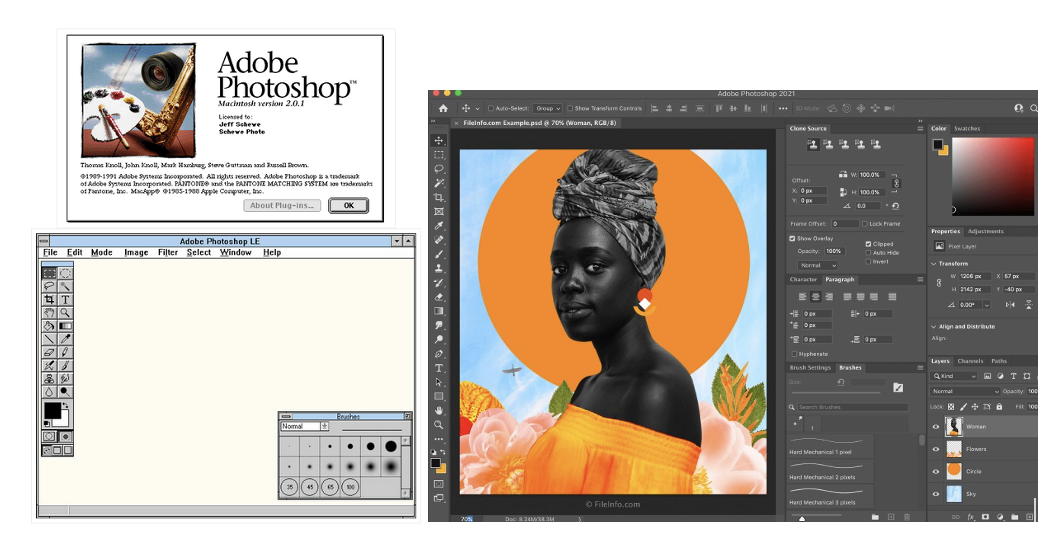
Photoshop 2.0, released in June 1991, was the second major version of Adobe’s photo editing software and exclusively available on the Macintosh platform. Photoshop 1.0 debuted in 1990, also only for Mac. It became the first professional graphic design. Its Legacy & Influence: Introduced professional tools—like CMYK editing, paths, and EPS import—that endure in modern versions of Photoshop. And set a precedent for desktop publishing workflows, solidifying the Mac–Photoshop combo as an industry staple. it’s Inspired countless features and paved the way for future innovations like layers (v3.0) and adjustment layers (v4.0).
The Future of Graphic Design: From Pixels to Platforms
Graphic design today is no longer just about making things look good—it’s about building experiences across platforms, devices, and even dimensions. As we enter what many call the fourth stage of the Information Age, design has evolved beyond the flat screen and is now rooted in interactivity, adaptability, and human-centered thinking.
In the early days, graphic design was print-heavy—posters, flyers, and branding guides ruled the scene. Then came the digital shift: websites, apps, and social media demanded visuals tailored for screens. But now, something new is emerging. The modern designer is more than a visual communicator—they’re a problem solver, a strategist, and a user experience architect.
The tools reflect this shift. Platforms like Figma, Framer, and Webflow empower designers to create prototypes and functional interfaces without writing a line of code. Instead of static mockups, we now think in components, interactions, and real-time collaboration. Designers work in teams with developers, product managers, and researchers, all building in sync.
AI is also reshaping the creative process. Tools like Adobe Firefly or RunwayML can generate design elements instantly based on text prompts. Need a background removed? A color palette suggested? An animation prototyped? AI does that in seconds. But rather than replacing human designers, AI is becoming a collaborator—it takes care of the grunt work, freeing creatives to focus on storytelling, emotion, and originality.
Another major shift is how design is experienced. Today’s visuals need to function seamlessly across a range of platforms: mobile apps, tablets, wearables, and even augmented reality (AR) and virtual reality (VR) environments. Designers are now thinking spatially, building interfaces that respond to gestures, gaze, and voice. Typography in 3D, ambient UI, and immersive design are no longer futuristic—they’re already here.
And with all these changes, design education is evolving too. Students aren’t just learning about type and color theory—they’re studying interaction design, data visualization, and design ethics. Many are taught to think iteratively: prototype, test, revise. They’re also encouraged to learn basic coding, so they can better collaborate with developers or build their own tools.
Looking forward, we can expect design to become even more adaptive and context-aware. Imagine interfaces that respond not just to screen size, but to your mood, heart rate, or surrounding environment. Or typefaces that shift based on the time of day. These aren’t sci-fi dreams—they’re part of the natural evolution of responsive, human-centered design.
In this emerging landscape, the most successful designers will be those who stay curious and flexible. They’ll move easily between tools and platforms, understand the language of development, and always keep users at the center of their process. They won’t just design for screens—they’ll design for people.
The age of pixels was only the beginning. The future belongs to those who can design for platforms, systems, and stories.
These are photos of the old Adobe photoshop (1991) and current adobe photoshop (2024).