

Graphic Design and Its Role in Movies Industry
Graphic design plays a crucial role in the movie industry, shaping how audiences perceive
and engage with films. No matter if it’s a poster, the main title design, visual effects or even a
promotional item, graphic design boosts a film’s story, gives it an identity and delivers an
immersive viewer experience. When technology changes, graphic design in movies also
changes. Its formation in the era of digital media, effect of AI, notable names in graphic
design for movies, recent trends and future directions are examined in this article. From
outstanding posters to unique opening graphics, graphic design is responsible for films’
eye-catching visuals. It plays a role in meeting people’s expectations, improves the way a
film is told and helps develop the movie’s identity. Through the years, new advances in
technology have affected the role of designers in movies.
Prior to the digital age, movies made graphics by hand using illustrations, lettering and real
physical effects. Because of digital programs like Adobe Photoshop, Illustrator and 3D
software, the industry was able to make more detailed and exciting designs. Due to these
changes in tools, people can now make high-quality, photorealistic posters for movies and use
motion graphics for eye-catching title sequences or add CGI for realistic effects we see in
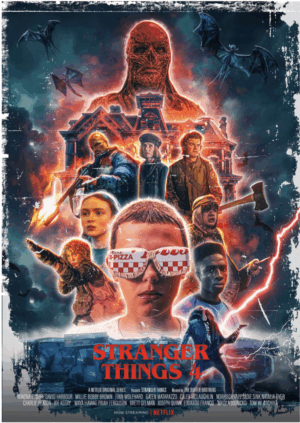
movies such as Avatar, Dune and Stranger Things. Now that we live in a digital age, graphic
design is more accessible, efficient and versatile, helping filmmakers be more creative.
AI is starting to change the way graphic design is used in the movie industry. Designers use
MidJourney, DALL-E and Runway ML to assist them with creating concept art, storyboards
and entire animated scenes. For example, AI saves designers time by taking care of repetitive
jobs, enhances visual effects, makes faces in animation look better and helps choose what to
include in posters and film trailers based on viewers’ favorites. Nevertheless, there are
worries that AI might replace human designers in the future. While AI speeds up production,
people’s ability to express emotions in visuals cannot be taken over by technology.
Several designers and studios have left a lasting mark on the movie industry:
a) Saul Bass – Legendary for his minimalist title sequences (Vertigo, Psycho).
b) Imaginary Forces – Known for iconic openings (Mad Men, The Avengers).
c) Studio AKA – Specializes in animated title sequences (The Hitchhiker’s Guide to the
Galaxy).
d) Prologue Films – Creates visually stunning intros (Tron: Legacy, Black Panther).
e) These artists and studios demonstrate how graphic design elevates cinematic
storytelling through typography, motion, and symbolism.
f) These artists and studios demonstrate how graphic design elevates cinematic
storytelling through typography, motion, and symbolism.
Current graphic design trends in movies include:
1) Retro and Nostalgia – Vintage-inspired posters (Stranger Things, Once Upon a Time
in Hollywood).
2) Minimalism – Clean, bold typography and negative space (The Social Network,
Drive).
3) Neon and Cyberpunk – Futuristic, glowing visuals (Blade Runner 2049, Cyberpunk:
Edgerunners).
4) Mixed Media – Combining 2D and 3D elements (Spider-Man: Into the Spider-Verse).
These trends reflect audience preferences and technological advancements, ensuring films
remain visually engaging.
How a film is marketed, told and received by the audience depends heavily on graphic
design. Design work has been made more effective by the digital age and AI and artists are
still leading the way with new designs and trends. The introduction of new creative methods
means films will be getting even more visually stunning. As people keep creating, the field of
graphic design will always be present in filmmaking.