



Employment Practice Labour Rights
BINUS University demonstrates a clear institutional commitment to upholding labour rights for all employees, including women and international staff. This includes recognising the principles of freedom of association and collective bargaining through internal policies, reporting mechanisms, and workplace governance structures.
1. Freedom of Association and the “Letter to Leaders” Platform
While BINUS does not operate a formal labour union, it provides structured avenues for employee voice and feedback. One key channel is the “Letter to Leaders” platform (https://bv05.typeform.com/to/JnEw7E), which allows all staff to submit complaints, suggestions, or concerns directly to university leadership.
This platform functions as an internal mechanism for collective expression, supporting transparency, accountability, and dialogue on issues such as compensation, contract terms, and workplace conditions.
2. Employee Handbook and Labour Rights Protections
The BINUS Employee Handbook outlines key labour policies that align with national regulations and international labour standards. It includes:
-
Provisions against discrimination and harassment based on gender, religion, race, or nationality.
-
Clear procedures for grievance handling and reporting violations without fear of retaliation.
-
Guidance on fair termination practices and employee protections.
-
Compensation structures based on objective criteria such as job role, experience, and performance.
These policies reflect BINUS’s adherence to Indonesia’s Labour Law (UU No. 13 Tahun 2003) and the university’s internal standards of fairness and professionalism.
3. Pay Equity and Gender Fairness
BINUS applies a structured and transparent compensation system to ensure equitable pay across roles and demographics. The university maintains specific policies aimed at:
-
Preventing wage discrimination based on gender or nationality.
-
Tracking and reviewing pay scales to support gender equity.
-
Conducting regular evaluations of salary structures to maintain fairness and competitiveness.
Relevant documentation includes the Pay Scale Equity Policy and the Tracking Pay Scale for Gender Equity initiative, which are publicly referenced on BINUS’s SDG reporting platform.
4. Ethical Reporting and Whistleblower Protections
To support ethical governance, BINUS has implemented a formal whistleblowing mechanism under its Good Organization Governance (GOG) framework. Employees can confidentially report misconduct, ethical violations, or breaches of employee rights through this channel, with protection against retaliation.
This mechanism reinforces the institution’s broader commitment to employee wellbeing, organisational integrity, and inclusive decision-making.
5. Participation in Professional Associations
In addition to institutional mechanisms, BINUS faculty members are also actively engaged in national and international professional organisations that advocate for academic and labour rights. Notable examples include:
-
Prof. Dr. Ir. Harjanto Prabowo, Head of Knowledge Affairs at the National Executive Board of APTIKOM (Association of Indonesian Informatics and Computer Science Higher Education Institutions)
- Prof. Ford Lumban Gaol, Vice Chair of the IEEE Indonesia Section and Chair of the IEEE Computer Society Indonesia Chapter
-
Prof. Dr. Juneman Abraham, Board Member of the Indonesian Psychological Association (HIMPSI) and co-founder of the Indonesian Forensic Science Association (AIFI)
Such involvement reflects BINUS’s culture of academic participation in professional networks that influence labour standards, ethical practices, and higher education policy.
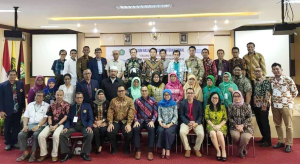
BINUS University recognises and protects the rights of its employees through clear policies, transparent processes, and accessible communication platforms. While it may not operate a traditional union structure, the university provides equivalent mechanisms—such as the “Letter to Leaders” platform—that enable collective feedback, employee advocacy, and fair treatment for all staff, including women and international personnel.
These practices reflect BINUS’s commitment to fostering a professional, respectful, and inclusive work environment in line with both national and global labour standards.