


International collaboration data gathering for SDG
BINUS University participates in international collaboration involving sustainability data analysis, measurement frameworks, and comparative assessment. Through the BINUS Center of Excellence in Sustainability (BIC-SUS), BINUS collaborates with RMIT University, Australia, on sustainability research and the development and adaptation of methods for assessing corporate sustainability disclosures and sustainable procurement practices.
This collaboration contributes to sustainability-related data measurement by examining how corporate sustainability information can be assessed systematically, how reporting gaps can be identified, and how business practices can be compared against international benchmarks. These activities provide evidence that can help identify areas for improvement in sustainable business practices and support broader sustainability objectives.
1. BINUS–RMIT International Research and Collaboration
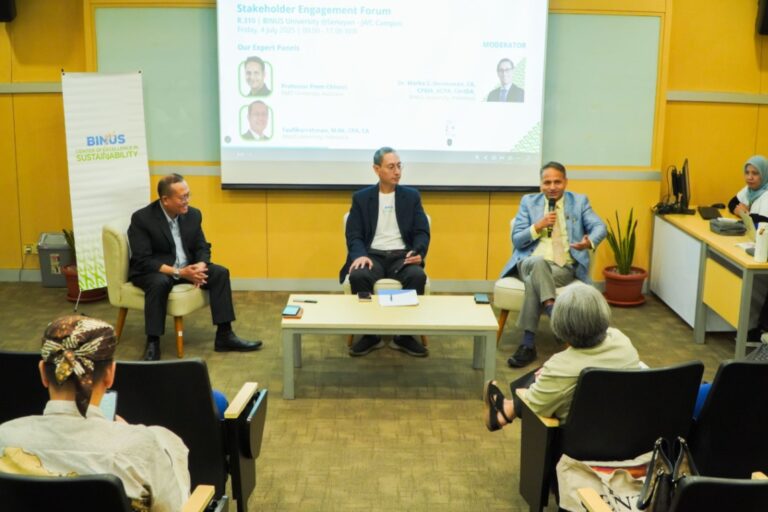
BIC-SUS collaborates with RMIT University on sustainability research, ESG measurement, and sustainable procurement. Through academic collaboration and stakeholder engagement, the institutions have examined sustainability indicators, corporate disclosure practices, data availability, and challenges associated with Indonesia’s transition towards a low-carbon economy.
These discussions have addressed the alignment of ESG frameworks with energy-transition targets, sustainability reporting, regulatory requirements, and the availability of reliable data. This work highlights the importance of consistent indicators and comparable information in assessing sustainability-related business practices and informing evidence-based decisions.
2. Sustainable Procurement Disclosure Index (SPDI)
A key measurement initiative associated with the BINUS–RMIT collaboration is the Sustainable Procurement Disclosure Index (SPDI), a framework developed through RMIT research and initially launched in Australia in 2023.
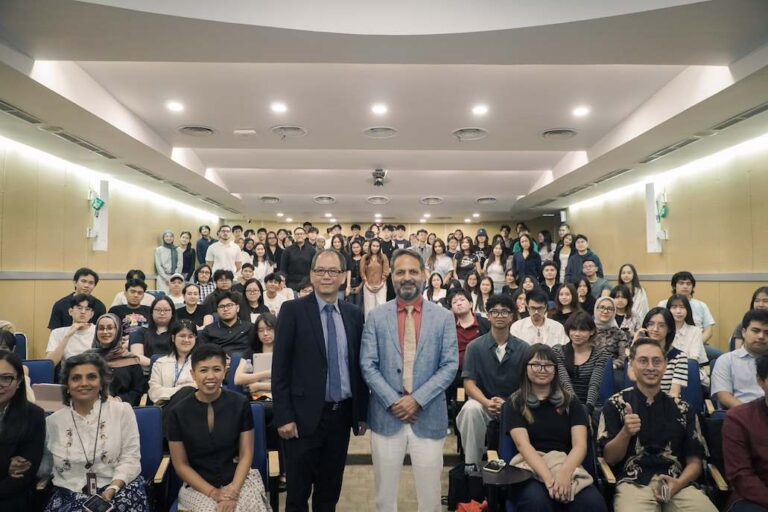
To support the development of SPDI in Indonesia, Professor Prem Chhetri of RMIT has begun collaborating with two BINUS University academics: Professor Yanthi R. L. Hutagaol, Head of BIC-SUS, with expertise in finance, and Dr. Marko S. Hermawan, a BIC-SUS member and Head of the International Business Management Program, with expertise in accounting. Their collaboration aims to adapt the SPDI framework to Indonesia’s business practices and regulatory environment.
SPDI provides a structured approach to measuring corporate disclosures on sustainable procurement. Specifically, it supports the assessment of the completeness of reported information, the identification of disclosure gaps, and comparisons of sustainable procurement disclosures across companies. Adapting the framework to Indonesia also provides a basis for comparing local corporate reporting practices with international approaches while taking local regulatory and business conditions into account.
These measurements are relevant to sustainable development because they help assess the transparency of corporate procurement practices and identify opportunities to improve responsible sourcing and sustainability reporting.
3. SPDI-AI: AI-Driven ESG Data Analysis
Complementing the SPDI framework, BIC-SUS has introduced SPDI-AI as an AI-driven approach to analysing corporate sustainability disclosures. The system uses machine learning, natural language processing (NLP), and data analytics to process information contained in sustainability reports and related corporate disclosures.
Its intended measurement capabilities include:
- Data extraction: identifying relevant sustainability and ESG information in corporate reports.
- Disclosure assessment: evaluating the presence and completeness of information relating to sustainable procurement and ESG practices.
- Scoring and benchmarking: supporting the assessment and comparison of corporate disclosures across companies and sectors.
- Disclosure gap analysis: identifying missing, incomplete, or insufficiently reported information.
- Comparative analysis: supporting comparisons with relevant international benchmarks.
These methods can make sustainability disclosure assessment more systematic and help researchers identify areas where corporate reporting and transparency could improve. SPDI-AI complements the broader research agenda by supporting data analysis, although its development should be distinguished from the BINUS–RMIT collaboration on SPDI unless joint development is explicitly documented.
Overall, BINUS University’s collaboration with RMIT and its related sustainability measurement initiatives contribute to the systematic assessment and comparison of corporate sustainability data. Through the adaptation of SPDI and the use of AI-driven disclosure analysis, BINUS supports the evaluation of sustainable procurement practices, the identification of reporting gaps, and comparisons with international benchmarks. These activities contribute to the broader SDG agenda by strengthening the evidence base for more transparent and responsible business practices. The measures focus on corporate sustainability disclosures rather than directly measuring all SDG indicators.