



Monitoring IUCN and other conservation species (policies)
BINUS University demonstrates its commitment to biodiversity conservation through a comprehensive policy outlined in the Rector’s Circular Letter No. 1667A/REK/IX/2023 on the preservation of biodiversity and its habitats. This policy mandates the identification, monitoring, and protection of species listed in the IUCN Red List and national conservation lists, especially those whose habitats may be impacted by the university’s operational activities or community engagement initiatives. The policy aligns with BINUS’s sustainability mission to balance academic excellence, environmental responsibility, and community empowerment.

One of the key highlights of this policy is its focus on integrating biodiversity preservation within community-based programs and local development. The university implements sustainability principles such as reduce, reuse, and recycle, along with active conservation practices to protect sensitive ecosystems. This is reflected in several community empowerment activities (PkM) carried out by BINUS University in 2024, particularly in Desa Campakamulya, Bandung, where the university collaborated with local coffee farmers cultivating Kopi Puntang—a local commodity known for its high ecological value.
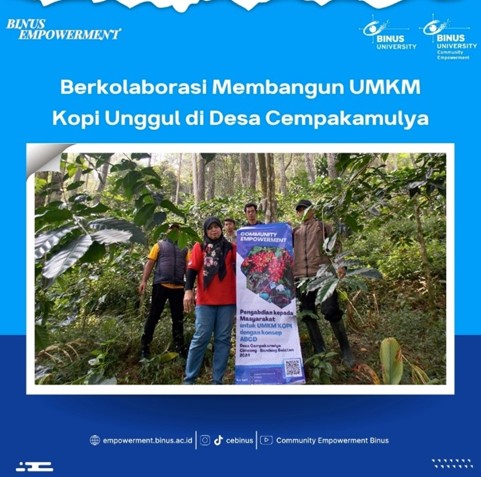
Through continuous engagement, BINUS University’s Community Empowerment team provides training and mentoring programs to support the development of UMKM Kopi Puntang. These efforts are not limited to improving product quality and market reach but also emphasize environmentally responsible cultivation practices. The initiative encourages sustainable land management, soil preservation, and reduced use of chemical fertilizers, contributing to the maintenance of biodiversity within the local ecosystem. By empowering local farmers to adopt eco-friendly agricultural techniques, BINUS indirectly supports the conservation of native flora and fauna that coexist within the coffee plantations of Mount Puntang, an area rich in endemic species.
This activity not only improves the socio-economic conditions of local communities but also aligns with the university’s broader vision of protecting biodiversity and promoting sustainable rural development. The combination of policy-driven guidance and community-based implementation illustrates BINUS University’s integrated approach to sustainability—ensuring that both human and ecological systems thrive in harmony.
Through these initiatives, BINUS University reaffirms its role as a responsible academic institution that actively contributes to biodiversity protection, ecological awareness, and sustainable livelihoods. This alignment between institutional policy and real-world application underscores BINUS’s dedication to achieving the United Nations Sustainable Development Goals (SDGs), particularly SDG 15: Life on Land, by fostering conservation through education, innovation, and community partnership.