Jakarta, 10 April 2026 – As part of our strategic steps in strengthening BINUS Asia Collaboration, our leadership participation in the QS China Summit 2026 in Shenzhen from 8-9 April marked a shift in how BINUS connects with key stakeholders shaping higher education in China and the wider Asia‑Pacific.

(Photo Editor: Mufti Warits/Andi D. Ahnafandra)
That long‑term goal is articulated by Rector Nelly, who emphasized BINUS’s commitment to borderless learning. “Through BINUS Asia Collaboration, we are creating a learning ecosystem without borders, where every Binusian can connect, discover, and learn across countries, and feel part of a global community that inspires and supports one another,” she shared in a press statement published by Tempo in November 2025.
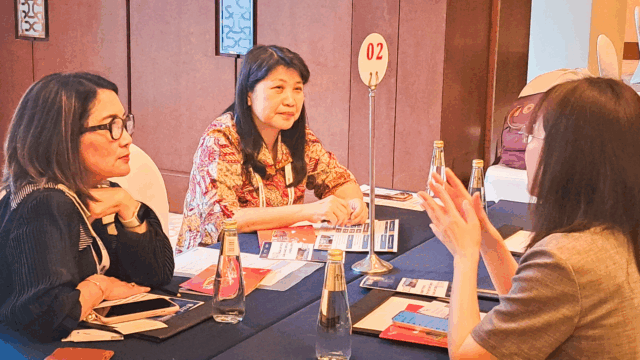
At the QS China Summit, this direction resonated strongly as university leaders, industry professionals, and government representatives discussed how higher education must respond to mobility programs and how cross‑sector collaboration can be integrated into learning models that produce work‑ready graduates while keeping universities relevant to students now and in the years ahead.
Within these discussions, Rector Nelly joined the Presidential Forum and engaged directly with fellow university leaders on how institutions must rethink their roles amid the growing cross‑border movement of students and talent in the region.
(Photo Editor: Mufti Warits/Andi D. Ahnafandra)
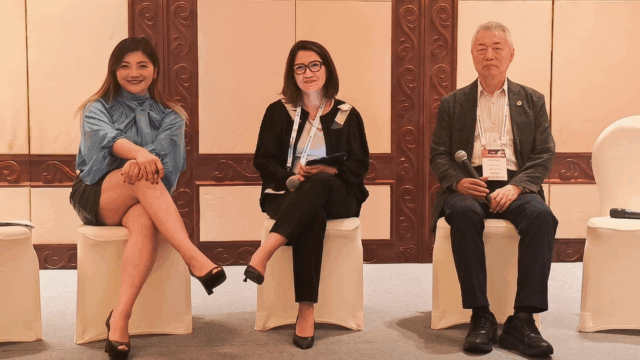
At the same time, our Vice‑Rector, Rini Setiowati, took part as a speaker in one of the panel sessions in “Building a Brand for Gen Z and Gen Alpha,” where she shared how BINUS is building collaborative ecosystems that respond to shifting student expectations of moving beyond prestige toward authenticity, trust, affordability, and real outcomes.
“BINUS is committed to providing quality and relevant education that resonates with today’s learners and tomorrow’s leaders. As future leaders, Gen Z embodies a community-driven, industry-relevant orientation and actively participates in global co-creation efforts to advance impactful collective action. By involving them as ambassadors, we connect them with Gen Alpha through the direct sharing of learning experiences, helping shape how the next generation approaches education and opportunity,” she added.
These conversations are part of a broader movement shaping higher education across the Asia‑Pacific today. UNESCO (2025) reports that the number of internationally mobile students has grown from around 2.1 million to nearly 7.3 million over the past two decades, with the Asia‑Pacific region now hosting almost one‑third of all students studying abroad worldwide. Meanwhile, the World Bank (2025) analysis also highlights that East Asian countries are increasingly attractive study destinations, supported by stronger economic prospects and higher income potential, linking education mobility more directly to future professional opportunities.
(Photo Editor: Mufti Warits/Andi D. Ahnafandra)
For BINUS, this shift translates into a clear focus on regional collaboration, particularly with Asian and Chinese university partners. Two‑way mobility continues to grow, with 182 BINUS students currently studying in China and 137 Chinese students learning across our campuses, reflecting how leadership engagement, institutional partnerships, and student experience are converging under BINUS Asia Collaboration.
To further expand the collaboration with Chinese universities and strategic stakeholders, through this QS China Summit, Rector Nelly and her team have a great time to engage directly with fellow leaders and explore potential partnerships. They shared BINUS’s academic strengths and international learning environment, which has been designed to feel familiar, inclusive, and relevant to our international students, particularly those from China and other parts of Asia.
Author:
Mita Adhisti
Editor:
Aninda Rahmasari
... ... ...