Jakarta, 12 January– In an era where artificial intelligence (AI) continues to evolve at remarkable speed, the future of work is being reimagined through human–machine collaboration. To delve into this transformation, BINUS University’s Faculty of Engineering and BINUS ASO School of Engineering recently collaborate with Arizona State University to address this topic through the SYNTHESIS Talk Show, gathering voices from academia and industry to map out what this future might look like and to discuss the growing convergence between humans and machines.
(Photo Credits: Mufti Al-Warits)
Under the theme of “Human. Machine. Meaning,” the central narrative of the talk show focused on how technology and human can work hand in hand to generate new forms of value, innovation, and societal impact, where human instinct and creativity, communication, and judgment are paired with machine precision, speed, and data processing capabilities.
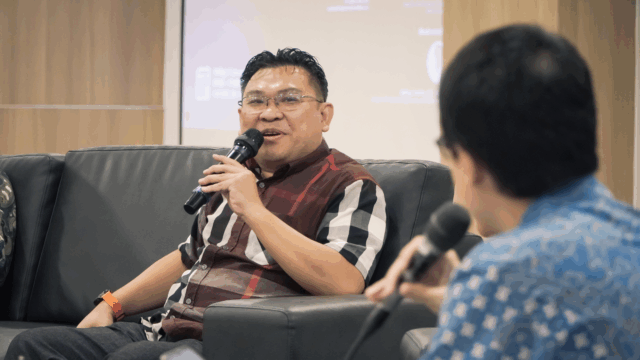
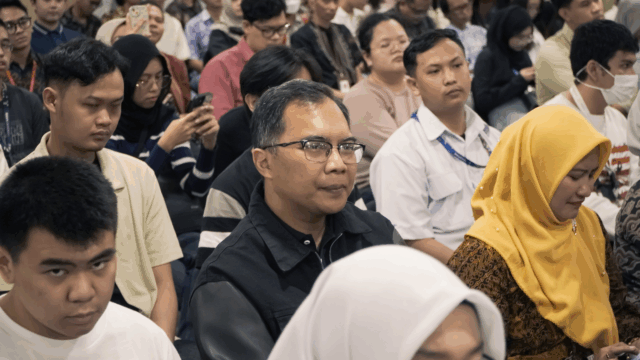
Adi Darmadi, President Director of Rockwell Automation Indonesia, spoke about future readiness in the workforce. He emphasized that simply being able to operate technology is no longer enough; universities must prepare graduates with the skills and competencies needed to address complex challenges by integrating technology with human insight and judgment, which aligned with a recent study from Kim and Lee (2025).
(Photo Credits: Mufti Al-Warits)
“We need problem-solvers in the real world, and the future is not about machines replacing humans, but about humans working with machines by pairing technological speed and accuracy with human creativity, intuition, and courage to make decisions through trial and error,” he added.
Even as machines take on more tasks, humans continue to hold the steering wheel of decision-making, especially in areas that require judgment, creativity, and ethical consideration. This argument raises a critical question: how ready our human resources, particularly in Indonesia, to integrate rapidly advancing technology into their work?
(Photo Credits: Mufti Al-Warits)
According to a 2023 Economist Impact report on Indonesia, advanced digital skills such as data analysis, IT support, and digital marketing are increasingly essential across sectors, reflecting digitalization’s growing role in the economy. The same analysis notes that although these skills are in high demand, data from 2020 indicated that fewer than 1% of Indonesian workers had advanced digital skills.
(Photo Credits: Mufti Al-Warits)
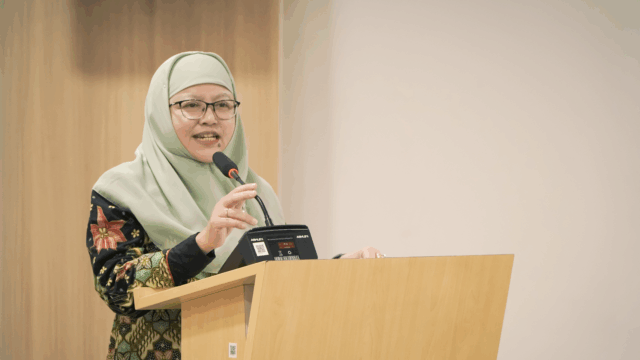
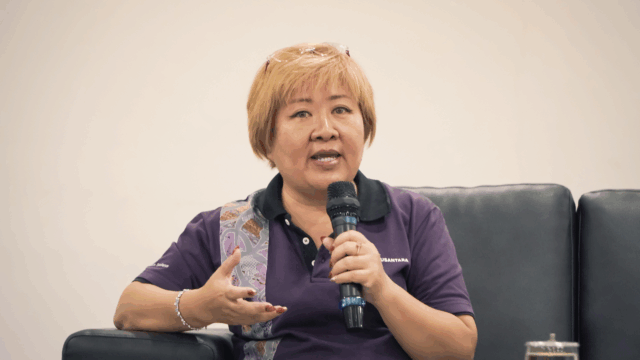
“Those who can work effectively with machines will benefit in the future, because that’s what labor market is looking for. Industries are already using machines in all aspects of working life. As young talents, you need to develop strong capabilities to apply these tools as technology has become a core skill for success in the modern workplace,” said Dr. Rinda Hedwig, Research Interest Group Leader in Photonics and Computer Systems at BINUS University.
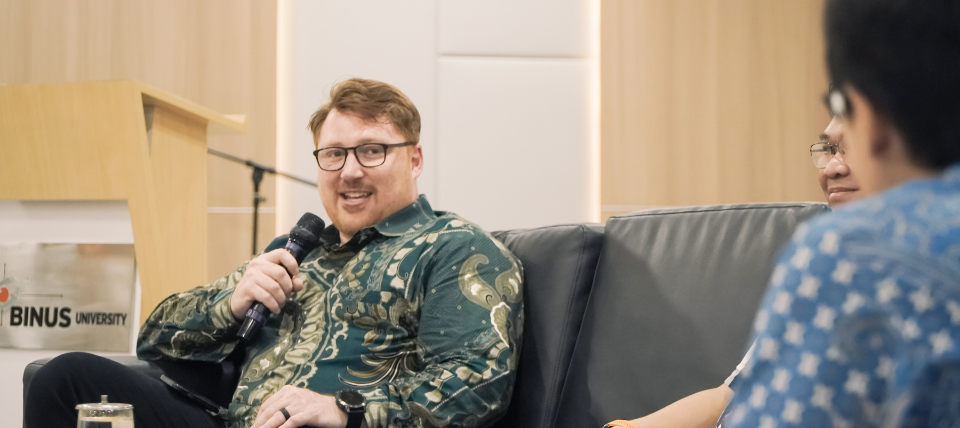
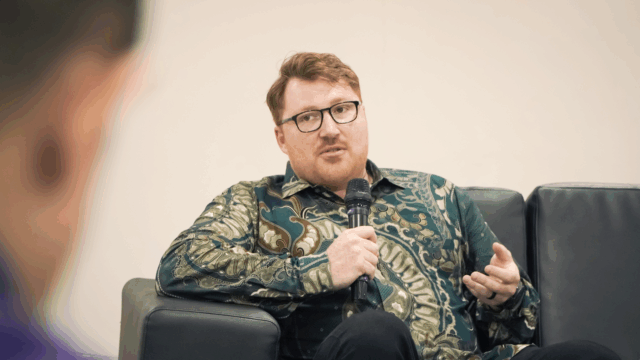
Comparing how technologically advanced countries like the United States prepare young talents, Jared Schoepf, Associate Teaching Professor and Director of the EPICS Program at Arizona State University, shared how his program uses digital systems like AI in teaching and learning through a co-designer approach.
(Photo Credits: Mufti Al-Warits)
“In our program, we focus on human-centered design to help students identify root causes through research and practical analysis. For example, we work with local communities like farmers for the EPICS Program to understand their challenges, then co-design and test solutions. We involve students, faculty from different fields, professionals, and community members at every stage to get feedback and improve our impact,” Jared explained.
(Photo Credits: Mufti Al-Warits)
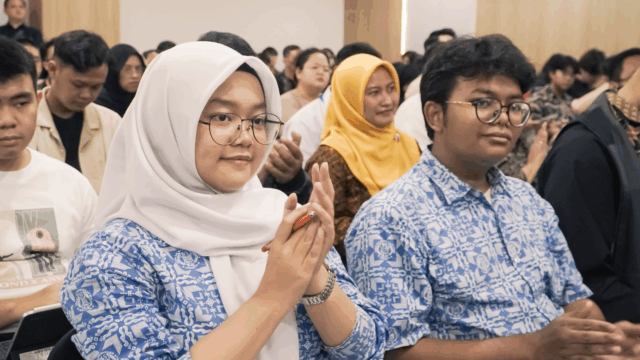
His remarks echoed the wider message of the talk show. As Indonesia works to strengthen its digital readiness, such human-centered approaches offer valuable insight into how technology can be integrated responsibly into education and work.
The SYNTHESIS Talk Show concluded with a forward-looking perspective on the urgency for empowering young talents to upgrade their skills in integrating technology with human insight, so they are ready to lead the future digital economy.
(Words by Mita Adhisti/Editor: Aninda Rahmasari)
... ... ...