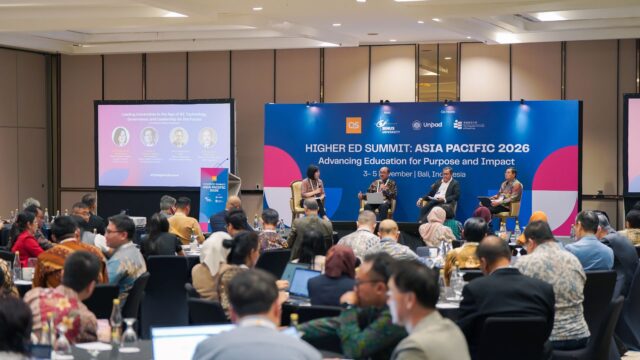
Bali, 6 November 2026 – The rapid rise of artificial intelligence (AI) is prompting university leaders to rethink how institutions design learning experiences, advance research, develop talent, strengthen governance, and respond to technological change. At the QS Higher Ed Summit: Asia Pacific 2026, BINUS University, as the event’s main host, convened a special session conducted in Indonesian, offering a platform for higher education leaders to share their perspectives on leading institutions through this transformation.
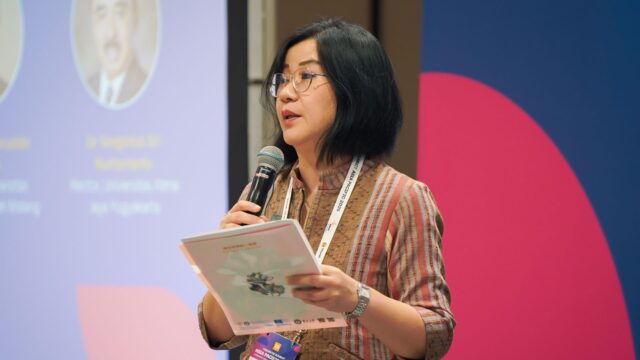
Under the theme “Leading Universities in the Age of AI: Technology, Governance, and Leadership for the Future,” Prof. Sanny Lim, Campus Director of BINUS @Alam Sutera, moderated a discussion featuring Prof. Harjanto Prabowo, Vice President of BINUS Higher Education & Professional Services, Prof. Nazaruddin Malik, Rector of Universitas Muhammadiyah Malang, and Dr. Gregorius S. Nurhartanto, Rector of Universitas Atma Jaya Yogyakarta.
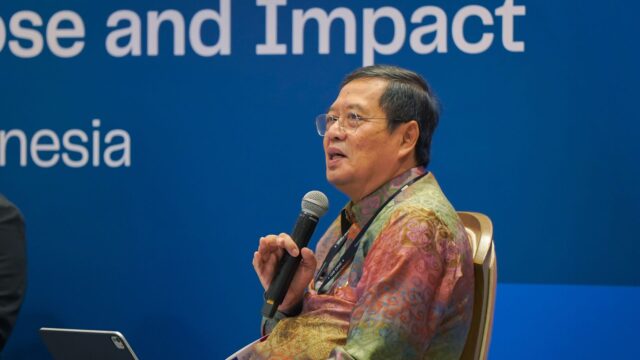
(Photo Credit: Mufti Al-Warits)
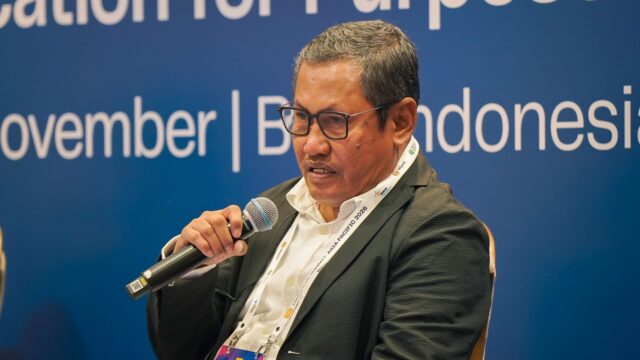
Addressing the role of leadership in the age of AI, Prof. Harjanto with over 30 years of experience in higher education and three terms as Rector of BINUS University often shares to fellow leaders to grow with AI rather than hold them back. In his view, AI should not be treated as an IT project, but as a university-wide transformation that supports the institution’s mission.
“We need to think carefully about its use, beginning not just at the classroom or learning level but at the strategic level. Because it is strategic, we need to ask: how can AI help the institution achieve its vision?” he explained.
(Photo Credit: Mufti Al-Warits)
This involves considering how AI can support institutional strategy, strengthen the implementation of the Tridharma of higher education, which encompasses education, research, and community service, and improve the way universities manage services, operations, and partnerships.
Reflecting a similar approach to institutional transformation, Prof. Nazaruddin shared how Universitas Muhammadiyah Malang has structured its AI journey around three pillars: Service Excellence Hub, Industry and Society Partnership, and Talent and Innovation Incubation. These pillars reflect the need for continuous institutional reinvention, enabling universities to move beyond their traditional role as knowledge providers to become solution providers for industry and society.

(Photo Credit: Mufti Al-Warits)
The next stage of AI transformation, Prof. Harjanto pointed to opportunities in personalized learning and academic planning. AI can support students with different learning needs and help them develop their desired competencies. However, its implementation should be guided by clear ethical boundaries and academic standards.
“Such transformation requires clear boundaries in human–AI collaboration. While AI can assist lecturers in developing learning materials and conducting research, decisions regarding students’ academic achievement and competencies must remain under the authority of educators,” said Prof. Harjanto.
(Photo Credit: Mufti Al-Warits)
Putting these principles into practice also requires institutional readiness. At Universitas Atma Jaya Yogyakarta, AI training involving university leaders, lecturers, and educational support staff has been accompanied by the introduction of academic integrity regulations.
Dr. Nurhartanto also stressed the importance of lecturers keeping pace with AI developments to effectively guide students in their academic work. As AI does not always provide accurate or relevant information, lecturers play a crucial role in helping students critically evaluate its outputs rather than relying on them uncritically. The experience illustrates why technological proficiency must be accompanied by critical thinking, verification, and academic accountability.
(Photo Credit: Mufti Al-Warits)
This reinforces the view that AI should support, rather than replace, the human aspects of education. By reducing routine academic and administrative workloads, technology can create more opportunities for lecturers to engage with students, provide mentorship, and contribute to character development.
To conclude, the challenge for higher education leaders is not merely to keep pace with technological advancements. Leaders have to ensure that institutional identity, integrity, and academic values remain intact as universities adapt to change. Ultimately, human development should remain at the center of education.
Author: Mita Adhisti | Editor: Yusuf Rifai
... ... ...