


Policy for Minimisation of disposable items
BINUS University has implemented a comprehensive set of policies and initiatives aimed at minimizing the use of disposable items, demonstrating its commitment to environmental sustainability and responsible resource consumption. A key component of this commitment is the transition toward paperless operations, encouraging staff and students to reduce paper usage through digital systems. Complementary office practices, such as double-sided printing and reviewing documents before printing, further support the efficient use of resources and the reduction of unnecessary paper consumption.
This commitment is supported by Rector’s Decree No. 0136A, which provides a framework for resource management and waste reduction. Under Point P, BINUS University promotes the reduce, reuse, and recycle (3R) principle to encourage efficient resource utilization and minimize waste generation. Point S addresses the management of liquid and solid waste in accordance with applicable government regulations. These institutional guidelines establish a foundation for integrating waste reduction and responsible resource management into university operations.
BINUS University further reinforces these efforts through Rector’s Circular Letter No. 1564A/REK/IX/2023, titled “Gerakan Ramah Lingkungan: Pengurangan Plastik dan Barang Sekali Pakai.” The circular encourages staff, students, and faculty members to minimize single-use plastics by adopting reusable alternatives, including tumblers, food containers, and shopping bags. These measures aim to reduce dependence on disposable items and prevent unnecessary plastic waste generation across the university community.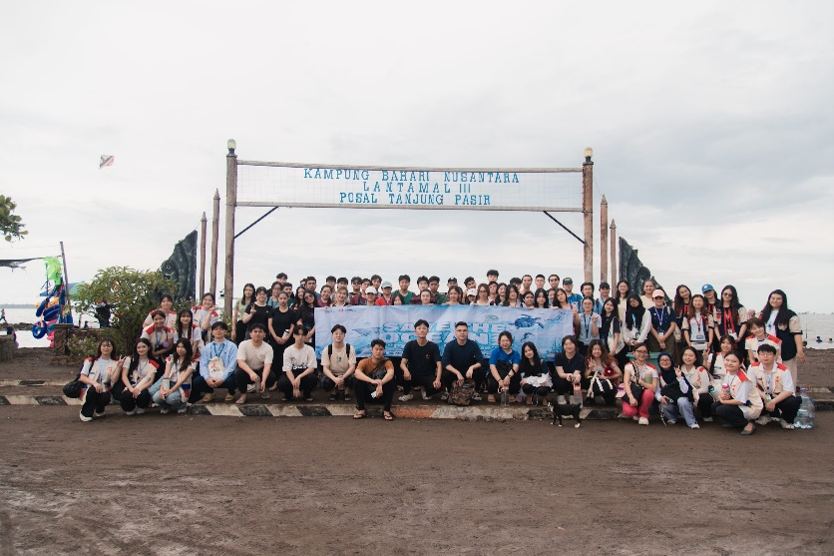
In addition to institutional policies, BINUS University promotes environmental awareness and creative reuse through student activities and sustainability initiatives. One example is Save the Ocean 2025, an environmental initiative that encourages participants to take an active role in protecting marine environments. The activity includes creative approaches to reusing waste materials, such as transforming discarded plastic bottles into useful products. By engaging students in environmental action, the initiative supports awareness of plastic pollution and the importance of reducing waste at its source. While recycling and upcycling do not directly demonstrate a reduction in disposable-item consumption, they complement the university’s broader efforts to encourage more responsible material use.
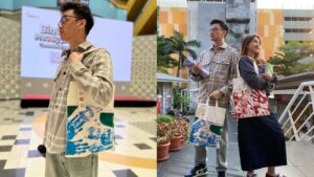
Another practical example is BINUS @Kemanggisan’s upcycling initiative in 2025, in which discarded kain blacu artwork was transformed into 330 environmentally friendly tote bags. This initiative demonstrates how existing materials can be repurposed into practical products instead of being discarded. Reusable tote bags can also serve as alternatives to single-use shopping bags, particularly when adopted in place of disposable plastic bags. The activity therefore connects waste reuse with the promotion of reusable alternatives within the university community.
This commitment is reinforced by the Rector’s circular No. 1564A/REK/IX/2023, titled “Gerakan Ramah Lingkungan: Pengurangan Plastik Dan Barang Sekali Pakai,” which promotes minimizing single-use plastics on campus. The circular encourages staff, students, and faculty to adopt eco-friendly alternatives by using reusable containers, tumblers, and shopping bags, contributing to a reduction in disposable plastic use and plastic waste disposal.