


Pedestrian priority on campus
BINUS University prioritises pedestrian access as an integral part of its campus design, accessibility, and sustainable mobility approach. Walking pavements are provided as a mandatory facility across all BINUS University campus areas, while pedestrian-friendly infrastructure, including connecting bridges between buildings, is integrated into campus design to encourage walking as a primary mode of movement.
- Pedestrian Pathways
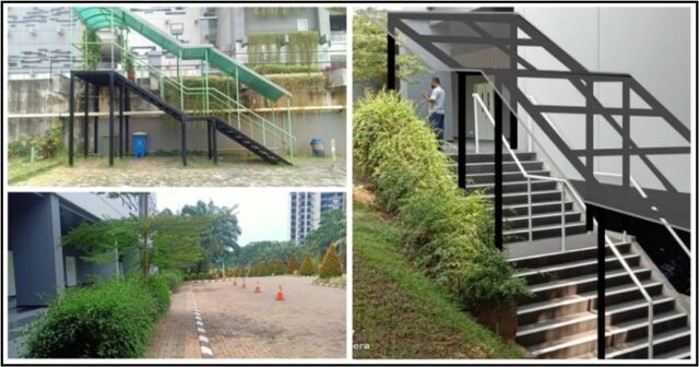
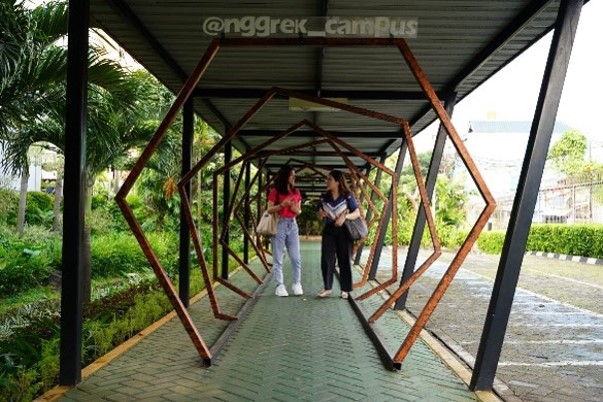
BINUS provides dedicated pedestrian pathways that are elevated above the surrounding road surface, creating a clear separation between pedestrians and motor vehicles. The pathways are complemented by trees and other plants, creating a greener and cooler walking environment, while canopies provide additional protection and comfort for pedestrians, particularly during rainy weather.
- Accessibility for All
Pedestrian access is further supported by facilities designed to accommodate users with different mobility needs.
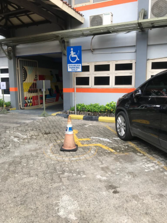
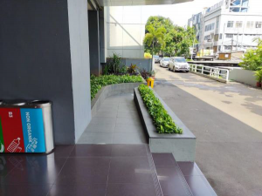
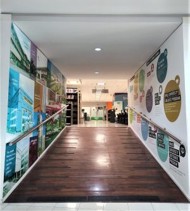
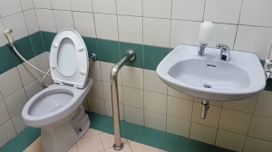
BINUS campuses provide :
- Designated accessible parking areas near building entrances : The availability of these dedicated parking spaces enables students with disabilities who require mobility support, such as wheelchair users or individuals using other mobility aids, to enter campus facilities more comfortably and efficiently.
- Ramps alongside stairs : In areas that cannot be accessed by elevators but are located at a higher level than the surrounding pathways, ramps are provided alongside stairs to ensure that students with disabilities can reach these locations without being limited to stairways or escalators. Some campus facilities are located in recessed areas, corners, or elevated sections that may not be directly accessible from the main pathways. For students with disabilities who rely on mobility aids, ramps provide an essential means of access to these spaces.
- Accessible restrooms : These accessible restrooms are carefully designed to meet the needs of their users and provide greater comfort and independence. These facilities support students with disabilities as well as other users, such as elderly individuals, parents with strollers, and staff transporting goods.
- Sustainable Mobility
Pedestrian infrastructure forms part of BINUS University’s broader sustainable commuting strategy. The university promotes walking, cycling, shuttle buses, and electric vehicles as lower-emission mobility options and aims to reduce reliance on private vehicles. By making walking infrastructure mandatory across its campuses and connecting pedestrian routes with other sustainable transportation options, BINUS integrates pedestrian access into its wider campus mobility planning.
- Information Signage
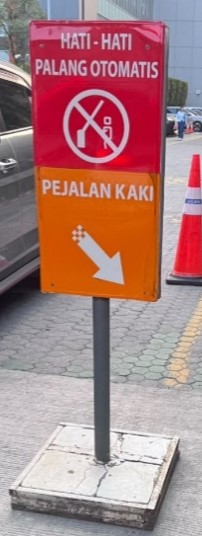
Information signage is provided across campus to help students, staff, and visitors identify facilities, navigate buildings, and find their destinations more easily. Clear and accessible signage supports independent movement and improves the overall campus experience. Strategically placed signage also helps users understand directions and locate important campus facilities, particularly in areas with multiple pathways, buildings, or entrances.
- Guiding Blocks
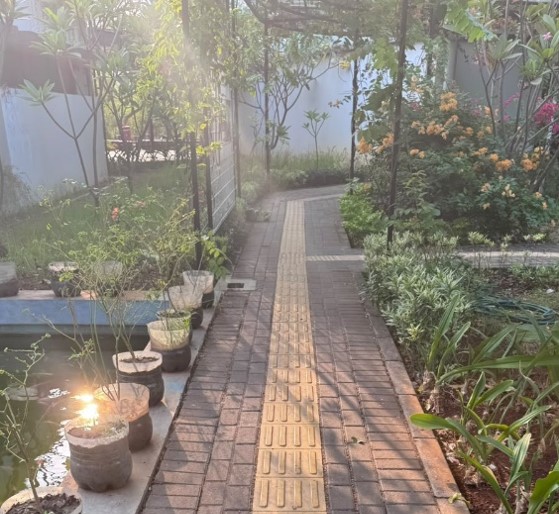
Guiding blocks are provided along pedestrian routes to support way finding for students and visitors with visual impairments. The tactile pathways help users navigate campus spaces more independently and safely. By integrating guiding blocks with the campus pedestrian network, BINUS supports a more inclusive walking environment and improves accessibility for users with different mobility and sensory needs.
Overall, BINUS University’s mandatory pedestrian pathways, dedicated and separated walkways, weather-protection features, connecting bridges, and accessibility facilities demonstrate that pedestrian access is prioritised across its campuses. These measures make walking safer, more comfortable, accessible, and practical for students, faculty, staff, and visitors, while supporting BINUS University’s commitment to inclusive and sustainable campus mobility.