



An Exploration on Sustainable Design Through Low-Bit Graphics
Jakarta, 1 July – As the global market valuation of animation is expected to exceed USD 890 billion in the next decade (Zoting & Shivarkar, 2025), BINUS University is committed to actively empowering students to help shape a more sustainable creative industry by integrating eco-conscious thinking into their designs through two outstanding works of our Animation students held at the Plaza Atrium of our Anggrek Campus in the “Sustainability Showcase Forum” as part of university’s “Road to 45 Years” celebration.
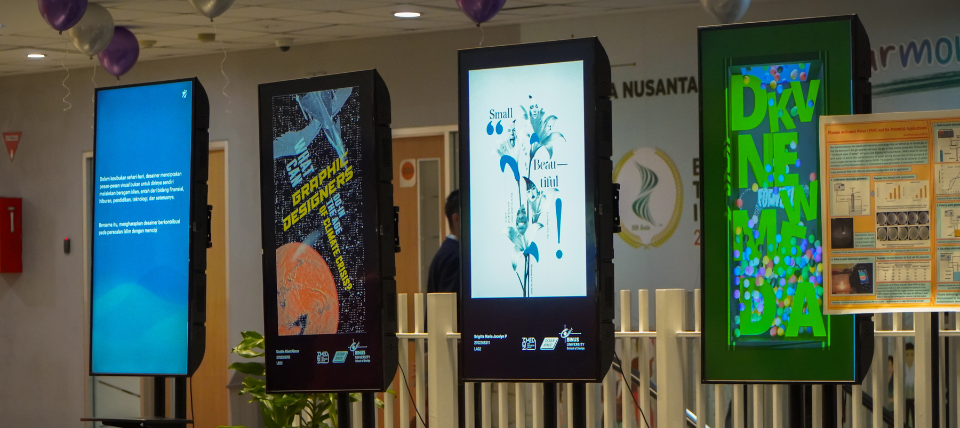
(Photo Credit: Mufti Warits)
Take a look at the work of “Less Carbon More Fun,” by Aliftsa Heidi Mahira, who created this in 2024 as part of a Visual Making Project course and used low-bit digital graphics and Halftone techniques. This method simulates continuous tones and shades in an image by using varying sizes or densities of individual solid-color dots, which the human eye blends to create the illusion of smooth gradients and a full spectrum of light and dark.
“If we want to design with low-energy graphics, halftone is a great technique. It lets us mimic grayscale shading using dots, which not only looks good but also reduces file size. That means less power used and a more environmentally friendly result,” said Aliftsa.
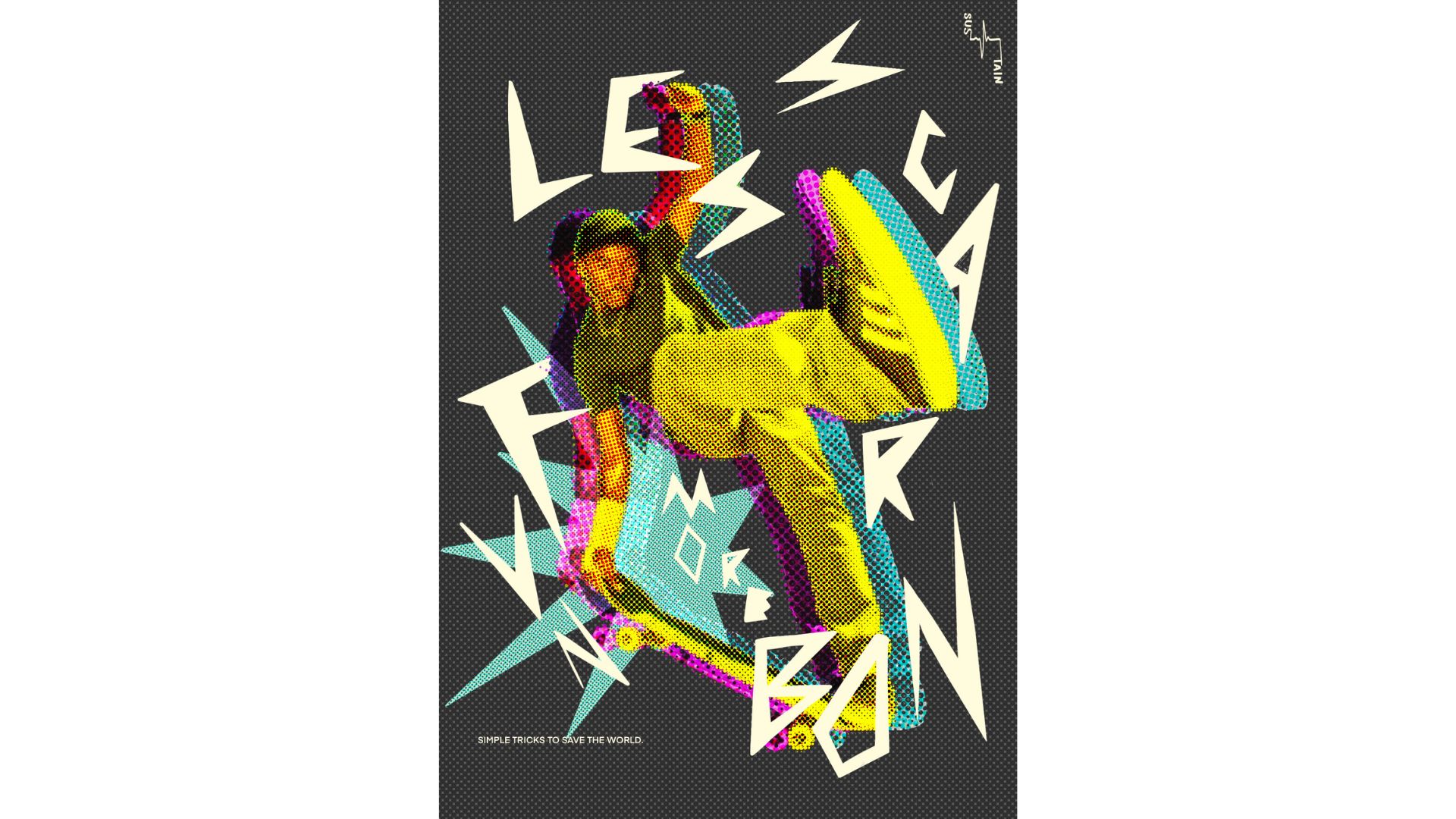
(Photo Editor: Mufti Warits)
However, this technique remains underutilized due to a prevailing preference for high-resolution, high-color-depth graphics, which are often associated with superior aesthetic appeal. This mindset has led to a stereotype that only visuals with high technical specifications are of high quality, while those with lower specifications are perceived as inferior.
Other prominent work is High Bit is Not the Standard,” by Audrey Serah Limuang. This work utilized dithering techniques to simulate color depth within images constrained by a limited color palette, demonstrating a creative approach to energy-efficient visual design.
For Audrey, the satisfaction in creating this work came from the sensory experience of exploring visual perception and continuously experimenting to discover beautiful dithering effects, proving that even low-bit-depth graphics can appear striking and elegant, meeting or even exceeding design standards.
Lastly, the forum brought Aliftsa and Audrey, as well as faculty and staff, to display their impactful work that demonstrates the institution’s commitment to sustainable development. Their artworks demonstrate that, with exploration and creative intent, designers can achieve compelling aesthetics while maintaining eco-conscious principles. Such efforts may help redefine how sustainability is perceived in the digital design landscape and hopefully inspire more creative creators to follow in their footsteps, together with BINUS University, in fostering and empowering society.
(Words by Mita Adhisti/Editor: Hamzah Ramadhan)

Comments :