
Tirabites
1. Introduction
1.1 Problem Statement
The growing popularity of trendy desserts, especially tiramisu, has created opportunities for product innovation in the dessert industry. Consumers, particularly young people, are increasingly interested in desserts that are practical, visually appealing, and suitable for fast-paced lifestyles. However, most tiramisu products available in Indonesia are still commonly sold in conventional forms such as cups, slices, or trays, which provide a relatively similar consumption experience. These products are often less practical to carry and consume, especially for consumers who prefer convenience and portability.
In addition, modern consumers tend to seek new and unique eating experiences without losing the familiar taste they already enjoy. This creates a market gap for tiramisu products with more innovative presentation concepts while maintaining the classic tiramisu flavor. Observations of dessert trends on social media also indicate that tiramisu products with modern serving styles are becoming increasingly popular abroad, while similar concepts remain relatively uncommon in Indonesia. Therefore, there is an opportunity to introduce a tiramisu product that combines practicality, attractive presentation, and familiarity of taste to meet the changing preferences of consumers.
1.2 Product Idea
TiraBites is a bite-sized tiramisu dessert designed to provide a more practical and modern way of enjoying tiramisu. The product presents the classic taste of tiramisu in the form of small dessert balls that are easy to consume, carry, and share. Unlike traditional tiramisu products that are usually sold in cups or trays, TiraBites offers a simpler and more convenient eating experience that fits modern lifestyles.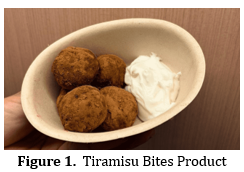
Each box of TiraBites contains several bite-sized pieces with different flavor variations, creating a more enjoyable and interactive dessert experience for consumers. The visually appealing presentation also increases the product’s attractiveness, especially among young consumers who are influenced by social media food trends. By maintaining the familiar tiramisu flavor while introducing a new serving concept, TiraBites aims to offer both novelty and comfort to customers.
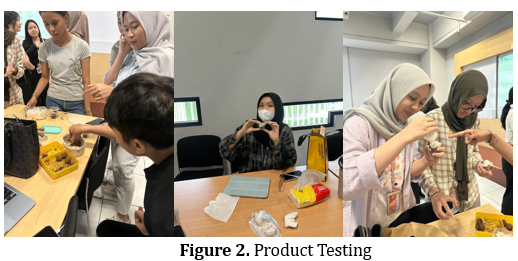
TiraBites is positioned as a premium dessert product targeting young consumers who enjoy trying unique and trendy food products. The product is developed with a simple yet consistent production process, allowing gradual business expansion while maintaining quality standards. In the long term, TiraBites aims to become a recognizable dessert brand by expanding sales channels from small-scale social media marketing to wider distribution through cafés and dedicated stores.
2. Market Analysis
2.1 Total Addressable Market (TAM)
Total Addressable Market (TAM) represents the overall market potential that can be reached by Tirabites. The product targets consumers aged 15–35 years in the Greater Jakarta area (Jabodetabek) who enjoy trendy desserts and modern snacks. This segment includes teenagers, university students, and young professionals who tend to follow current food trends and prefer practical lifestyle-oriented products.
Based on market estimation, there are approximately 5 million active consumers who have the potential to become Tirabites customers. With a selling price of IDR 23,000 per pack, the estimated market potential reaches IDR 151,000,000,000 per month. This significant value indicates that the modern dessert business has strong growth potential amid increasing consumer interest in practical and visually appealing food products.
2.2 Serviceable Available Market (SAM)
Serviceable Available Market (SAM) of Tirabites is focused on the Tangerang area through online sales strategies and participation in bazaars or campus events. This area was selected due to the high concentration of young consumers, particularly university students and young professionals, who represent the primary target market for practical dessert products.
In addition, the use of social media as a promotional platform is considered effective in reaching consumers within this region. It is estimated that there are approximately 75,000 active consumers who fit the target market profile of Tirabites. With a product price of IDR 23,000 per pack, the reachable market potential is estimated at IDR 1,725,000,000 per month. Focusing on a more specific market segment enables the business to develop more effective and efficient marketing strategies.
2.3 Serviceable Obtainable Market (SOM)
Serviceable Obtainable Market (SOM) represents the realistically achievable target market for Tirabites during the early stage of business development. At this stage, Tirabites aims to achieve sales of 1,800 packs per month. This target is determined based on the current production capacity, marketing capability, and the condition of the business as a newly established venture. With a selling price of IDR 23,000 per pack, the estimated monthly revenue is projected to reach IDR 41,400,000. This target is considered realistic for a growing business and has the potential to increase over time alongside the growth of brand awareness, customer loyalty, and wider marketing reach in the future.
3. Business Model
The business model of Tirabites is designed to address the needs of modern consumers who seek dessert products that are practical, appealing, and easy to consume at any time. Tirabites offers tiramisu in a bite-sized form, making it more convenient and suitable for an on-the-go lifestyle. In addition to being easy to consume, the product is suitable both as a personal snack and as a dessert to share with friends. To adapt to market preferences, Tirabites provides several flavor variants, including original, nusantara, and matcha, which align with current dessert trends.
In operating the business, Tirabites collaborates with several key partners, such as raw material suppliers, packaging suppliers, delivery services including GoSend and GrabExpress, as well as social media platforms such as Instagram and WhatsApp. These collaborations support the production, distribution, and promotion processes to ensure business operations run effectively. Furthermore, Tirabites utilizes bazaars and support from influencers or content creators to increase brand awareness and attract consumer interest. The main business activities include product quality control, online sales, social media management, product delivery, and participation in bazaars or campus events. Quality control is one of the primary focuses to maintain product taste, texture, and hygiene in order to ensure customer satisfaction. Customer relationships are also developed through active interaction on social media, engaging content marketing, and refund or replacement services in case of product damage.
The primary target market of Tirabites consists of teenagers and young adults aged 15–35 years, particularly university students and young professionals who seek practical yet trendy snacks. Sales are conducted through social media platforms such as Instagram and TikTok, pre-order systems via WhatsApp or Line, and direct selling at bazaars and campus events. These strategies are considered effective in reaching the target market while also building closer relationships with consumers. To support its business operations, Tirabites relies on several key resources, including production equipment, raw materials, recipes and brand identity, social media accounts, and skills in baking, marketing, and content creation. The business cost structure consists of fixed costs such as electricity and internet expenses, variable costs including raw materials and packaging, as well as additional expenses for participating in bazaars and events. Meanwhile, the main source of revenue is generated through bundle product sales priced at IDR 20,000–23,000 per pack through pre-order systems and direct sales at various events. With a practical business concept that follows current market trends, Tirabites has significant potential to grow as a modern dessert brand among young consumers.
4. Marketing Strategy
The marketing strategy was designed to increase product awareness and expand market reach, particularly among teenagers and young adults as the primary target consumers. The promotional approach combines both digital and offline marketing methods to maximize product exposure and improve consumer engagement.
Digital marketing is implemented through the utilization of social media platforms, particularly Instagram and TikTok, by using paid advertisements. The advertisements are configured using a hyper-local targeting approach, limiting the display radius to approximately 10–15 km from the selling location. This strategy is expected to improve promotional efficiency by focusing on potential consumers located near the distribution area, thereby increasing the likelihood of product purchases.
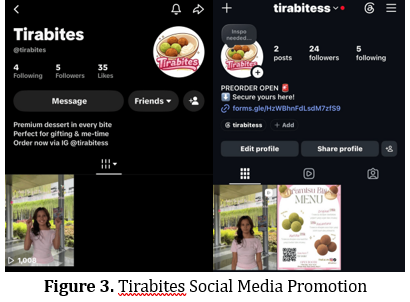
In addition to online promotion, offline marketing activities are conducted through participation in campus bazaars and shopping mall events. Pop-up booths are utilized to introduce the product directly to consumers and provide opportunities for product sampling and direct interaction. Participation in food bazaars and local culinary festivals is considered beneficial for increasing brand visibility, especially in locations frequently visited by young consumers.
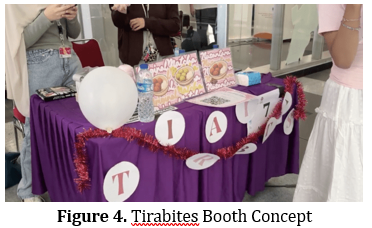
Furthermore, bundle-selling strategies are introduced to attract consumers with specific purchasing needs. Several special package concepts, such as the “Birthday TiraBites Tower” and “Friday Sharing Pack,” are designed to provide product variations suitable for celebrations, office gatherings, and campus activities. This bundling strategy is expected to encourage higher purchase quantities while also enhancing product attractiveness and consumer convenience.
Overall, the combination of digital advertising, offline promotional events, and product bundling is expected to strengthen market penetration and support sustainable business growth.
5. Financial Analysis
5.1 Cost of Goods Sold (COGS)
Cost of Goods Sold (COGS) is calculated using the full costing method by categorising all production costs into several components, namely raw material costs, utilities/overheads, and variable costs per pack. This calculation is carried out to determine the total production costs incurred for each product variant before setting the selling price.
Generally, COGS is calculated using the following formula:
According to the calculations, the highest production cost is for the Nusantara variant at Rp10,895 per pack, whilst the Matcha variant has a total cost of goods sold of Rp10,820 per pack. The Original variant has the lowest production cost, at Rp8,753 per pack. These cost differences are influenced by the use of additional ingredients such as cream cheese, matcha powder, yoghurt and whipped cream in each product.
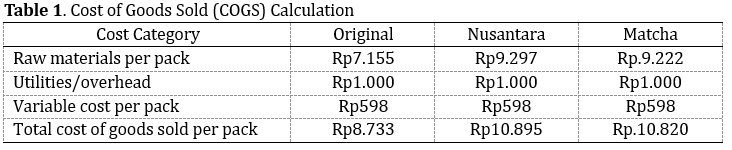
Utilities and overheads include the costs of electricity, equipment usage and internet connection during the production process. Meanwhile, variable costs include packaging, spoons and gloves used for each product.
5.2 Break Even Point (BEP)
The Break-Even Point (BEP) is used to determine the minimum number of products that must be sold for a business to neither make a loss nor a profit. The calculation is based on fixed costs, selling price, and the contribution margin for each product.
The BEP formula used is:
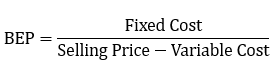
The contribution margin is calculated as the difference between the selling price and the variable cost. According to the calculations, the highest contribution margin is for the Matcha variant at Rp12,478, followed by Nusantara at Rp12,403, and Original at Rp11,917.
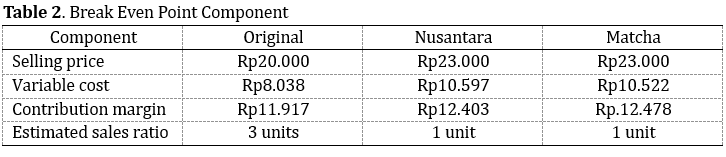
Based on this sales ratio, the weighted average contribution margin was calculated at Rp12,126. The weighted average contribution margin was calculated using the following formula:

With total fixed costs of Rp5.400.000, the total break-even point is calculated as follows:
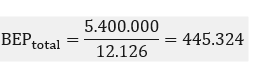
Based on the BEP calculation, a single store is required to sell a minimum of 446 packs per month to reach the break-even point. Assuming the business operates for 26 working days per month, the minimum daily sales target is approximately 17 packs per day.
6. Team Roles
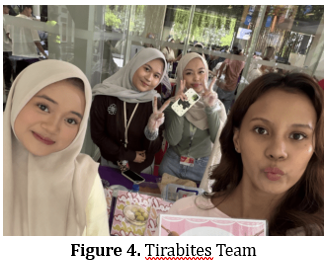
The Tirabites team consisted of four members who had different responsibilities in developing the product and preparing the business project. Afrah Nabila Syafri served as the Chief Executive Officer (CEO) and was responsible for creating the product concept and determining the problem statement. Az Zahra Shaliha Rahma Siregar worked as the Chief Marketing Officer (CMO) who handled the market analysis and business model planning. Adelia Dwi Putri acted as the Chief Technology Officer (CTO) and focused on the marketing strategy, cost of goods sold (COGS), and financial planning. Meanwhile, Najwa Azzahra served as the Chief Operational Officer (COO) who coordinated the operational activities and prepared the presentation materials.
7. Market Validation Reflection
7.1 Validation Methods
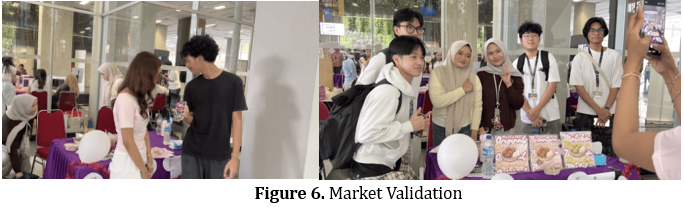
Market validation was conducted using the feedback capture grid method to identify consumer responses toward the Tirabites product. In addition, consumers raised questions regarding the ingredients, production process, and development of flavor variants, indicating a strong interest in the Tirabiteseral suggestions for improvement were also provided, such as making the texture creamier, reducing the bitter taste, adjusting the product size to better fit the one-bite snack concept, and adding toppings or fillings. In addition, consumers raised questions regarding the ingredients, production process, and development of flavor variants, indicating a strong interest in the Tirabites product and its future development.
7.2 Data and Insights
The market validation process for TiraBites provided several important insights regarding customer preferences and product perception. Most respondents gave positive feedback about the product’s unique concept, practical bite-sized form, and balanced sweetness level. Many customers mentioned that the product was easy to eat, visually attractive, and suitable for modern lifestyles. Several respondents also appreciated the familiar tiramisu flavor combined with a more innovative presentation style. Comments such as “praktis dimakannya,” “unik produknya,” and “rasanya pas tidak terlalu manis” indicated that consumers valued both convenience and taste consistency.

Another important insight was the strong interest in product variety and customization. Many respondents suggested adding more flavor options, toppings, or fillings inside the bites to create a more exciting dessert experience. Customers also showed interest in improving the sensory experience of the product, particularly through texture enhancement. Suggestions such as adding crunchy elements, making the cream creamier, or strengthening the tiramisu flavor appeared repeatedly in the feedback. This indicates that texture and flavor intensity play a significant role in customer satisfaction.
In addition, customers showed concern toward the practicality and appearance of the product. Some respondents commented on packaging design, logo development, and serving temperature. These responses suggest that visual branding and product presentation are important factors that influence consumer attraction, especially among younger customers who are highly influenced by social media trends.
7.3 Challenges Encountered
During the market validation process, several challenges were encountered in analyzing customer feedback. One major challenge was obtaining enough respondents, as some people did not fill in the feedback form completely or chose not to respond. This limited the amount of data available and made it more difficult to identify clear trends and customer preferences.
Another challenge was the different opinions regarding texture and portion size. Some respondents thought the bites were too dense or too large, while others felt they were too soft or too small. Some respondents also mentioned that the cream became too runny at room temperature, while others preferred the product when served cold. In addition, several customers said that the bites were fragile and easily broke apart when handled.
There were also different opinions about flavor balance. While many respondents liked the sweetness level, some felt that certain variants were too bitter, too milky, or lacked a strong tiramisu taste. To address these challenges, improvements were considered in texture stability, flavor consistency, bite size, and flavor variations to better match customer preferences.
7.4 Actionable Outcomes
Based on the feedback received from 34 respondents, several improvements could be made to further develop Tirabites. Most respondents liked the unique bite size concept because it was considered practical and easy to eat. In addition, respondents also stated that the product had a balanced sweetness and an attractive appearance. The concept of Tirabites was considered interesting and different from common tiramisu products available in the market. Several respondents also mentioned that the product had a good flavor and appealing aroma. These positive responses showed that Tirabites had the potential to attract consumers, especially younger customers who preferred practical and innovative desserts.
However, some respondents suggested several aspects that still needed improvement, especially the texture and flavor development. Several respondents stated that the texture was too dense, less creamy, and easily crumbled when eaten. Some respondents also suggested improving the cream consistency to create a smoother texture. In addition, respondents recommended adding more flavor variations to make the product more attractive to consumers. A few respondents also mentioned that the flavor intensity of certain variants still needed improvement. Therefore, the next step for product development was to improve the product consistency, enhance the cream texture, and develop more flavor options that matched consumer preferences.
8. Conclusion and Call to Action
The market validation process showed that Tirabites received positive responses from consumers due to its unique bite-size concept, balanced sweetness, and practical serving size. Most respondents considered the product interesting, visually appealing, and easy to consume in daily activities, making it suitable for modern lifestyles. In addition, the product was viewed as different from conventional tiramisu products commonly found in the market, which increased its attractiveness among younger consumers. The feedback also indicated that consumers appreciated the innovative concept and the familiar tiramisu flavor offered by the product. Several respondents also suggested improvements regarding texture consistency and flavor development to further enhance product quality. Overall, the validation results showed that Tirabites had strong potential to be further developed as an innovative dessert product.
Tirabites was developed as an innovative dessert product that offered a new experience in enjoying tiramisu through a practical bite size concept. With its attractive appearance, balanced sweetness, and unique concept, Tirabites had the potential to attract a wider range of consumers, especially younger generations who were interested in trendy and practical desserts. In addition, the product also showed opportunities for further development through flavor innovation and product improvement to better match consumer preferences. Therefore, Tirabites was expected to become a competitive dessert product with strong market potential in the future.
Anggota Kelompok:
- Afrah Nabila Syafri
- Adelia Dwi Putri
- Az Zahra Shaliha Rahma Siregar
- Najwa Azzahra
Dosen Pengampu: Roni Heryatno, S.E., MM
Comments :