
SLIMEBOO
Problem Statement & Product Idea
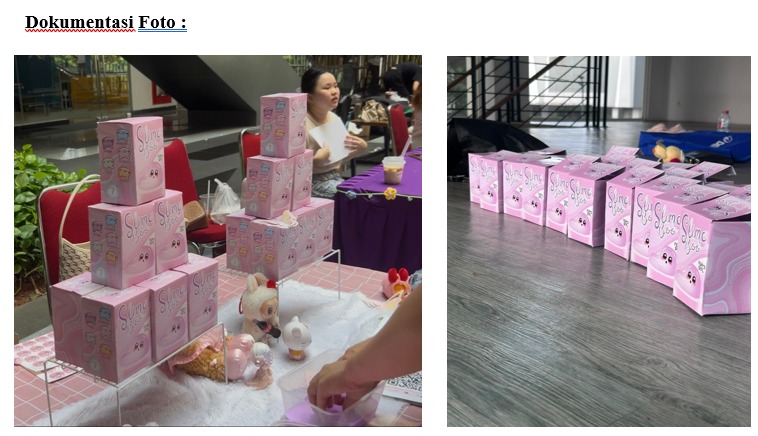
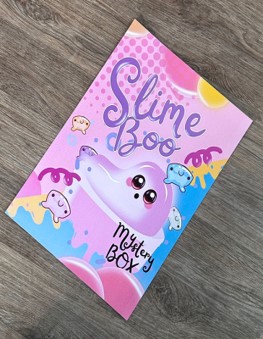
Most slime products currently available in the market only focus on entertainment and lack innovation. Consumers today, especially teenagers and Gen Z, are more interested in products that are not only fun but also aesthetic, interactive, and capable of providing stress relief. In addition, the rise of blind box and unboxing trends has increased consumer interest in products that offer surprise and unique experiences. SlimeBoo is designed as a pastel-themed blind box slime that combines entertainment, stress relief, and practical functionality in one affordable product. Through its unique packaging and surprise unboxing concept, SlimeBoo offers a more interactive and memorable experience compared to ordinary slime products. In addition, the product can also function as a simple cleaning tool, making it both fun and useful for consumers.
Market Analysis
A. Business Model
1. Customer Segments
SlimeBoo targets children, teenagers, and young adults who enjoy sensory toys, aesthetic products, blind box trends, and stress relief items. Parents and gift buyers are also included as potential customers.
2. Value Propositions
SlimeBoo offers a unique blind box slime experience with pastel themed packaging, different textures, scents, and surprise accessories. The product combines entertainment, stress relief, and collectability in one affordable product.
3. Channels
SlimeBoo promotes and sells products through social media platforms such as TikTok and Instagram, online marketplaces like Shopee and Tokopedia, as well as bazaars and pop up events.
4. Customer Relationships
Customer relationships are built through interactive social media content, giveaways, influencer collaborations, and active communication with customers through comments and messages.
5. Key Activities
Main activities include slime production, blind box packaging design, social media marketing, content creation, and product distribution.
6. Key Resources
Important resources include slime raw materials, packaging designs, production equipment, creative teams, and digital platforms for marketing and sales.
7. Key Partners
SlimeBoo works with slime material suppliers, packaging vendors, marketplace platforms, logistics services, influencers, and content creators.
8. Cost Structure
The main costs include raw materials, packaging production, shipping, marketing promotions, influencer collaborations, and marketplace administration fees.
9. Revenue Streams
Revenue is generated mainly from product sales through marketplaces, events, bundle packages, and promotional campaigns.
Marketing Strategy
SlimeBoo’s marketing strategy focuses on building a fun, creative, and stress relieving brand that connects with mostly Gen Z and young adults through interactive digital content and community engagement. The main goal is not only to attract new customers, but also to turn them into loyal repeat buyers through consistent branding and customer interaction.
To acquire customers, SlimeBoo will utilize social media platforms such as TikTok and Instagram to increase brand awareness and engagement. The content strategy will focus on short form videos featuring satisfying slime textures, ASMR sounds, slime customization, and behind the scenes content. By consistently uploading entertaining and visually appealing content, the brand aims to reach wider audiences organically through trending sounds, viral challenges, and social media algorithms.
In terms of branding and positioning, SlimeBoo is positioned as more than just a slime brand. It represents a “comfort and creativity companion” for students and young adults seeking relaxation and entertainment in their daily lives. The brand identity emphasizes colorful visuals, aesthetic packaging, satisfying textures, and playful experiences that match the interests and lifestyle of Gen Z consumers.
To maintain longterm customer relationships, SlimeBoo will implement customer retention strategies such as loyalty and referral programs, where customers can earn points, discounts, or exclusive products through repeat purchases and successful referrals. The brand will also launch limited-edition slime collections and monthly themed products to encourage recurring purchases. Additionally, SlimeBoo will actively engage with customers through polls, giveaways, slime-naming contests, and reposting user-generated content to strengthen community interaction and customer loyalty.
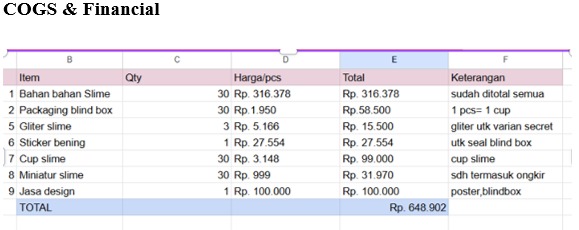
COGS (Cost of Goods Sold) refers to the total direct cost of producing the product, including materials, packaging, and related production expenses. In this project, the total COGS is Rp 648,902
BEP with a total investment of Rp 648,902 and a selling price of Rp 35,000 per box, the project is expected to break even after selling approximately 19 boxes. The projected revenue is Rp 1,050,000, generating an estimated profit of Rp 401,098. This project focuses not only on profitability but also on market testing and consumer feedback collection for future growth.
Market Validation Reflection
B. Introduction
SlimeBoo was created as a business idea that combines creativity, entertainment, and stress relief into one product. Nowadays, many consumers are looking for products that are visually attractive, fun to use, and able to create exciting experiences. Seeing the growing popularity of sensory toys and blind box trends, we saw an opportunity to develop a slime product that feels more unique and memorable compared to ordinary slime products in the market. We believed that a pastel-themed slime with surprise packaging could attract customers who enjoy aesthetic and interactive products while still being affordable for students and teenagers.
Target Audience Research
In conducting market validation, we focused mainly on teenagers, Gen Z consumers, and young adults because these groups are highly active on social media and tend to follow current trends. We also considered children and gift buyers as potential customers since slime products are often purchased for entertainment and special occasions. To understand our target audience better, we observed consumer behavior and popular trends through platforms such as TikTok and Instagram, where slime videos, ASMR content, and blind box unboxing are widely viewed and shared. Through this research, we found that many consumers are interested in products that provide satisfying experiences, aesthetic packaging, and stress-relieving activities. These findings helped us confirm that SlimeBoo has the potential to attract a market that values both entertainment and creativity.
Validation Methods
We used surveys and product testing sessions to collect feedback from potential customers. Respondents were asked to rate the slime’s texture, quality, aroma, color, and overall satisfaction after trying the product. These methods worked well because they were simple, easy to access, and allowed respondents to directly experience the product before giving their opinions.
The feedback we received was mostly positive. Many respondents mentioned that they liked the soft and stretchy texture, cute colors, pleasant scent, and unique blind box concept of SlimeBoo. Several respondents also said the slime was satisfying to play with and visually attractive. However, some respondents suggested improvements such as adding more color and texture variations, improving the scent options, and including more decorations or toppings to make the slime look more appealing. Our initial assumption was confirmed because most respondents expressed satisfaction and stated that they would recommend SlimeBoo to others. However, the feedback also showed that customers expect more product variety and customization.
One challenge we faced was receiving different preferences from respondents regarding scents, textures, and designs. Some respondents preferred softer slime, while others wanted crunchier textures or more decorations. In addition, a few respondents questioned product durability and whether the slime could melt or become damaged over time. These challenges showed us that customer preferences can vary significantly. To address this, we plan to expand our product variations and improve product quality and packaging in the future.
Based on the feedback, we plan to add more slime variants, improve scent options, create limited edition themes, and include more toppings or decorative elements. We also plan to explore slime kit concepts and provide better information about slime care and durability. The feedback showed us that customers value creativity, sensory satisfaction, and product uniqueness. Our next step is to continue testing new variations and improving the overall customer experience.
Data and Insights
The whole market validation process kinda gave us solid insights into what customers actually like and how much potential SlimeBoo could really have in the market. From the survey answers and the product testing sessions, most participants said they had positive feelings about the product’s soft texture, its pastel looking colors, the pleasant scent, and that whole blind box idea that’s kinda unusual. Quite a few respondents mentioned that the surprise moment improved the experience overall, and it makes the item feel more exciting than typical slime products , you know.
The results also showed something pretty clear: people seem to genuinely want products that blend entertainment, creative play, and stress relief. The aesthetic packaging along with the collectible vibe were seen as major reasons why they would consider buying ,especially teens and Gen Z consumers, since they’re really tuned into social media trends and sharing.
Also, in the feedback there were opportunities for improvement that came up pretty often. Some people suggested adding more texture types, more scent choices, extra color options, and even decorative toppings so customers can customize more and keep interest going over time. A few participants also brought up worries about durability and storage, so it looks like it matters a lot to include straightforward product care instructions, no vague stuff.
All in all, the validation confirmed SlimeBoo has strong market potential, and it seems to match what consumers want from interactive yet visually attractive sensory items. The insights we gathered are going to steer the next stages of product development , including new variants, limited-edition drops, and ways to make the overall customer experience even better so satisfaction rises and brand loyalty sticks.
Challenges Encountered
My team and I had a few challenges in the preparation and selling of SlimeBoo. The concept development and finalization of the product was one of the greatest difficulties. We had to come up with some creative concepts to help the market and differentiate SlimeBoo from other slime products. There was a lot of talking and testing to find all the right ideas to combine blind box concepts, pastel themes and sensory experiences.
A difficulty was the synchronizing of various ideas and viewpoints, within the team. As everyone had their own ideas and opinions, there were times when we disagreed on product design, marketing strategy and packaging ideas. So, it was essential that we communicate and compromise with one another to make decisions together.
Moreover, it was challenging to arrange suitable timings during the production process as each team member had different activities and responsibilities. One thing we had to figure out is how to effectively manage the production time, prepare materials and organise tasks. With teamwork, discussions and better time management, we were able to complete the preparation, and successfully implement the selling process of SlimeBoo.
Actionable Outcomes
Based on the market validation results, several actionable outcomes were identified to improve the product and strengthen its market potential. First, SlimeBoo will expand its product line by introducing more texture variations, scent options, and color combinations to accommodate different customer preferences. Additional decorative toppings and customization features will also be added to create a more engaging and personalized experience.
Second, the team plans to enhance product quality and durability by improving packaging and providing clear instructions on slime storage and maintenance. This will help address customer concerns regarding product longevity while increasing overall customer satisfaction.
Third, SlimeBoo will implement limited-edition collections and themed releases to maintain customer interest and encourage repeat purchases. Combined with active social media engagement, giveaways, and customer participation activities, these initiatives aim to build a stronger community and increase brand loyalty.
Finally, the team will continue gathering customer feedback through future product testing and surveys. By consistently evaluating consumer preferences and adapting to market trends, SlimeBoo can further refine its offerings and create sustainable growth opportunities for the business.
Conclusion
The SlimeBoo project successfully demonstrated how a simple product can be transformed into a unique business opportunity through creativity, innovation, and market understanding. By combining the growing popularity of slime products with the blind box trend, SlimeBoo offers not only entertainment and stress relief but also an exciting and memorable customer experience.
The market validation process showed that the product was well received by potential customers, particularly teenagers and young adults who value aesthetic, interactive, and trend-driven products. The positive feedback regarding the product’s texture, appearance, scent, and surprise element indicates that SlimeBoo has the potential to compete in the sensory toy market. At the same time, customer suggestions provided valuable insights for future improvements and product development.
Overall, this project highlights the importance of understanding customer needs, testing business ideas, and continuously improving products based on feedback. With its unique concept, strong market interest, and opportunities for further innovation, SlimeBoo has the potential to grow into a recognizable brand that delivers both enjoyment and value to its customers.
Team Roles
CEO : Laura Cindy Clementine
Responsible for leading the overall business strategy, coordinating team activities, making key decisions, and ensuring that the project achieves its objectives and targets.
CFO : Cut Allyssa Laksamana
Responsible for managing financial planning, budgeting, cost calculations, and profitability analysis, including the preparation of COGS and Break-Even Point (BEP) calculations.
COO : Genoveva Maria Vianny
Oversaw daily operations, production planning, inventory management, and ensured the smooth execution of product preparation and distribution processes.
CMO :Rubianca Sandrina Rahmadhani
Developed and executed marketing strategies, managed social media campaigns, created promotional content, and strengthened customer engagement and brand awareness.
CTO : Olivia Chelsea
Conducted market research and analysis, identified customer needs and trends, and provided insights to support product development and business decisions.

Dosen Pengampu : Roni Heryatno, S. E., M. M
Comments :