


A Signage-Based Environmental Graphic Design System for Pulau Burung
Research Focus: SOSIAL HUMANIORA
Keyword: environmental graphic design, signage system, mangrove education, spatial wayfinding, Pulau Burung
Summary
Pulau Burung in Mayangan Village, Subang, is part of a wider mangrove ecosystem that serves as a valuable space for environmental learning. However, field observations show that the current educational infrastructure remains limited, particularly in the clarity of spatial information and the availability of interpretive tools. Issues such as inconsistent signage, lack of habitat explanation panels, and absence of child-friendly navigation media challenge students’ ability to explore and understand the ecological functions of the island during learning activities.
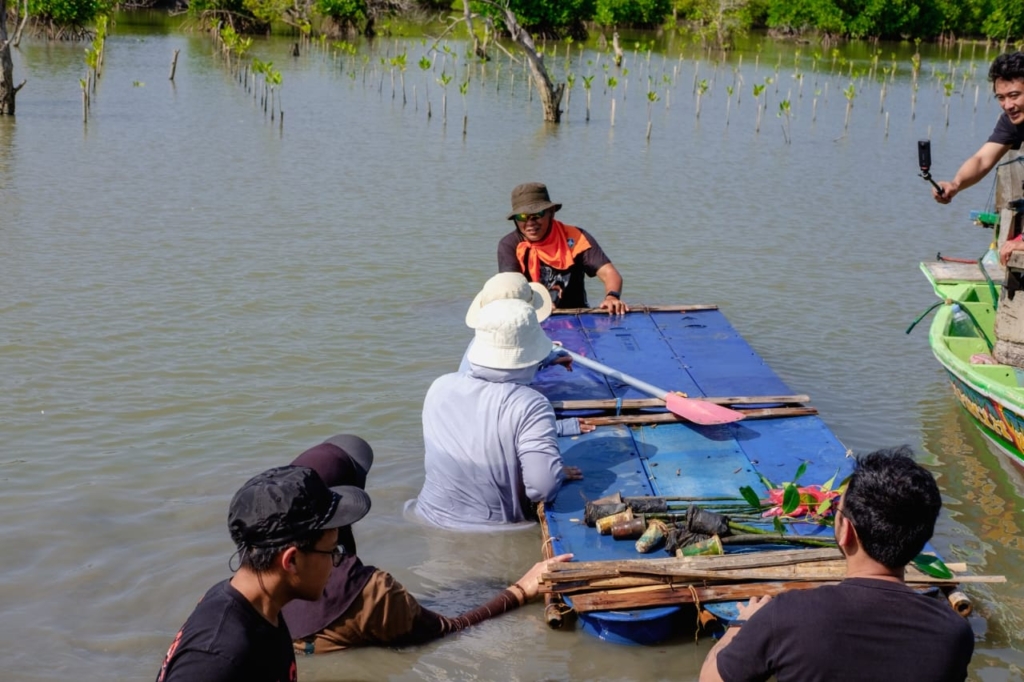
Researcher Survey to Pulau Burung
To address these challenges, the research team developed a comprehensive Environmental Graphic Design (EGD) signage system grounded in the Signage Pyramid Model. This system integrates three core components: the information content system, the graphic system, and the hardware system. Together, these components establish clear communication pathways that help visitors navigate Pulau Burung while interpreting key ecological points such as the crab house area, bird nests, snake habitats, docks, and resting zones.
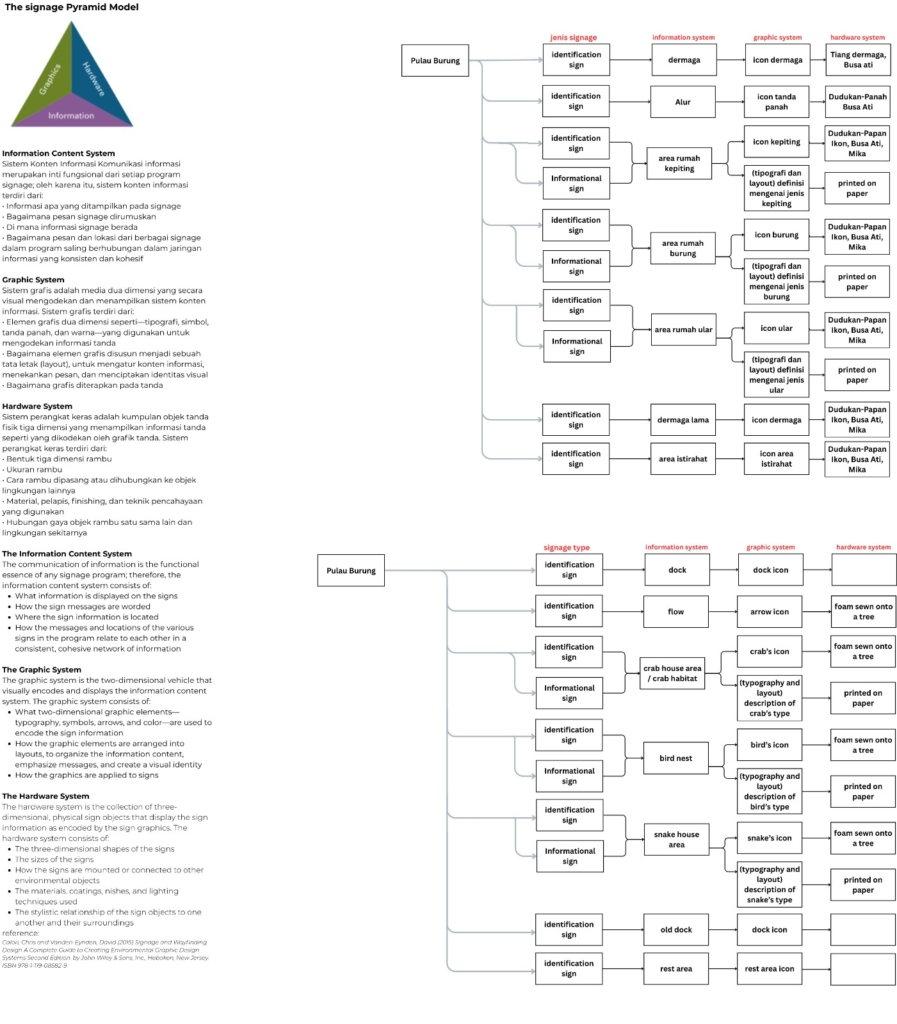
The signage system includes identification signs and interpretive signs supported by coherent iconography, simple spatial cues, and concise educational messages. Each sign is tailored to the island’s environmental conditions using weather-resistant materials and installation methods that minimize ecological disturbance. This structured approach ensures that information is communicated consistently and accessibly to students from grades 11 and 12, who form the primary user group during field-based learning.
Initial implementation shows significantly improved visitor orientation and spatial comprehension. Students reported that icons, arrows, and interpretive descriptions helped them understand location functions, identify species more accurately, and follow learning routes with minimal guidance. Teachers observed that the signage reduced confusion and increased students’ confidence when exploring the island independently. Community members also noted that the clarified system supports local narratives and strengthens Pulau Burung’s role as an educational destination.
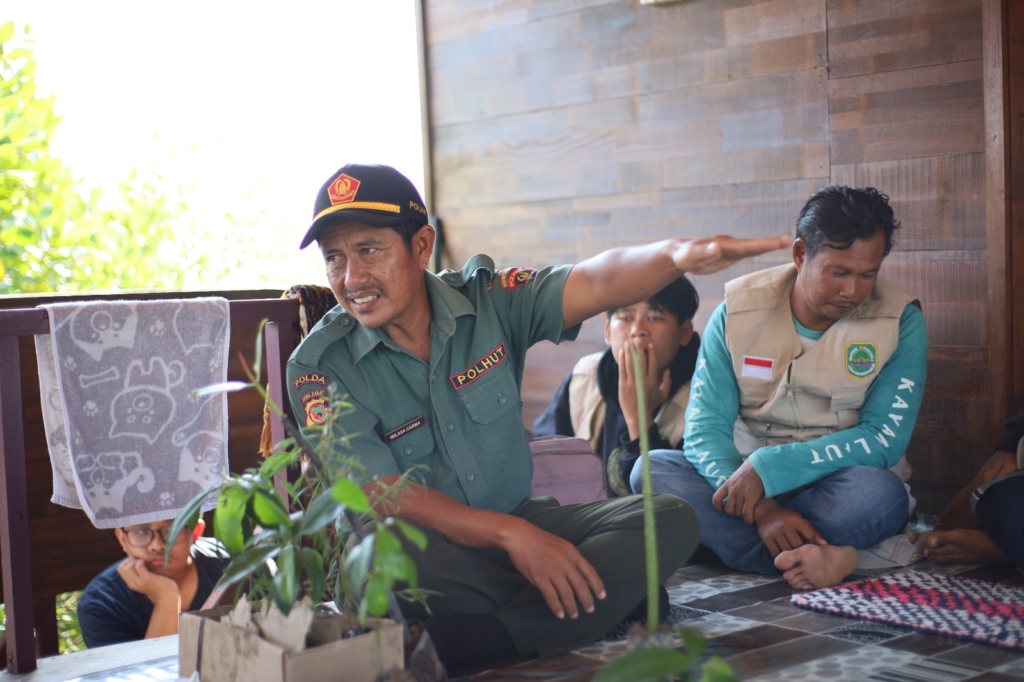
Discussion with Forest Police about EGD
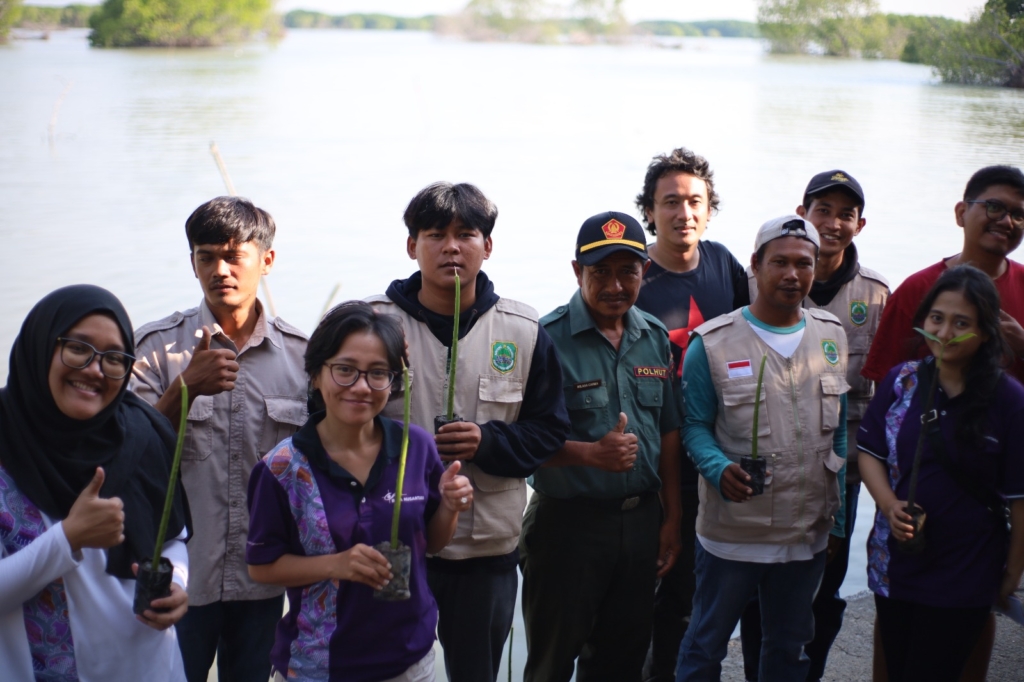
Local Community, After Explained about Environmental Graphic Design for Pulau Burung
The development of this EGD-based signage system demonstrates its potential to transform Pulau Burung into a more inclusive and engaging outdoor classroom. Future enhancements will include expanding interpretive panels, refining the wayfinding system, adding interactive map tools, and integrating the signage network with the Mangrove Education House (REM) as the main interpretation center. The work contributes to the long-term vision of shaping Mayangan Village into a sustainable, community-driven edu-ecotourism site rooted in environmental awareness.
Product Impact
Product impact refers to the observable improvements resulting from the implementation of the Pulau Burung signage system, including clearer spatial orientation for students, increased understanding of mangrove-related habitats, higher engagement in outdoor learning, and strengthened environmental identity for Desa Mayangan. The signage enhances accessibility, supports teachers in structuring field activities, and contributes to a more coherent educational experience in the mangrove ecosystem.
Product Uniqueness
Product uniqueness lies in the integration of the Environmental Graphic Design framework with local ecological narratives, forming a cohesive system of visual and spatial communication. The signage functions as a boundary object that connects students, teachers, community knowledge, and the natural landscape of Pulau Burung. Its combination of culturally rooted icons, structured information design, and environmentally adaptive hardware creates a learning tool that is both functional and contextually resonant.
Researcher:
Uzda Nabila Shabiriani, S.Ds., M.Ds.
Ersto Ardianto
Intan Suci Lestari
Iftika Suliastuti
Andhika Pramalystianto
SDG: Industry, Innovation and Infrastructure
Scheme: Hibah Internal PPB
Year: 2025
Institution: Bina Nusantara University
Member Type: Research Internal Member
Comments :