


How Science Communication Boosts Your Academic Citations
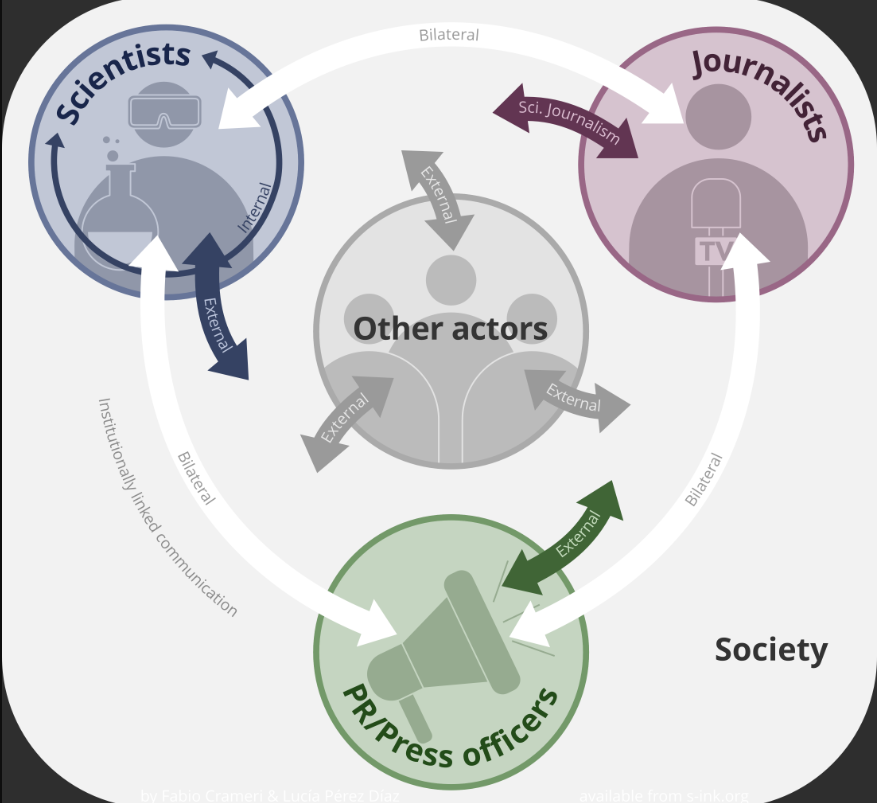
A study analyzing ecology and conservation papers found a strong, consistent link between social media activity and citation counts — and the signal held even after controlling for journal prestige and time since publication. The researchers pulling ahead in citations were not necessarily publishing in better journals. They were making their work easier to find, easier to share, and easier to reference. For a BINUS lecturer watching a SINTA score stagnate despite a solid publication record, this finding deserves a strategic response, not just a nod of interest.
SINTA (Science and Technology Index) scores directly influence Jabatan Fungsional advancement, grant eligibility under Ditjen Diktiristek schemes, and BINUS’s own KPI calculations for lecturers at all levels. A paper sealed inside a journal database accumulates no citations from practitioners, journalists, or graduate students at other institutions who don’t know it exists. A paper that enters public discourse — even in simplified form — creates discovery pathways that a paywall page never generates. When research is posted on social media, shared in a news article, or discussed in a podcast, it enters a fundamentally different distribution system: one driven by sharing logic rather than search logic.
The mechanism is well documented. Research published in the Journal of Computer Information Systems found that a researcher’s cross-platform visibility — across academic networks, professional platforms, and social media — is positively correlated with scholarly citation success. A UK survey of academics recorded concrete outcomes from online engagement: social media posts led to direct paper requests, blog articles produced collaboration offers, and public-facing content resulted in invitations to policy panels and international conferences. These are not edge cases. They are systematically observed patterns across multiple research disciplines and institutional contexts.
The citation-visibility link is not limited to natural sciences. It holds across business, health sciences, education, and communication research — any field where a finding can be stated clearly in plain language. For BINUS lecturers working in technology, management, creative industries, or social sciences, the logic is the same: research that reaches more people gets cited more often by the people whose citations count toward promotion criteria. A SINTA score does not care whether the researcher got there through journal publications alone or through a research communication strategy that expanded the audience for those publications.
The numbers within BINUS itself tell a version of this story. The #binusresearchpoint hashtag grew from just over 100 posts in early 2024 to more than 1,220 by September 2025. That growth represents an expanding archive of publicly findable research — a cumulative library that builds discovery pathways for individual researchers whose names and topics appear consistently. Broader evidence supports the trajectory: a 2019 analysis of Altmetric data found that papers in the top quartile of online attention received roughly three times more citations over the following three years than papers with no public presence at all. Altmetric scores are now displayed on Elsevier, Springer, and Wiley journal pages, and several Indonesian universities have begun incorporating them into performance evaluation frameworks as a complement to Scopus metrics.
The practical entry point is already built. Every published paper listed in EPDP is a candidate for a #binusresearchpoint post — a carousel that states the finding clearly, credits the researcher by name, and enters a searchable, indexed public feed. If you have papers in EPDP without a corresponding social media post, that gap represents a citation opportunity you have not yet claimed. RTT’s Downstreaming team runs quarterly content creation sessions and is available for one-on-one consultation for lecturers who want support translating technical findings into accessible, shareable content.
For a step-by-step guide to the tools, channels, and reporting process that makes science communication count at BINUS, visit the Science Communication page at http://binus.ac.id/techtransfer/science-communication.
#ScienceComm #CitationImpact #AltMetrics #BINUSResearch #SINTAScore #ResearchVisibility #AcademicImpact
Comments :