

From Lab Notes to Real-World Impact: How BINUS Is Teaching Researchers to Cross the Last Mile
On many university campuses, there is a familiar quiet tragedy. Years of careful research culminate in papers, reports, and presentations, then stop. The ideas are solid. The science is sound. Yet the work never becomes a product, a service, or a solution that people outside the academy can actually use.
This gap between discovery and impact is not unique to Indonesia, but its consequences are especially visible in a country facing urgent challenges in health, environment, food, and technology. Research exists. What is missing is a clear, practical pathway to bring it into the real world.
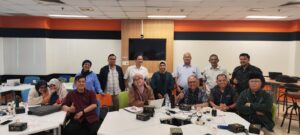
That problem is the starting point of BINUS University’s Program Hilirisasi dan Komersialisasi, a structured initiative designed to help researchers move their work from ideas and prototypes toward real adoption by society and industry. In August 2025, the program’s first cohort, known as PPHK Batch 1, offered a revealing experiment in what happens when academics are taught not just to think, but to translate.
The bottleneck after discovery
Researchers are trained to ask questions, test hypotheses, and produce evidence. They are far less often trained to ask a different set of questions. Who actually needs this? Why would anyone use it? What problem does it solve better than what already exists?
The modules behind the program make a blunt observation. Many research projects fail to reach the market not because they lack quality, but because they lack validation. They skip conversations with users. They overlook legal protection. They underestimate how messy the journey from laboratory to daily life can be.
This is where the program’s design becomes distinctive. Instead of focusing on abstract entrepreneurship, it breaks the process into concrete, learnable steps, each tied directly to a researcher’s own work.
A three-stage bridge
The program is built around three linked stages.
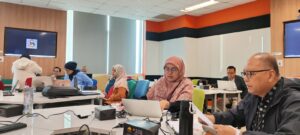
The first is training, delivered through PPHK in an offline, highly interactive format. This choice was deliberate. Participants had to argue, test assumptions, and revise ideas in real time. Over five intensive days in August, sessions ran from early morning to late afternoon at BINUS Anggrek campus.
The second stage is mentoring. Here, research proposals, whether basic, applied, or developmental, are guided step by step toward business proposals. This is where scientific logic meets market logic.
The final stage is real projects with industry partners. This is the moment when ideas face reality, including cost, scale, users, and constraints. Success here is not defined only by profit. Social impact and public benefit are equally valid outcomes.
Across all three stages, the goal is simple but ambitious, to produce researchers who are willing and ready to go all the way to commercialization.
Learning by pressure, not by lecture
One of the most striking aspects of PPHK Batch 1 was its assessment model. Forty participants began the program. Only eighteen earned certificates in the final round.
Selection was not symbolic. Participants were evaluated continuously through individual and group tasks, active participation, and repeated pre-tests and post-tests. These tests were not about memorizing theory. They measured whether participants could actually apply concepts to their own products, prototypes, or research outputs.
Those who passed did so at every stage of the process, showing consistent growth in practical understanding. In technical terms, many of their projects achieved a higher Technology Readiness Level, or TRL, a scale used to describe how close a technology is to real-world use. In plain language, their ideas moved closer to being usable outside the lab.
When researchers meet users
Perhaps the most human moment in the program comes when participants are asked to identify pain points, the everyday frustrations or unmet needs experienced by real people.
For many researchers, this is uncomfortable. It requires letting go of elegant theories and listening instead to messy, sometimes contradictory human stories. A technology that works perfectly may still fail if it solves the wrong problem.
The modules repeatedly return to this lesson. Value is not created by complexity, but by relevance. A solution matters only if someone else feels the benefit.
This shift in mindset can be surprisingly emotional. Participants confront the possibility that their original idea may need to change, or even be abandoned. Yet for many, this is also liberating. The work stops being hypothetical and starts to feel purposeful.
Why this matters now
Indonesia is investing heavily in research and innovation. But investment alone does not guarantee impact. Without pathways like this one, the country risks producing knowledge that circulates only within academic journals.
Programs like PPHK address that risk directly. They do not dilute scientific rigor. Instead, they add missing layers, including intellectual property awareness, feasibility analysis, communication skills, and market validation.
For ordinary people, the implications are concrete. Research that reaches commercialization can mean cleaner water technologies, more accessible health solutions, smarter digital tools, or new methods adopted by communities and policymakers. Even when outcomes are not profit-driven, the social value can be substantial.
Training the trainers
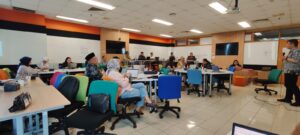
There is another quiet ambition embedded in Batch 1. It also functioned as a Training of Trainers. Participants are expected to carry what they learned back to their own departments and programs, multiplying the impact across the university.
In this way, the program is less about a single cohort and more about cultural change. It suggests a future where researchers routinely think beyond publication, where questions of use and adoption are not afterthoughts but part of the research journey itself.
Crossing the last mile
The distance from an idea to a real-world solution is often called the last mile. It is rarely glamorous, frequently frustrating, and essential.
What PPHK Batch 1 shows is that this mile can be taught, practiced, and measured. Not everyone will cross it. But for those who do, research stops being an endpoint and becomes a beginning.
And in a world that urgently needs ideas to leave the page and enter daily life, that shift may be the most important finding of all.
Comments :