



ICOBAR – FIDI 2025 Highlight: Dr. Nisa Widyastuti Shares Research on Malnutrition and Obesity Trends in Indonesia
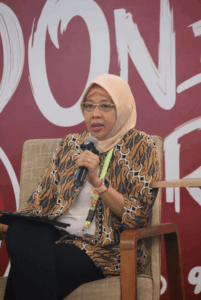
On the second day ICOBAR – FIDI Joint Scientific Forum 2025, Dr. Nisa Widyastuti, a Research Scientist at the University of Otago, New Zealand, delivered an insightful presentation titled “Double Trouble: When Hunger Meets Obesity in Indonesia.”
Addressing academics, researchers, and policymakers, Dr. Nisa explained that Indonesia faces a growing double burden of malnutrition, where undernutrition such as stunting and micronutrient deficiencies coexist with obesity and diet-related noncommunicable diseases. “We are seeing children who are stunted but also overweight, and adults who suffer from both nutrient deficiencies and chronic illnesses like diabetes or heart disease, often within the same household,” she said.
Her findings were drawn from the Indonesian Family Life Survey (IFLS), which has tracked more than 42,000 individuals across five waves from 1993 to 2014. Using trajectory models, the study identified three weight trends among adults: a majority maintaining a healthy but gradually increasing weight, a group starting overweight and getting heavier, and a smaller group—8.6% of the sample—classified as obese throughout, representing an alarming 16 million adults nationwide.
For children and adolescents, four distinct patterns emerged, including a group that started overweight and became obese over time. This group, though only 5.6% of the sample, equates to nearly 4 million children—close to the entire population of New Zealand. Dr. Nisa emphasized that obesity among younger generations is increasing faster, especially among those born in the 1970s–1990s, raising concerns for Indonesia’s future workforce health.
She stressed that obesity cannot be reduced to individual responsibility. “Food systems are complex. Choices are influenced by families, schools, the food industry, media, and even how our cities are built,” she explained. Tackling obesity, therefore, requires a whole-system approach that goes beyond health education to include policies like taxation on ultra-processed foods and sugary drinks, and urban planning that promotes healthier living.
Cultural and social contexts, she noted, also play a pivotal role. Food in Indonesia is tied deeply to identity, traditions, and emotions. “If we only focus on food from a health perspective, we miss all of that,” Dr. Nisa added, underscoring the importance of culturally sensitive policies.
During the Q&A session, participants raised questions on strategies to reduce obesity in Indonesia, the role of caregivers, and the feasibility of adopting global models. Dr. Nisa responded that while Indonesia can learn from international experiences, every country needs tailored solutions. She highlighted that blaming parents, particularly mothers, is unfair, as obesity is shaped by environments and structural conditions. She called for multisectoral collaboration involving health, education, agriculture, and city planning.
“Obesity is not a simple problem, and no one chooses to be obese—unless they are a sumo wrestler,” she remarked lightly, before reminding the audience that even developed nations like New Zealand continue to struggle with high obesity rates.
Dr. Nisa concluded by urging stronger nutrition policies that address both undernutrition and obesity simultaneously. “Currently, we are just focusing on undernutrition, which is a shame. We need to recognize obesity as an equally urgent challenge,” she said.
#ICOBAR2025 #PublicHealthNutrition #DoubleBurden #ObesityInIndonesia #NutritionPolicy
Comments :