

ICOBAR – FIDI 2025 Highlight: BINUS Scholar Dr. Tia Mariatul Kibtiah Explores Middle East Opportunities for Indonesia Through SDGs
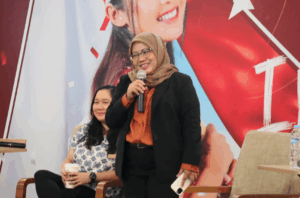
At the second day of ICOBAR – FIDI Joint Scientific Forum 2025, Dr. Tia Mariatul Kibtiah, S.Ag., M.Si., Associate Professor at BINUS University, delivered an engaging presentation on “SDGs in the Middle East: Challenges and Opportunities in Economic Development and Environmental Issues.”
Dr. Tia began by reflecting on her academic journey, which has long focused on terrorism, radicalism, and Middle East studies. Despite these topics often being overshadowed by conflict narratives, she emphasized that the Middle East also represents a hub of economic dynamism, technological advancement, and sustainable development initiatives.
Through a comparative lens, she highlighted that the Middle East is often seen in Indonesia as a purely religious and cultural partner. Yet in reality, Middle Eastern countries prioritize economic interests, forging strong ties with China, the United States, and Europe. According to her, Indonesia’s view of the region often resembles “cinta bertepuk sebelah tangan”—an unrequited love—where Indonesians admire the Middle East while receiving limited economic reciprocity.
Dr. Tia showcased examples of Middle Eastern engagement with Sustainable Development Goals (SDGs), particularly in clean energy, infrastructure, and industrial innovation. She underlined the significance of Masdar, a United Arab Emirates company leading in renewable energy, which is currently involved in Indonesia’s solar and geothermal projects, including developments in West Java.
She also elaborated on Saudi Arabia’s NEOM project, a futuristic initiative in smart cities, tourism, and renewable energy. Here, Dr. Tia urged Indonesia to seek a stronger foothold—beyond sending migrant workers—to ensure real economic benefits. Similarly, she pointed to Qatar’s Vision 2030, with its agricultural and investment opportunities that could align with Indonesia’s palm oil and agri-tech sectors.
During the discussion, Dr. Tia addressed concerns on why Middle Eastern nations often hesitate to invest heavily in Indonesia. She noted that corruption, lack of business discipline, and cultural differences remain major barriers. In her view, overcoming these challenges is essential if Indonesia wants to be seen not only as a consumer market but as a valuable strategic partner.
Answering questions from the audience, she reinforced that Indonesia must “open its mindset” and view the Middle East not solely through the lens of religion or conflict, but as a region where renewable energy, infrastructure, and economic collaboration can flourish. She added that academics have a responsibility to critique and inform government policies to better position Indonesia in these global partnerships.
Dr. Tia concluded with a call to action: Indonesia must seize the moment, diversify its engagement, and step into the emerging opportunities presented by the Middle East’s evolving role in global trade, energy, and sustainability.
#ICOBAR2025 #BINUSUniversity #SDGs #RenewableEnergy #IndonesiaMiddleEast
Comments :