


ICOBAR – FIDI 2025 Highlight: Dr. Eng. Muhammad Aziz Shares Insights on Hydrogen, Decarbonization, and Indonesia’s Energy Roadmap
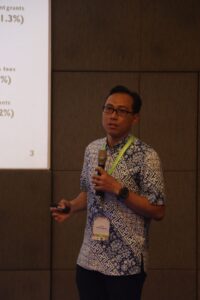
On the opening day of ICOBAR 2025, Dr. Eng. Muhammad Aziz from The University of Tokyo delivered an engaging presentation on the future of sustainable energy, focusing on hydrogen, carbon reduction strategies, and Indonesia’s path toward decarbonization.
Dr. Aziz began by introducing his laboratory, which specializes in energy and process integration—research spanning hydrogen production, CO₂ separation, advanced energy storage, and industrial decarbonization. His team applies a multidisciplinary approach, combining mechanical, chemical, and environmental engineering.
One of the highlights of his talk was his emphasis on non-carbon-based secondary energy resources such as electricity, hydrogen-based fuels, and heat. Dr. Aziz explained how his lab explores both small- and large-scale modeling, from local power plants to national energy systems.
Hydrogen emerged as a central theme. Dr. Aziz described chemical looping technologies that enable hydrogen production while capturing CO₂, as well as research into hydrogen storage using metal hydrides. While hydrogen combustion is promising, he also noted the technical challenge of its invisible flames and the importance of safe utilization.
Indonesia’s ambitious target of carbon neutrality by 2060 was also addressed. Dr. Aziz cautioned that achieving this goal outright is “impossible” under current conditions. Instead, he urged for realistic milestones—incremental five- and ten-year steps—to ensure measurable progress. He emphasized that fossil fuels remain a national asset, but must be paired with effective CO₂ capture and reduction strategies.
The session also explored electric vehicle integration, highlighting both risks and opportunities. Uncontrolled charging behaviors, he warned, could destabilize the grid, but vehicle-to-grid solutions could turn EVs into distributed energy assets.
Finally, Dr. Aziz underscored the importance of collaboration and co-creation. He shared examples of Japan–Indonesia partnerships, including a JICA-funded project on algae-based CO₂ capture and hydrogen production, alongside satellite laboratories established in ITB and BRIN.
“Collaboration is not just about sharing resources,” Dr. Aziz concluded, “but about co-creating solutions together.”
#ICOBAR2025 #SustainableEnergy #HydrogenEconomy #Decarbonization #EnergyTransition #RenewableEnergy #FutureOfEnergy #CollaborationForInnovation #CarbonNeutrality #CleanEnergySolutions
Comments :