

Career Pathway App Guides Students to the Right Major
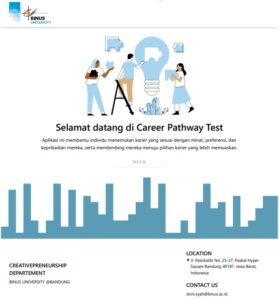
At BINUS University, innovation is not only encouraged—it’s expected. One shining example of this is the Career Pathway Apps, a web-based personality and career test designed by Dr. Doni Purnama Alam Syah, S.Kom, MM, and his research team. The app has become a promising prototype in the university’s journey to help students make better-informed academic and career decisions.
Built on the renowned RIASEC model by psychologist John L. Holland, the Career Pathway Apps assesses users’ personalities across six dimensions—Realistic, Investigative, Artistic, Social, Enterprising, and Conventional—and matches them with career environments where they’re most likely to thrive. In its current form, the app offers a guided test with 42 questions. Upon completion, users receive a detailed report and a personalized certificate via email that outlines their dominant career characteristics.
But the story behind the app goes beyond its interface.
“I started developing this application after observing a recurring issue in our program,” Dr. Doni said. “Many students were transferring majors mid-way through their studies, which impacted graduation timelines and resulted in misalignment between their field of study and future jobs.”
This challenge sparked a realization: academic misalignment could often be traced back to a lack of early personality-based guidance. “We needed a system that could help both students and departments identify fit before the journey even began,” he added.
Despite the solid theoretical backing, translating a psychological model into a user-friendly platform was no simple task. “One of the biggest challenges was ensuring the app’s interface matched how users behave and interact online,” Dr. Doni explained. His prior research into consumer behavior and online learning guided the process. “It’s not just about putting questions into a digital form; it’s about making sure the logic of the test resonates with the user experience.”
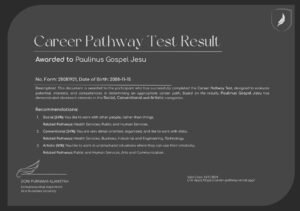
Initial trials of the app weren’t always met with enthusiasm. “At first, students thought it was just another generic assessment,” he recalled. But once the app started producing tangible outputs—such as personality reports and certificates that could be used for academic advising—student feedback shifted dramatically. “They began to understand not just who they are, but what kind of career path aligns with their natural tendencies.”
Dr. Doni is clear that, at this stage, the app’s primary function is to help students identify the best-fitting major based on their personality. While he envisions it eventually integrating with broader career services like job boards, soft skills training, or alumni databases, for now, the focus is on delivering clear, actionable insights at the beginning of the academic journey.
“Think of it as an academic compass,” he said. “It doesn’t tell you exactly where to go, but it helps you understand the direction that fits you best.”
He also has a message for fellow academics and students hesitant to turn their research into real-world applications: “Start with identifying the real pain point. Then, build a product that produces visible, documentable results. Focus first on the most likely users—those who will benefit the most—and expand from there.”
Career Pathway Apps is currently being piloted within select departments, including Creativepreneurship, and early indicators show it’s making a measurable difference in helping students align their academic choices with their future aspirations.
As the higher education landscape continues to evolve, Dr. Doni’s work reminds us that impactful research doesn’t have to stay in the lab. With the right intent and user focus, it can transform into tools that guide, support, and inspire.
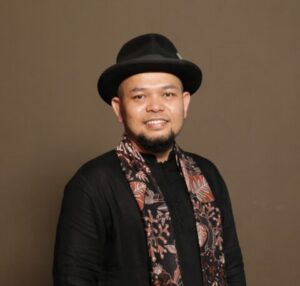
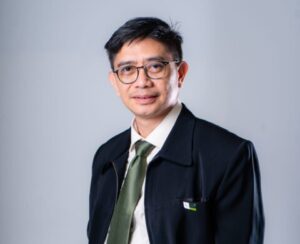
Meet the team behind Career Pathway Apps:

Comments :