

Let’s Practice Open Science, BINUS Style!
Research Worldwide Is Moving Toward Openness
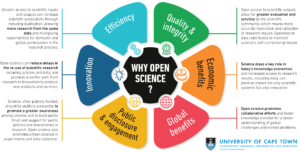
In 2021, 194 UNESCO member states adopted the Recommendation on Open Science, the first global framework governing how publications, data, and research infrastructure should become more widely accessible. In June 2026, UNESCO launched its own digital platform to put that recommendation into practice.
BINUS Technology Transfer supports this shift through its own systems and practices: intellectual property registration through HKI Apps, technology readiness assessment aligned with Indonesia’s national TKT framework, and a pathway from research to real-world use through BRIDGE Apps. This page explains how those pieces fit together, and how BINUS balances open access with protecting the innovations its researchers create.
Three Core Elements of Open Science, According to UNESCO
The 2021 Recommendation does not stop at a slogan about openness. It breaks open science down into operational elements that can guide policy, including at university level. The official explanation sits in the factsheet Understanding Open Science.
Open access
Covers scientific publications, research data, open educational resources (OER), software, and research hardware. Scholarly work should be findable and reusable by others.
Open infrastructure
Repositories, publishing platforms, and metadata standards that connect research outputs across countries and institutions, instead of leaving them isolated on each campus’s own servers.
Open engagement
Dialogue with the wider public and with traditional or indigenous knowledge, so science moves in two directions: from campus to the public, and from communities back into the scientific process.
Official UNESCO Guidance You Can Open Right Now
UNESCO groups all of this under one umbrella, the Open Science Toolkit, a set of guides, checklists, and factsheets first launched in December 2022 and updated continuously.
For research leadership
Policy and strategy documents, most relevant for institutional decision-making.
Checklist · 2022
Guide · 2022
Guide · 2022
Guide · 2022
For researchers directly
Material for anyone preparing a manuscript or planning to open data.
Factsheet · 2022
Guide · 2023
Guide · 2023
Guide · 2022
Core document and indexes
Core document · 2021
Platform · 2026
Index
From Recommendation to Platform, in Five Years
Indonesia Is Moving at the Same Moment
Four days after UNESCO launched its platform, BRIN, through its Directorate of Repository, Multimedia, and Scientific Publishing, together with Wikimedia Indonesia, held the Open Indonesia 2026 conference in Jakarta on 24 June 2026. BRIN Chairman Arif Satria stated that openness in research accelerates the dissemination of knowledge, widens access for researchers, and makes replication and verification of results easier, while stressing that this openness needs to be balanced with clear data governance, including questions of data sovereignty.
BRIN highlighted four infrastructure pillars for the country’s research ecosystem: data repositories, open access publishing platforms, metadata standards, and data management policy, anchored to the FAIR principles (Findable, Accessible, Interoperable, Reusable). For universities like BINUS, this points toward closer alignment between national research reporting and FAIR data principles in the years ahead, a direction BINUS Technology Transfer is already tracking closely.
Openness Calibrated to Where Research Stands
Not every stage of research carries the same considerations when it comes to openness. BINUS follows Indonesia’s national Technology Readiness Level framework, known as TKT (Tingkat Kesiapterapan Teknologi), established under Peraturan Menteri Riset, Teknologi, dan Pendidikan Tinggi No. 42/2016. TKT runs from 1, a basic scientific principle being observed, to 9, a fully operational system in commercial use.
| TKT stage | General approach |
|---|---|
| TKT 1–3 Basic research |
Generally published and shared openly, contributing directly to the global body of knowledge UNESCO’s framework is built around. |
| TKT 4–6 Validated prototype |
BINUS Technology Transfer works with researchers to secure intellectual property protection first, through HKI Apps, before any public disclosure. |
| TKT 7–9 Commercial-ready |
Once IP is secured, the technology is showcased through BRIDGE Apps and connected with industry partners through BINUS’s Industry Partnership and Solution Matching (ISM) programme. |
Open by Default, Protected Where It Matters
BINUS Technology Transfer follows a consistent principle: share what can be shared, and protect what needs protecting, in that order. Research findings, general methodology, teaching materials, and non-sensitive datasets are generally published openly. Inventions with genuine commercial or patent potential are secured through HKI registration first, before any public disclosure, protecting both the university’s innovations and its researchers’ rights.
Usually shared openly
- Academic manuscripts, once the formal publication process is complete
- General methodology that contains no new invention
- Teaching materials and course content (OER)
- Non-sensitive datasets, with complete metadata
- Community engagement (PkM) outcomes and impact reports
Protected before anything is shared
- Inventions with patent potential
- Prototypes with commercial value
- Formulas, core algorithms, or trade secrets
- Datasets bound by an NDA or an industry partner agreement
- Research results heading toward downstreaming (hilirisasi) or licensing
How This Plays Out
The examples below illustrate how the process typically works. They are illustrative, not specific disclosed research projects.
A computer-vision model for early plant disease detection
A research team reaches a working prototype stage for a model that detects leaf disease from images. Before submitting a manuscript, the team checks whether the model architecture has patent potential. The general methodology and non-sensitive training images are published openly, while the core model code stays protected until a patent application is filed through HKI Apps. Once the IP is secured, the prototype is listed on BRIDGE Apps, and BINUS’s Industry Partnership and Solution Matching programme helps connect the team with a licensing partner in agritech.
A digital-mentoring programme for small businesses
A community engagement (PkM) team collects impact data from a digital-mentoring programme supporting a group of partner small businesses. With no patentable invention involved, the anonymized results move straight to open publication, shared through BINUS’s community engagement channels and public research communication.
How BINUS Technology Transfer Supports Open and Protected Research
Researchers, partners, and prospective collaborators can expect the following from BINUS Technology Transfer.
IP consultation and registration
Support navigating intellectual property registration through HKI Apps, before any public disclosure of patentable work. General guidance is also available through the IP resources hub.
Technology readiness assessment
Guidance aligned with Indonesia’s national TKT framework, to help calibrate what is ready to share openly and what needs protecting first.
Industry partnership and licensing
Through the Industry Partnership and Solution Matching (ISM) programme, matched to where a technology currently stands: Technology Push, Market Pull, or Co-Creation.
Product and technology showcase
Validated research outputs can be listed on BRIDGE Apps, reviewed by expert reviewers from RTT, industry, and BINUS through a structured product commercialization pathway.
Open science communication
Research with direct public or community relevance is shared through BINUS Technology Transfer’s public channels once the appropriate protections are in place.
Get in Touch
For questions about intellectual property, technology readiness assessment, or partnership opportunities through BINUS Technology Transfer, reach out to the team directly.
Sources
- UNESCO. “Open science.” unesco.org/en/open-science
- UNESCO. “Open Science Toolkit.” unesco.org/en/open-science/toolkit
- UNESCO. “Launch of UNESCO Open Science Platform.” 23 June 2026. unesco.org/en/articles/launch-unesco-open-science-platform
- Niaga.Asia. “BRIN: Open Science Percepat Inovasi, tetapi Kedaulatan Data Harus Tetap Dijaga.” 24 June 2026, covering the Open Indonesia 2026 conference held by BRIN’s Directorate of Repository, Multimedia, and Scientific Publishing together with Wikimedia Indonesia. niaga.asia
- Peraturan Menteri Riset, Teknologi, dan Pendidikan Tinggi No. 42/2016, on the measurement and determination of Technology Readiness Level (TKT).
For the latest guidance on IP registration and applicable grant schemes, consult the current official Panduan Teknis for each programme, or contact BINUS Technology Transfer directly at tech.transfer@binus.edu.