

The Future of University Commercialization in Indonesia — Are You Ready?
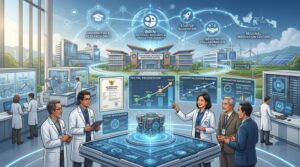
In February 2026, BRIN (Badan Riset dan Inovasi Nasional — National Research and Innovation Agency) visited Universitas Indonesia’s innovation directorate to discuss a specific programme: Rumah Inovasi Indonesia — a national initiative to establish regional innovation hubs, each anchored to a university, each designed to bridge research outputs with real implementation at the local and regional level. BRIN’s stated rationale for approaching UI was precise: the agency needed a university partner with “the capacity to manage intellectual property and downstream research that is ready for regional implementation.” That phrase — ready for regional implementation — is the operational definition of a product with registered HKI, a documented TKT, and a validated market context. In other words, what BRIN is looking for in a university research partner is the profile that the BINUS Product Commercialized submission process generates annually (BRIN/UI DIRBT, February 2026 — Kolaborasi Rumah Inovasi Indonesia, innovation.ui.ac.id).
For BINUS lecturers, this is not background context. It is a directional forecast: the next generation of external institutional recognition — government partnerships, BUMN co-development agreements, Science Techno Park access, and national research hub participation — will be distributed to universities and researchers with documented, TKT-graded, IP-protected product portfolios. The habits built now, through the PI submission process, are the foundation of that external positioning.
Several converging trends reinforce this direction. Indonesia’s national research expenditure in 2024 reached Rp50.27 trillion, with the higher education sector accounting for 94.27% of national research human resources — making universities structurally central to the innovation ecosystem. Patent filings reached 10,894 in 2024, an increase over the prior year. Yet Indonesia’s export mix remains dominated by low-technology-intensity products — the structural gap that hilirisasi policy exists to close. This tension between high research activity and low technology-intensive output is precisely the problem that the entire DIKTISAINTEK BERDAMPAK agenda is designed to address, and it creates the policy environment in which applied, market-ready research carries more institutional weight than at any prior point in the system’s history (BRIN/PIRTI, 2025 — Indikator Iptek, Riset, dan Inovasi Indonesia, penerbit.brin.go.id).
The Kampus Berdampak programme, formally launched in May 2025 as the successor to Merdeka Belajar – Kampus Merdeka, operationalises this shift at the campus level. Its core premise — that universities should function as “nodes of social transformation” connecting knowledge to real problems — is an institutional endorsement of applied research over research-as-publication. The Magang Berdampak track, the Kedaireka matching fund continuation, and the university-industry partnership programmes building out under this agenda are all expressions of the same underlying logic: the research ecosystem rewards demonstrated application, not potential application.
Deputy Education Minister Stella Christie articulated this directly at the Human Development Synergy Forum in December 2025: “Innovation comes from universities. Campuses must become spaces where ideas, research, and technology respond to real problems. Research strengthening and industry partnerships must be continuously reinforced.” This is not aspiration. For lecturers who are reading the grant scheme priorities for 2026 and beyond, it is the clearest available signal about what reviewers and policy-makers will be rewarding (Kemenko PMK, December 2025 — Human Development Synergy Forum).
For individual BINUS lecturers, the strategic implications play out at two levels. In the short term, a strong Product Commercialized submission this December creates a product profile — IP-registered, TKT-assessed, market-documented — that is immediately useful as evidence in external grant applications and partnership proposals in the following year. In the medium term, lecturers who develop a multi-year product roadmap — deliberately progressing a product from TKT 4 to TKT 7 over three to four years, with associated HKI upgrades, user engagement at each stage, and progressively stronger competitive documentation — position themselves as the kind of applied researchers that BRIN’s Rumah Inovasi network, Kemdiktisaintek’s deep-tech funding programmes, and private sector accelerators are specifically seeking.
The institutions that will benefit most from Indonesia’s evolving innovation ecosystem are those where commercialization is a research planning discipline, not a December submission exercise. BINUS RTT’s Product Strategic Roadmap consultation is designed precisely for this longer view: mapping a product’s current state against a multi-year development trajectory, identifying the external grant windows at each TKT milestone, and building the documentation strategy that makes the journey coherent and competitive.
The ecosystem is building toward applied impact. The window to position yourself within it is now open — and the annual BRIDGE Apps submission is the first step.
For a full overview of BINUS’s commercialization framework, support services, and submission process, visit the Product Commercialization page at BINUS Technology Transfer.
#BRINIndonesia #RumahInovasi #risetberdampak #hilirisasi #KampusBerdampak #Kedaireka #BINUSresearch #masadepanriset
Comments :