



From Paper to Practice: How BINUS Roadmaps Turn Strategy Into Research, Impact, and Adoption
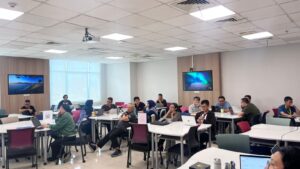
At BINUS, we learned something the hard way: a strategy document only matters if people actually use it. If it feels like paperwork, it gets filled once, stored somewhere, and forgotten. If it feels like a shared compass, it becomes the thing that keeps research, community empowerment, and technology transfer moving in the same direction.
That’s why this roadmap initiative was designed to be practical from day one. The goal was not to produce “beautiful documents.” The goal was to make it easier for every faculty, study program, and individual researcher to answer the same questions with confidence: What are we focusing on? Who are we doing it for? What outputs are we aiming for? And what does progress look like year by year?
Why we did this
A lot of good work happens in silos. Research runs on one track, community programs run on another, and technology transfer feels like a separate universe. The result is predictable: scattered priorities, duplicated effort, and outputs that don’t connect.
So we built a simple structure that makes alignment easier than misalignment. The logic is straightforward:
- The faculty roadmap sets the umbrella direction.
- The rumpun ilmu roadmap keeps the scientific direction consistent across programs that share a discipline cluster.
- The study program roadmap becomes the 3-year “north star” that staff can actually execute and that individual lecturers can realistically translate into personal plans.
In other words, each layer has a job. This prevents double work and keeps everyone moving toward the same outcomes.
What we produced
We didn’t start with a template. We started with a matrix.
The matrix is the backbone that connects the three domains (research, empowerment, tech transfer) and shows how they should reinforce one another. Once that logic was clear, we turned it into three templates that cascade neatly:
- Faculty Roadmap Template
Sets the big direction and the shared priorities across research, empowerment, and tech transfer. - Rumpun Ilmu Roadmap Template
Keeps things coherent across study programs under the same discipline cluster, mainly by defining pillars, methodology standards, and shared assets. - Study Program Roadmap Template (3-year)
This is the one people will actually live with: themes, strategies, targets (qualitative and quantitative), partners, and a Year 1 to Year 3 progression that makes sense.
The point of the 3-year study program roadmap
This roadmap is not a detailed product plan. It is not a full list of everything lecturers do. And it is not a copy of the faculty Renstra.
It’s a focused plan that helps a program pick 1 to 3 themes that are realistic, aligned, and executable, then clearly map:
- what the research outputs will be,
- what empowerment programs will look like,
- what tech transfer could realistically move toward adoption,
- who the partners are,
- and how progress evolves from Year 1 to Year 3.
If people fill it well, it becomes the anchor for individual lecturer roadmaps. If people fill it vaguely, everyone goes back to guessing.
How to fill it without overcomplicating things
Here’s the mindset that makes the roadmap useful:
1) Start with the user, not the activity.
Don’t start with “we will do a seminar” or “we will make an app.” Start with who benefits and what problem they face: a school admin team that struggles with data reporting, teachers who need simpler workflows, or communities that need digital readiness support.
2) Pick 1–3 themes and commit.
Focus beats breadth. A tight roadmap that gets executed beats five themes that never reach adoption.
3) Show the Year 1 → Year 2 → Year 3 logic.
A good roadmap reads like a journey:
- Year 1: validate needs, baseline, early pilots.
- Year 2: expand, integrate, build quality standards.
- Year 3: sustainable adoption, best practices, and structured scaling.
4) Keep research outputs research-like.
Don’t force everything into “commercialization.” Research can be strong through instruments, datasets, publications, grants, and reproducible methods. Tech transfer is where TKT, licensing, pilots, and service models become central.
5) Partners are not decoration.
Don’t list 10 partners. Pick the ones that actually unlock something: access to data, access to users, co-development capability, or scaling channels.
6) Evidence matters.
If it’s real, it leaves traces: MoUs, pilot reports, meeting notes, user feedback, ethics approvals, datasets, repositories. The roadmap becomes stronger when it points to these.
How we socialized it
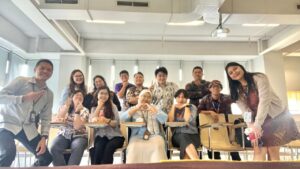
Templates don’t solve anything if people interpret them differently. So we ran more than 10 discussion sessions with faculty and study program leaders between October and December, making sure everyone understood the logic and could fill it in a consistent way.
We also ran pentahelix discussions so teams could hear what’s happening outside campus: what government cares about, what industry needs, what communities struggle with, what media sees on the ground, and what academic leaders think is coming next. This is important because many teams don’t know what they don’t know, and outside perspectives help sharpen priorities. The architects behind these are:
- Joice Yulinda Luke (International Conference and Book Publication Section Head)
- Ridhwan Bugiansyah Rasid (Research Roadmap Section Head)
- Wisnu Ivan Kusuma (Fostering Section Head)
- Tommy Prayoga (Technology Transfer)
- Tsabita Dinillah (Research Roadmap Staff)
- Clara Orindelia (International Book and Conference Staff)
- Merlin Reineta (Research Roadmap Staff)
- Desri Fatimah Natalia Tambunan (Commercialization Officer)
- Alicia Diana Teresa (Outreach-Research Officer)
- Dirgansyah Ismail, S.ST (Community Fostering Officer)
- I Gusti Bagus Agung Oka (Community Engagement Officer)
- Dewa Ayu Defina Audrey Nathania (Outreach-Research Staff)
- Bagas Rizky Ramadhan (Research Roadmap Officer)
- Iga Dinaris Masitoh (Research Roadmap Staff)
The takeaway
If you remember one thing, make it this: the roadmap is meant to reduce confusion, not create more forms.
A good roadmap makes it obvious what your program will prioritize, who you are serving, what you will produce, and how you’ll build momentum year after year. When it’s filled that way, it becomes a living guide, not a one-time document.
Comments :