


How Dr. Lasmy’s research on eco-tourism in Bromo’s Edelweiss Village inspires sustainable development through community empowerment and digital innovation
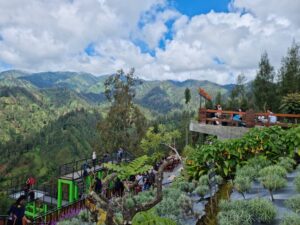
Picture this: a breathtaking sunrise over Mount Bromo, with rolling mist blanketing the hills and the air filled with the scent of Edelweiss flowers. Nestled in this serene landscape lies Edelweiss Wonokitri Tourism Village, a hidden gem in East Java that combines nature, tradition, and innovation. But beneath its beauty is a larger story of preservation, empowerment, and the pursuit of sustainability.
This story is at the heart of Dr. Lasmy, S.Kom., M.M. from BINUS University, who leads an ambitious research project titled “Sustainable Development Strategies for Eco-Tourism Conservation in Edelweiss Wonokitri Tourism Village, Bromo Tengger Semeru National Park.” Her goal is to create a model that doesn’t just attract tourists but also protects the environment, empowers the local community, and strengthens the regional economy.
The village, located in the highlands of Pasuruan Regency, is home to the Tengger Tribe, an indigenous community known for its deep respect for nature and culture. Here, the Edelweiss flower, often called the flower of eternity, holds sacred significance. Locals use it in traditional ceremonies, and cultivating it legally for tourism is both a source of pride and income. Yet as tourism grew, new challenges appeared.
“Many destinations call themselves eco-tourism sites but don’t actually follow sustainable principles,” Dr. Lasmy explains. “We wanted to change that by creating a framework rooted in real community participation and responsible development.”
Her research team found that the key to true eco-tourism lies in balance — between nature and economy, tradition and innovation. The study identifies several major issues in developing sustainable tourism, including limited infrastructure, low digital literacy, and the lack of skilled human resources to manage eco-friendly operations.
To address this, the team not only analyzed the problems but co-created solutions with the villagers. Using the Design Thinking methodology, they conducted interviews, workshops, and empathy-driven research to understand local needs and perspectives.
From this collaborative process came several practical strategies. First, the development of community-led guided tours, where villagers share their cultural stories and eco-conservation practices directly with tourists. Second, the implementation of waste management systems and environmental education programs to ensure that tourism benefits nature rather than harms it. And third, the creation of digital tools — including interactive media and mobile applications — to promote the village globally while training locals in digital marketing and entrepreneurship.
“Eco-tourism isn’t just about nature,” says Dr. Lasmy. “It’s about people — their stories, their knowledge, and their role as protectors of their own environment.”
The research highlights that local participation is the backbone of sustainability. Many residents of Wonokitri Village, once reliant solely on farming, are now learning to integrate tourism into their livelihoods. Guided by the principles of the International Ecotourism Society, the project helps villagers gain skills in hospitality, conservation, and business management — turning them into stewards of both culture and ecology.
However, challenges remain. Funding limitations, uneven access to technology, and fluctuating visitor numbers are still barriers to long-term success. To address these, Dr. Lasmy’s team recommends forming partnerships between government agencies, NGOs, and universities to ensure continuous support. Monitoring systems and measurable sustainability indicators are also being developed to evaluate the ongoing impact of these initiatives.
The results are already promising. The community now demonstrates a growing awareness of conservation, and tourists are showing more interest in eco-friendly travel experiences. Edelweiss Village has even been recognized as one of the Top 8 Tourism Villages in East Java (ADWI 2023) — a testament to the potential of combining heritage with innovation.
Looking ahead, Dr. Lasmy envisions Edelweiss Wonokitri as a living model of eco-tourism that other regions can learn from. Her team’s next steps include piloting new educational programs, developing certification systems for sustainable tourism, and expanding digital tools for marketing and training.
“Sustainability isn’t a destination,” she reflects. “It’s a continuous journey — one that connects people, culture, and the planet.”
In that sense, Edelweiss Wonokitri Village isn’t just a place on a map. It’s a story — a story of how a small mountain community in East Java is showing the world that innovation and tradition can bloom together, just like the timeless Edelweiss that thrives in the heart of Bromo’s misty peaks.
Through research, empathy, and collaboration, Dr. Lasmy’s work reminds us that true progress doesn’t come from choosing between nature and development — it comes from making them grow hand in hand.
Comments :