


Is Social Media Only for the Young? Breaking the Myth and Exploring Career Opportunities in Social Media Marketing
The most commonly believed myth by the general public and aspiring business owners is that social media is just for the young.
However, this assumption no longer reflects the reality of today’s digital environment. Social media platforms are now widely used by people across different age groups, including children, adults, and older generations. From a professional marketing perspective, successful social media strategies should not focus exclusively on age but should also consider audience interests, consumption patterns, and interactions with digital content.
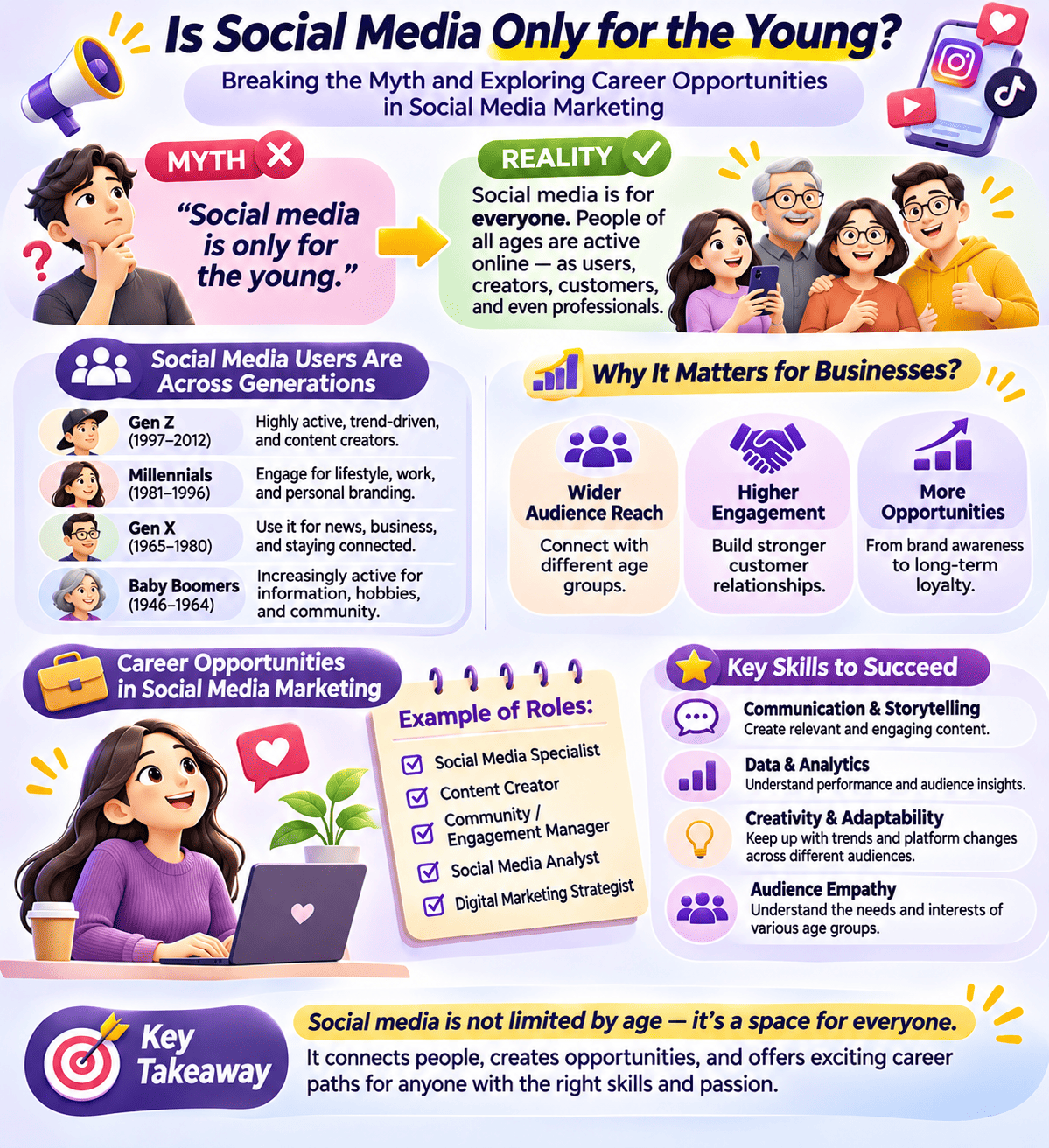
Modern marketing and branding strategies emphasize audience segmentation based on consumer behavior and relevance rather than simply demographic factors. Social media algorithms can help businesses reach audiences based on their interests and online activities. Therefore, assuming that social media is only suitable for younger audiences can cause businesses to overlook valuable market opportunities, including potential customers with strong purchasing power and brand loyalty. Understanding the diversity of social media users allows businesses to develop more relevant marketing strategies and reach a broader audience.
Exploring a Career Path: Director of Social Media Marketing
The development of social media marketing also creates opportunities for professionals to pursue managerial careers, one of which is Director of Social Media Marketing. This position goes beyond content creation and daily social media management. It involves designing, managing, and directing social media marketing activities to ensure alignment with the company’s overall business objectives.
A Director of Social Media Marketing is responsible for developing long-term strategies, analyzing campaign performance, managing teams, and integrating social media activities with the broader digital marketing strategy. This role requires professionals to understand both marketing execution and business strategy.
To succeed in this career, several key skills are essential:
- Strategic Thinking and Business Understanding: The ability to develop social media strategies that support organizational goals.
- Data Analysis Skills: The ability to analyze campaign performance and utilize analytical tools to support decision-making.
- Leadership and Team Management: The ability to coordinate, guide, and manage teams effectively.
- Branding and Content Strategy: Understanding how to develop consistent brand communication and relevant content.
- Digital Advertising Campaign Management: The ability to manage and direct social media advertising campaigns.
- Communication Skills: The ability to communicate and coordinate effectively with different stakeholders.
Conclusion
Social media marketing is not restricted to a particular age group. Its diverse audience creates opportunities for businesses to reach potential customers through strategies based on interests, behavior, and engagement. At the same time, the field offers career opportunities that extend beyond operational activities, including managerial positions such as Director of Social Media Marketing.
Professionals pursuing this career need a combination of strategic thinking, analytical capabilities, leadership, and communication skills to connect social media initiatives with business objectives.
Writer: Felicia Zefanya Irawan – 2802420246
Lecturer: Nico Yonatan Wicaksana, S.Kom., M.Kom.

Comments :