Title
The Impact of Rising Bitcoin Activity on Carbon Emission, Electricity Consumption, and Electrical Waste
Category
Case Study & Document
Description
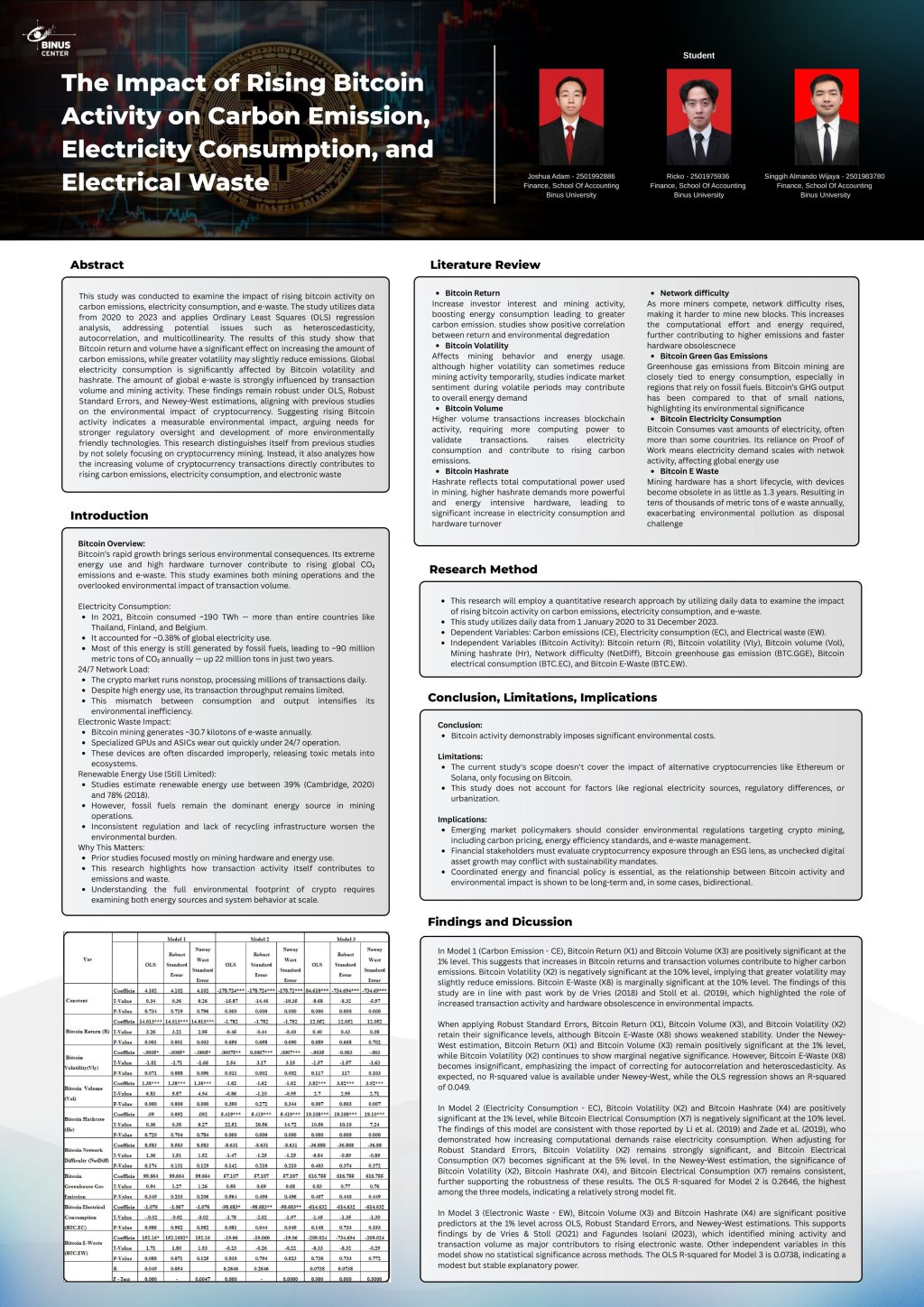
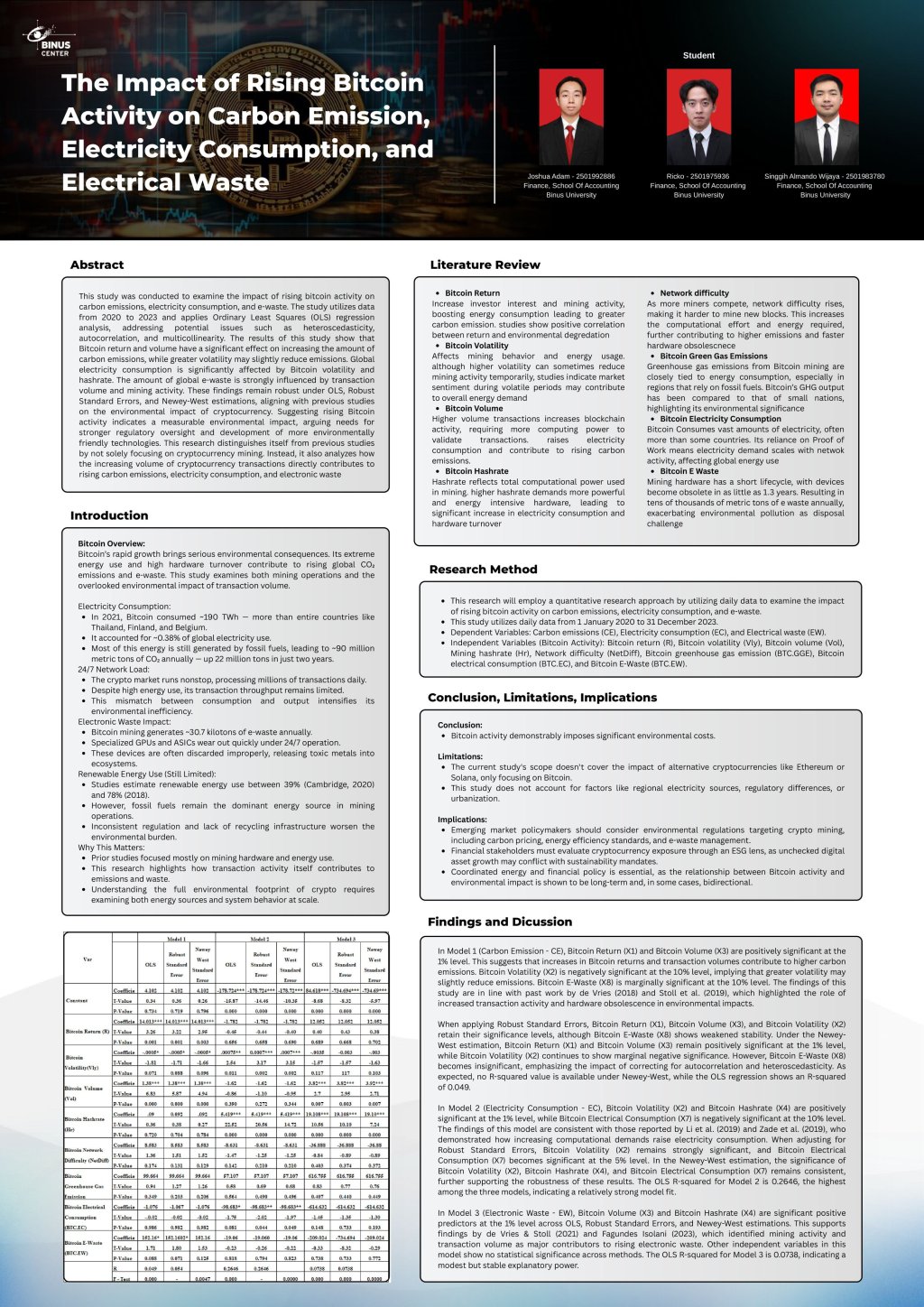
This study examines the environmental consequences of rising Bitcoin activity by analysing its impact on carbon emissions, electricity consumption, and electronic waste using daily data from 2020 to 2023. The study employs Ordinary Least Squares (OLS), Robust Standard Errors, and Newey-West estimators, revealing that escalations in Bitcoin returns and transaction volume substantially elevate carbon emissions. At the same time, volatility shows a slight mitigating effect. Electricity consumption is strongly driven by Bitcoin volatility and mining hashrate, reflecting the energy-intensive nature of blockchain validation under the proof-of-work system. Additionally, electronic waste is significantly influenced by transaction volume and mining activity, highlighting the rapid obsolescence of specialised hardware such as GPUs and ASICs. The findings emphasise that Bitcoin’s environmental footprint extends beyond mining to include transaction-level activity, reinforcing concerns about sustainability in the digital asset ecosystem. Despite limitations, such as an exclusive focus on Bitcoin and the omission of regional energy differences, the study offers important implications for policymakers and investors, advocating stricter environmental regulations, improved energy efficiency, and the integration of ESG considerations into the evaluation of cryptocurrency investments.
Contact Us
km@binus.edu