



BIC-SUS and RMIT Mark Second Year Collaboration in Driving Procurement for a Regenerative Future
Jakarta, 16 May 2026 – BINUS Center of Excellence in Sustainability (BIC-SUS) has further strengthened a strategic partnership with RMIT University, driven by a shared commitment to expanding collective action in sustainability. Now entering its second year, this collaboration reflects our ongoing effort to connect academic perspectives with industry practices, particularly in the area of sustainable procurement.
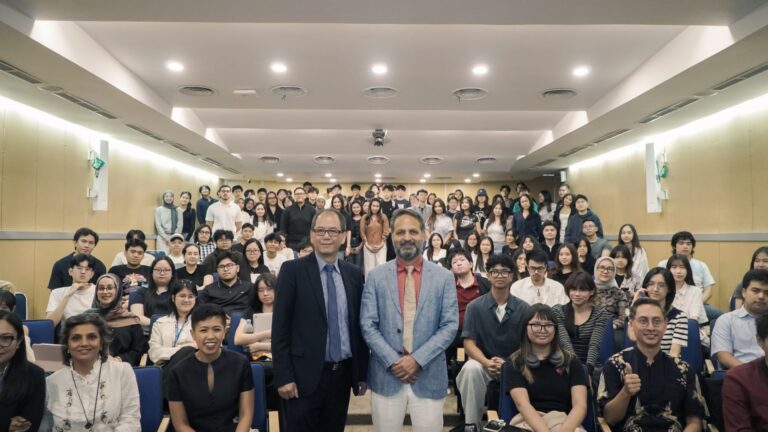
As part of this initiative, we organized a series of workshops, including a masterclass held on 7 and an industry workshop on 9 May at BINUS@Senayan – JWC Campus, designed for both students and industry practitioners.
(Photo Credit: Andi D. Ahnafandra/Photo Editor: Mufti Al-Warits)
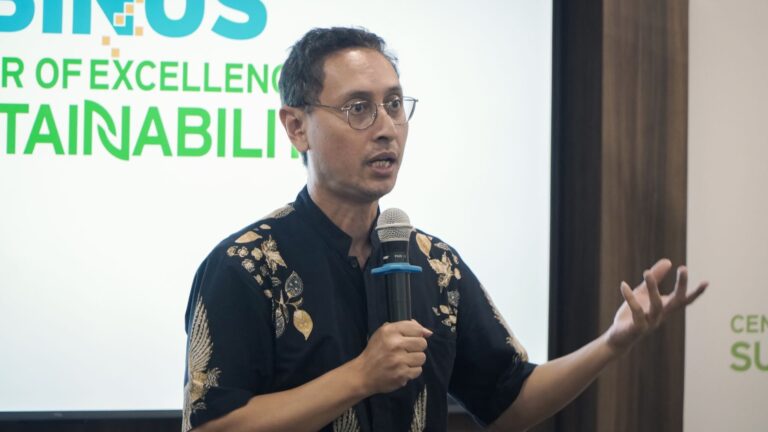
“This program would not have been possible without the support of our colleagues from RMIT University, including Professor Prem Chhetri, Professor Charles Lau, and Aswini. Since last year, our collaboration has enabled us to exchange knowledge, share practices, and explore developments in sustainability. Through this series, we also see strong interest from our students and industry participants to both learn from and contribute insights alongside BINUS and RMIT,” said Dr. Marko S. Hermawan, BIC-SUS’s Coordinator of Operations and Management, during the opening.
Kicking off the program, around 100 BINUS students took part in a masterclass on “Procurement for a Regenerative Future,” with Prof. Prem Chhetri and Prof. Charles Lau from RMIT University sharing their perspectives on sustainability and procurement. Both speakers have extensive experience in sustainability and supply chain management as they are the key persons behind the development of the RMIT’s Sustainable Procurement Disclosure Index (SPDI), a framework designed to strengthen transparency and accountability in procurement practices.
(Photo Credit: Andi D. Ahnafandra/Photo Editor: Mufti Al-Warits)
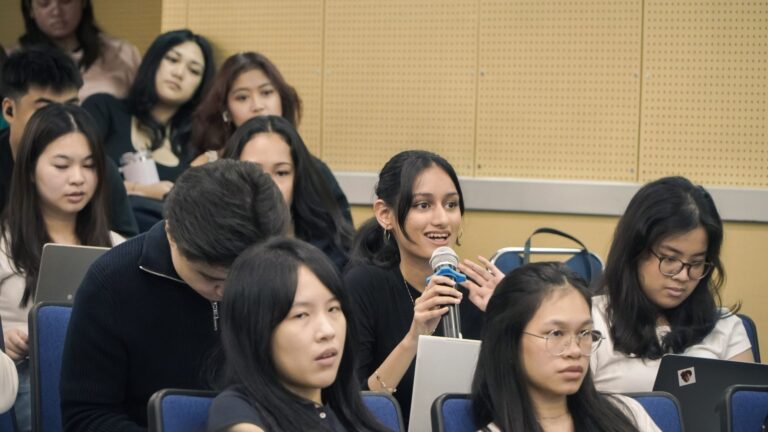
Rather than staying at the conceptual level, the discussions were highly interactive, with students actively responding to real-world case scenarios and raising questions on how sustainability and regeneration can be applied in practice.
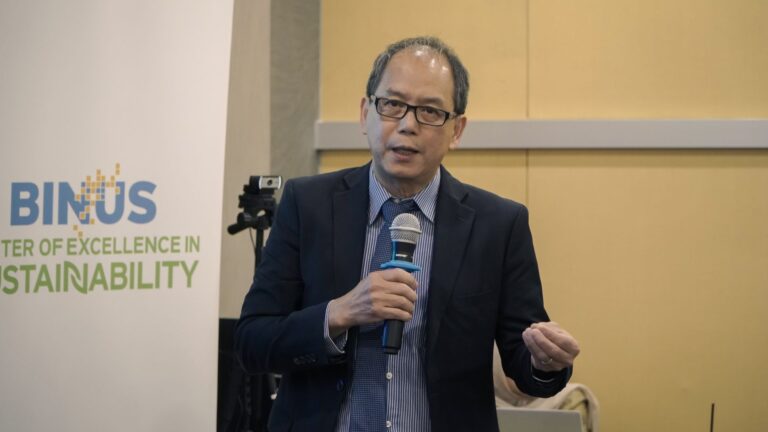
As Prof. Lau explained, sustainability alone is not enough to address current environmental challenges, as it mainly focuses on doing less harm rather than restoring what has already been damaged.
(Photo Credit: Andi D. Ahnafandra/Photo Editor: Mufti Al-Warits)
“Sustainability often centers on efficiency, such as using reusable components, reducing the cost of new resources, and adopting renewable energy. While these efforts can slow down system degradation, they do not reverse it or make the system more resilient. Therefore, he highlighted the need to move beyond sustainability toward regeneration, which actively creates positive impacts and supports recovery,” he added.
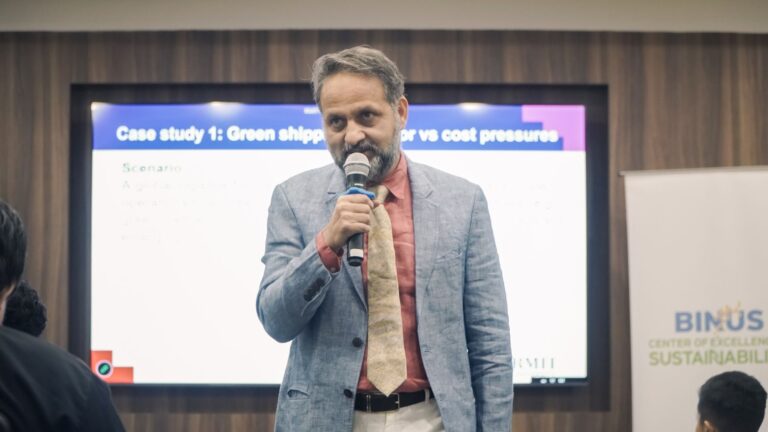
The session also sparked constructive discussions about trade-offs between cost, environmental responsibility, and future business priorities, reflecting strong interest and critical thinking from participants.
(Photo Credit: Andi D. Ahnafandra/Photo Editor: Mufti Al-Warits)
Prof. Chhetri emphasized that one of the biggest challenges in sustainability is not only how businesses produce, but also how people consume. He pointed out that technology has made life more convenient, but it has also encouraged new patterns of overconsumption, where people expect faster services, instant delivery, and constant access to products. Responding to Prof. Chhetri’s question on whether free and fast delivery is compatible with sustainability, one student agreed that it is not fully compatible, as it can be inefficient and may encourage overconsumption.
This conversation then continued in a broader professional context through the industry workshop, “Applying a Sustainable Procurement Disclosure Index to Industry: Paving the Way for a Regenerative Future.” While the masterclass encouraged students to question consumption patterns and business trade-offs, the workshop invited professionals from various sectors to bring their practical perspectives on how sustainability can be applied in procurement and organizational decision-making.
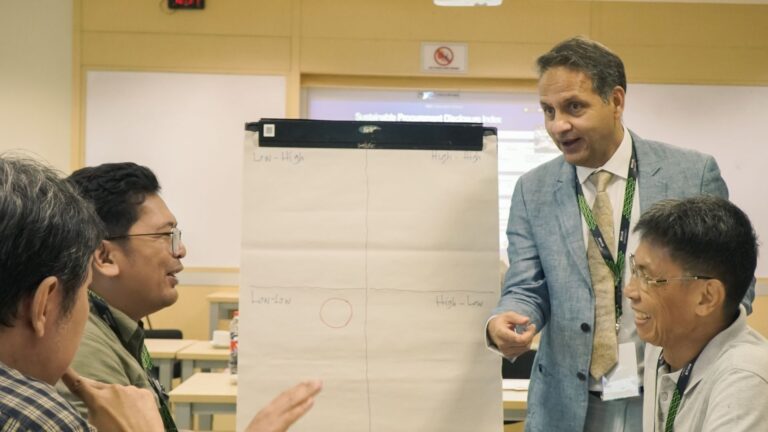
(Photo Credit: Andi D. Ahnafandra/Photo Editor: Mufti Al-Warits)
This session with industry has extended discussion topics from individual consumption and business scenarios to a more institutional question of how organizations can make procurement more transparent, responsible, and aligned with sustainability goals.
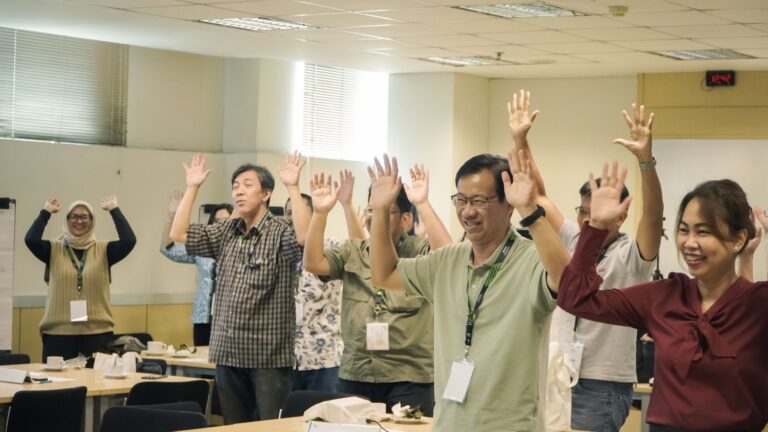
(Photo Credit: Mufti Al-Warits)
This relevance was also highlighted by Dr. Rini Setiowati, Vice-Rector for Collaboration and Global Engagement.
“Sustainable procurement is not only an important topic for industry, but also for the university itself, in considering the many procurement activities involved in supporting daily academic and operational needs,” she shared during the opening session.
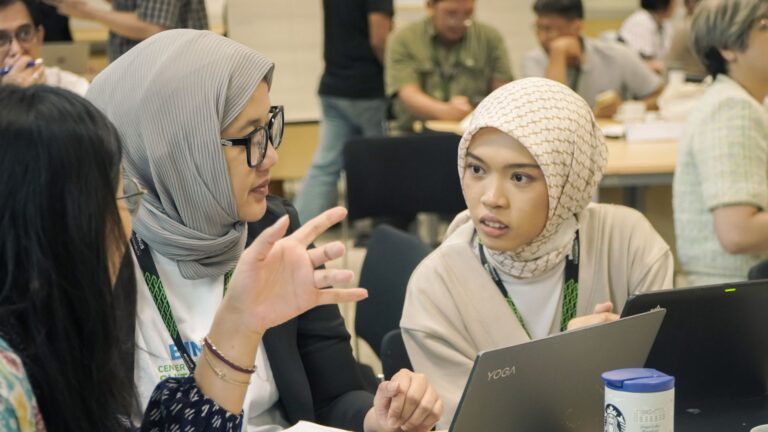
(Photo Credit: Mufti Al-Warits)
The discussion then shifted to the practical challenges faced by organizations, including balancing cost pressures, meeting regulatory requirements, and dealing with limited visibility across supplier networks. These issues reflect the gap between long-term sustainability goals and day-to-day operational realities.
“We understand that sustainability requires a long-term approach, but in practice many systems are still geared towards short-term planning and day-to-day operations. That gap is what makes it difficult to implement consistently,” one participant shared.

(Photo Credit: Mufti Al-Warits)
This challenge became a central theme of the session and was later explored further through the demonstration of the Sustainable Procurement Disclosure Index tool delivered by BINUS graduate student Nasywa Alya Kharasani, who is also a BIC-SUS member. The session then became more interactive as participants worked directly with real company data, allowing them to see how procurement-related disclosures are evaluated in practice and where gaps often appear.
Last but not least, at the end of the session, we invited several participants to share their feedback and reflections on the workshop. Representing Indika Group, Linda Guning shared that the session provided valuable insights for companies that are currently strengthening their sustainable supply chain practices.
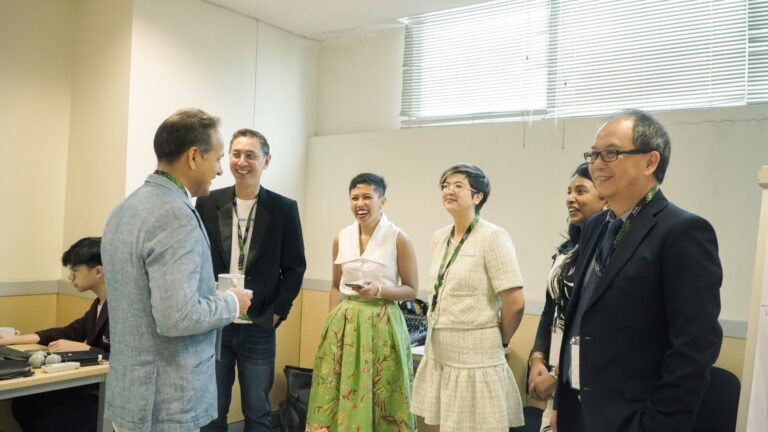
(Photo Credit: Mufti Al-Warits)
“The SPDI scoring will be very helpful for us when communicating with management, as sustainability discussions need to be supported by quantitative evidence. It allows us to show how far our sustainable procurement practices have progressed and where improvements are still needed,” she shared, while also expressing her hope that similar workshops can be organized more often in the future.
(Photo Credit: Mufti Al-Warits)
Overall, the workshop concluded by reinforcing the need for stronger collaboration between academia and industry in addressing sustainability challenges. By combining research, practical tools, and professional perspectives, BINUS and RMIT continue to support the development of more accountable and transparent procurement systems by engaging in wider communities.
Author: Mita Adhisti