


Advancing Transparent and Sustainable Business Practices Through Global Academic Collaboration
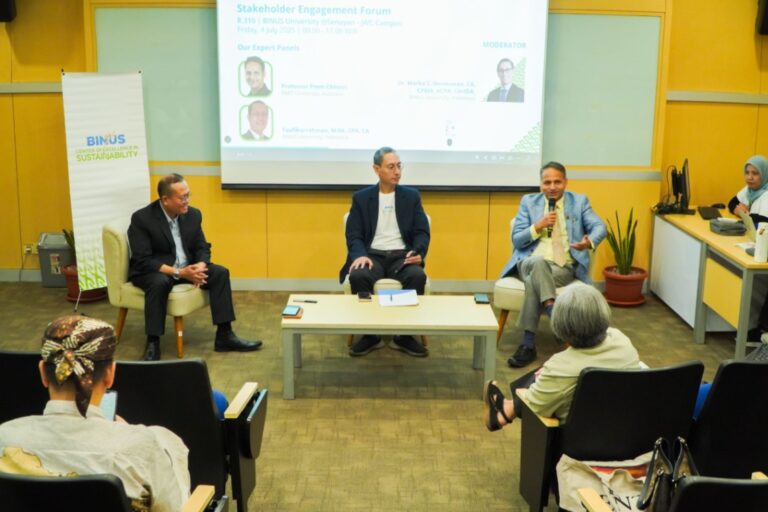
As part of our commitment to advancing sustainability and fostering global best practices, the BINUS Center of Excellence in Sustainability (Bic-Sus) proudly hosted the Stakeholder Engagement Forum on July 4, 2025. The forum brought together academics, students, and industry stakeholders to discuss institutional transformation and sustainable business practices.
We were honored to welcome Prof. Prem Chhetri, a distinguished expert in Logistics and Supply Chain Management from RMIT University, Australia, as the keynote speaker for the forum. During the session, Prof. Chhetri shared insights into how RMIT University has successfully integrated sustainability principles into various aspects of university life, including teaching and learning, research initiatives, operational practices, and strategic collaborations.
(Photo Credit: Mufti Warits)
One of the key highlights of the discussion was the introduction of the Sustainable Procurement Disclosure Index (SPDI), an initiative co-developed by Prof. Chhetri. The SPDI framework was designed to enhance transparency, accountability, and sustainability in procurement practices across broader business ecosystems. Through this initiative, organizations are encouraged to improve the disclosure and implementation of sustainable procurement practices.
RMIT University’s strong commitment to sustainability has also contributed to its global recognition, including achieving the #56 position in the 2025 Times Higher Education (THE) Impact Rankings. This achievement reflects the university’s consistent efforts in embedding sustainability into its institutional strategy and operational activities.
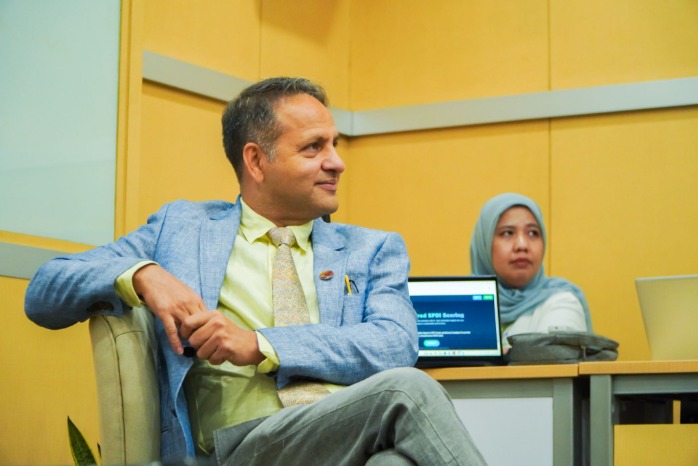
During the forum, Prof. Chhetri emphasized the importance of institutional transformation in implementing sustainability effectively.
“Institutional transformation and systemic change are essential to embed sustainability at both strategic and operational levels effectively. This requires a dual approach, combining top-down governance that provides vision and policy direction with bottom-up empowerment that encourages engagement, innovation, and ownership at every level of the institution,” explained Prof. Chhetri.
(Photo Credit: Mufti Warits)
He further highlighted that RMIT’s integrated approach has enabled the university to strengthen accountability, encourage innovation, and successfully implement sustainability practices across the institution.
Beyond institutional practices, the discussion also explored RMIT’s research commitments aligned with the United Nations Sustainable Development Goals (SDGs). The university actively supports research projects focused on sustainability issues, including nature-based water solutions, bushfire management, and improving transparency in sustainable business practices through ethical procurement.
The SPDI initiative, first launched in 2023, was initially developed to assess the sustainable procurement practices of Australia’s top 200 listed companies. Following its success, the project has expanded across Asia through collaborations with various academic institutions, including BINUS University.
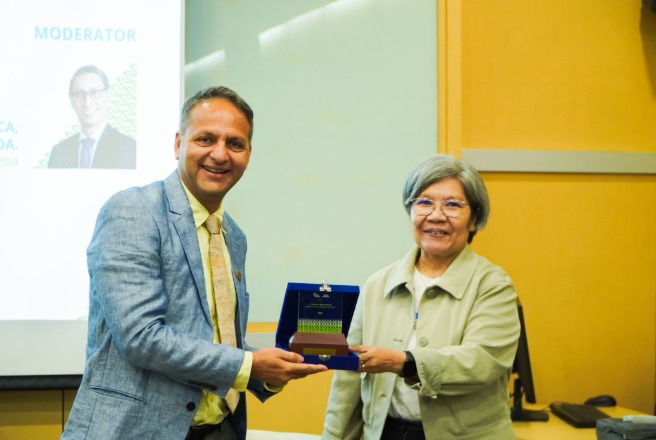
To support the development of SPDI in Indonesia, Prof. Chhetri has begun collaborating with two prominent academics from BINUS University: Prof. Yanthi R. L. Hutagaol, Head of Bic-Sus with expertise in finance, and Dr. Marko S. Hermawan, Bic-Sus member and Head of the International Business Management Program with expertise in accounting. Together, this collaboration aims to adapt the SPDI framework to align with Indonesia’s business practices and regulatory environment.
(Photo Credit: Mufti Warits)
This collaboration will help to create a platform for inclusive dialogue involving academia, students, and business leaders in developing a more transparent and sustainable business ecosystem. The initiative also aims to improve public access to reliable information regarding corporate sustainability practices.
The Stakeholder Engagement Forum reflects Bic-Sus’ dedication to advancing sustainability awareness and fostering meaningful collaboration between higher education institutions and industry stakeholders. By connecting global expertise with local initiatives, we hope the forum will serve as an important step toward creating long-term sustainable impact in Indonesia and beyond.